

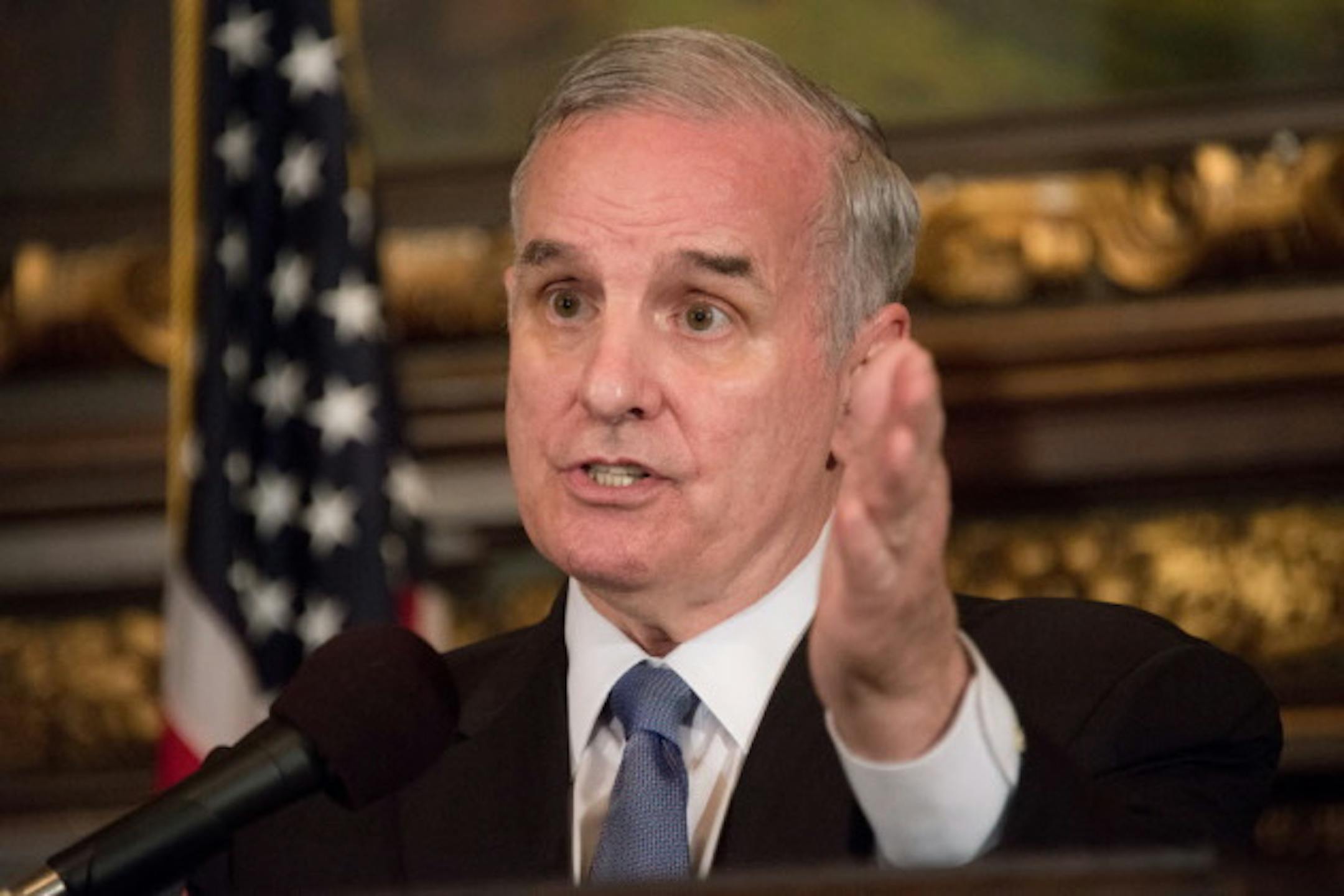
Two months after triumphantly signing a major hike in Minnesota's minimum wage into law, Gov. Mark Dayton told a newspaper: "It may be that we have to fine-tune it."
According to the Rochester Post Bulletin, the DFL governor said that his restaurant-owning sons made the case that tipped employees should be treated differently than other hourly employees.
"I understand my sons' frustration with the tip credit issue. They make a very articulate case," Dayton said in a meeting with the newspaper's editorial board last week, according to a report.
Minnesota minimum wage advocates have long opposed any kind of tip credit.
Although there are many ways to include such a credit in wage laws, essentially if a credit is permitted employers could pay employees less than the state minimum with the understanding, or even guarantee, that tips would more than make up the gap. Most states allow a full or partial tip credit. Minnesota does not.
Restaurant and hospitality groups have long advocated for a tip credit, saying that without it businesses will suffer. That plea went unheeded.
Although the DFL Legislature battled over many details of the minimum wage law last year and this year, lawmakers never moved toward adopting a tip credit.
Instead, it approved a wage law that would slowly increase the state's minimum wage from $6.15, where it has long stagnated, to $9.50 an hour by 2016. The first bump will come this August when the lowest paid hourly workers would see their wages jump to $8 an hour.


