

 1:03
1:03Minnesotans thirsting for access to liquor stores on Sunday aren't likely to see the state's long-standing ban lifted this year, but they might see looser restrictions on Sunday sales at breweries and taprooms.
Sen. Roger Reinert, the Duluth DFLer pushing to end the Sunday prohibition, said Wednesday that he lacks enough votes to get a full repeal of the ban out of a key Senate committee. The proposal also lacks sufficient support to pass the House.
Instead, Reinert is offering two bills he called "baby steps" — allowing breweries to sell 64-ounce glass growlers of beer on Sunday and letting brewery taprooms offer Sunday hours even if they don't serve food.
"I do want full repeal. But I'm also practical and realistic, and this is what we could do," Reinert said. Lifting Sunday restrictions on craft brewers would boost an industry that's exploding across the state, Reinert said, with dozens of small breweries popping up throughout the Twin Cities and cities and towns statewide.
Efforts to scrap the Sunday ban entirely have been losers at the Capitol for many years, but advocates have been more organized and active at the Capitol in recent months. Although they call the repeal a common-sense change, owners of many small liquor stores like the current law because it lets them close one day a week without losing business to larger competitors.
Liquor industry's stance
Their lobby group, the Minnesota Licensed Beverage Association, wields heavy clout with legislators and has been the chief Capitol guardian of the Sunday ban. The group's lobbyist said Wednesday it would not try to prevent Sunday growler sales or taproom hours, which makes passage more likely.
"The conversation around Sunday sales has always been related to liquor store operations," Beverage Association lobbyist Joe Bagnoli said. He said letting breweries sell growlers on Sunday is unlikely to affect liquor stores, which don't sell them.
Bagnoli said some Sunday ban supporters fear that lifting brewery restrictions could be "a nose under the camel's tent" that lays the groundwork for full repeal in the next few years.
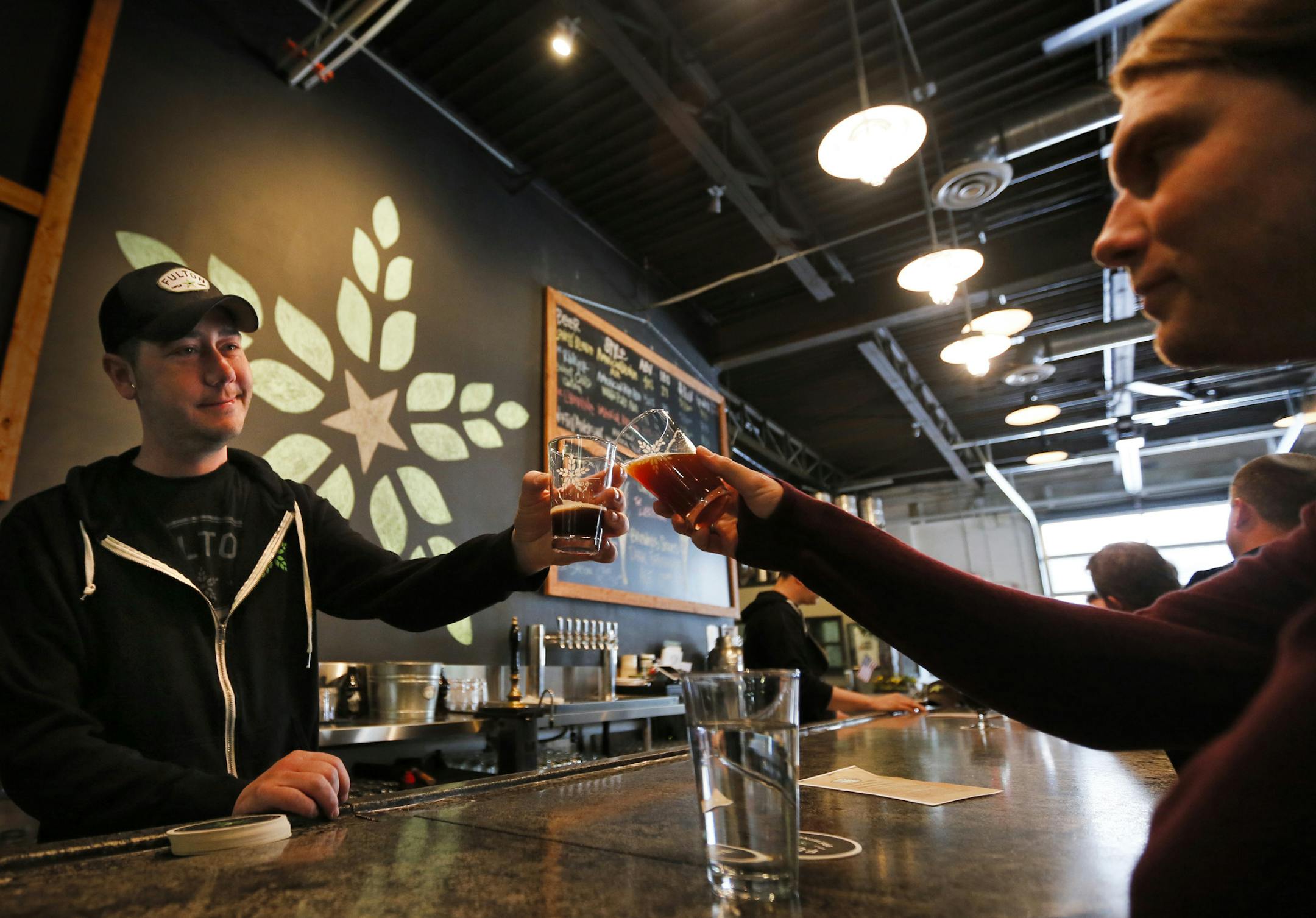
![The tap room at Fulton Brewery in Minneapolis was bustling Wednesday afternoon, while lawmakers at the capitol were working on a bill that could allow them to sell their brew on Sunday. ] Lawmakers who support allowing Sunday liquor sales in Minnesota are hoping for a long-awaited breakthrough as the proposal gets its first airing in a Senate committee Wednesday. There have been signs of growing support for a frequently discussed but long-stalled issue, thanks to a more organized push and the po](https://arc.stimg.co/startribunemedia/Z3POO7X7OLTCDEB4GJA2LDSDFM.jpg?&w=1080)
![Ben Flattum of the Minnesota Brewers Association, left, thanked Sen. Roger Reinert (DFL-Duluth) for his work on keeping the liquor bill alive. On the right Joe Bagnoli, Minnesota Licensed Beverage Association who also testified. ] GLEN STUBBE * gstubbe@startribune.com Wednesday, March 19, 2014.](https://arc.stimg.co/startribunemedia/5O6H3N2LEWO3DLGMI37IJZ5V74.jpg?&w=1080)


