

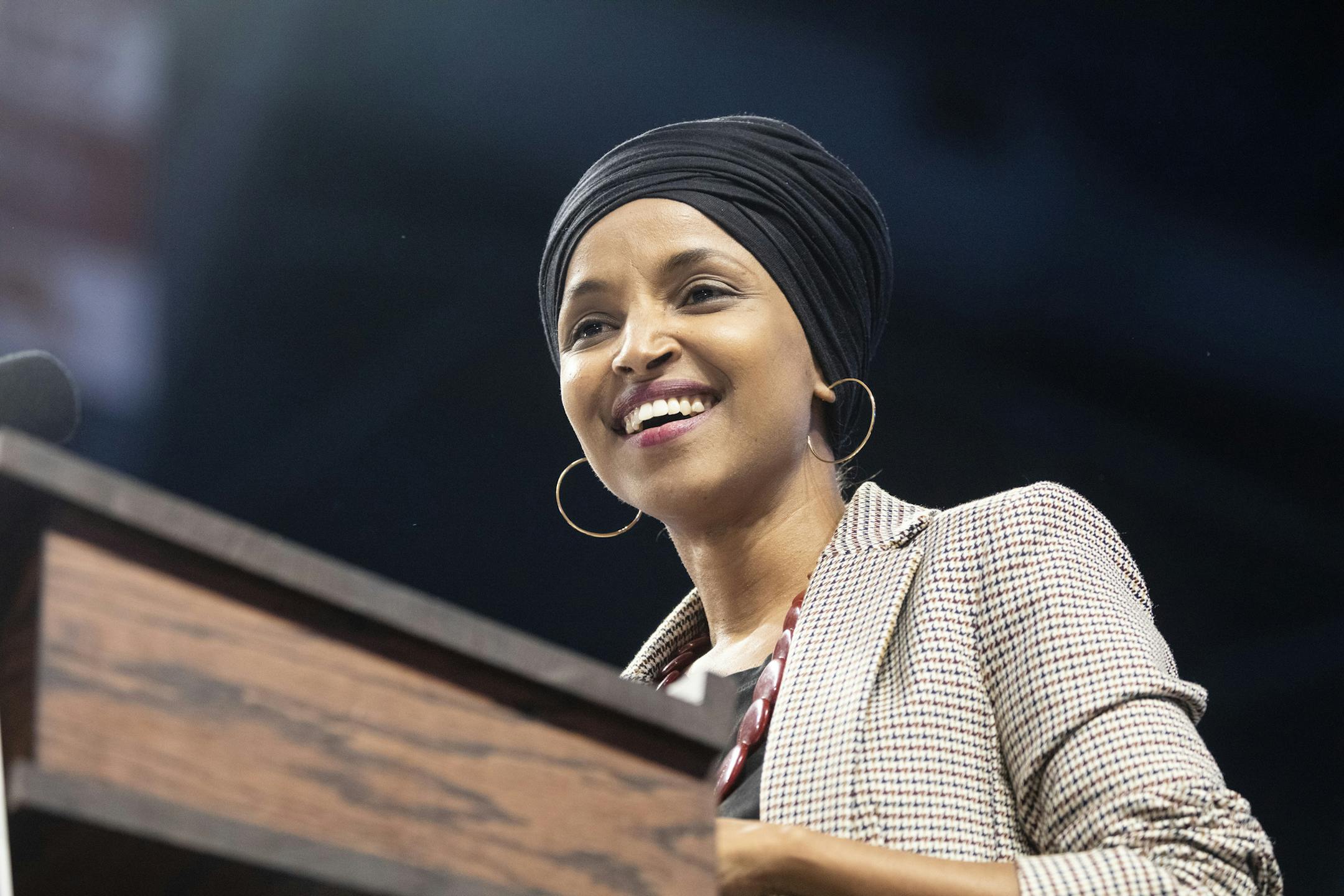
The Federal Election Commission has asked for more detail about thousands of donors to Minnesota U.S. Rep. Ilhan Omar who gave less than $200 each, a group of contributors who poured more than $800,000 into her re-election bid over a three-month period.
Agency staff sent a letter to the Minneapolis Democrat's campaign in late November, seeking more information about the large share of cash from individuals giving $200 or less — the maximum allowed before triggering donor disclosure requirements — in her latest quarterly filing. Such contributions accounted for more than 75% of the $1.1 million Omar reported raising from July to September.
The letter, sent Nov. 26, asked Omar to either amend the filing to identify any donors who exceeded the threshold or affirm that all $833,961.64 in unitemized contributions came from individuals who gave less than $200 over the course of the year. Failure to respond, the agency added, could result in an audit or enforcement action.
Omar's campaign responded in a letter sent last week, saying the committee is aware of the limits and "endeavors to fully comply" with the law. The response, signed by campaign treasurer Kate Wittenstein, adds that contribution tracking software used by the committee "flags and aggregates such contributions accordingly."
"If for any reason the Committee were to identify any clerical or other reporting errors the Committee will, of course, amend accordingly," Wittenstein wrote.
Politicians up and down the ballot are increasingly relying on donors who give just a few dollars at a time to boost their campaign accounts. Presidential candidates on both sides of the aisle point to small-dollar donor figures as a sign of grassroots support.
An earlier analysis from OpenSecrets.org ranked Omar as one of the House's top recipients of small-donor cash. Rep. Alexandria Ocasio-Cortez, another young Democrat, led the way at the time, with more than 80% of contributions from donors giving $200 or less.
The surge in small donations reported by Omar in the third quarter coincided with an especially high-profile period for the freshman congresswoman, including a clash with President Donald Trump over his tweet saying Omar, a refugee from Somalia, and three other women of color in Congress should "go back" to where they came from.


