

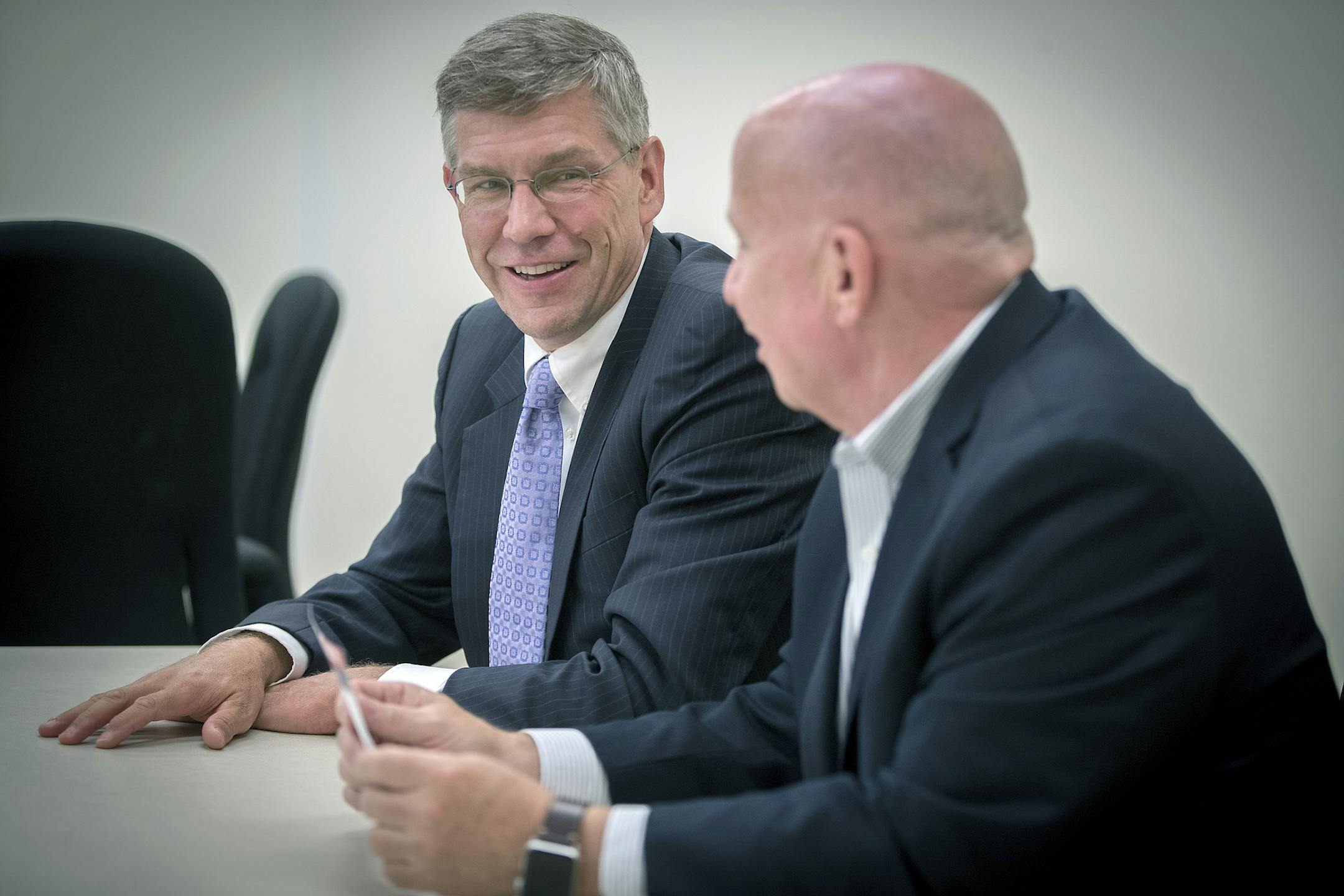
U.S. Rep. Erik Paulsen pitched an overhaul of the U.S. tax code Thursday at Best Buy headquarters, trying to build support for one of his own top priorities as Republicans in Washington struggle for major accomplishments.
Paulsen and colleague U.S. Rep. Kevin Brady of Texas, who chairs the powerful House Ways and Means Committee, said that they expect by the end of the year to send President Donald Trump a major tax bill that he will sign. It will lower tax rates for families and businesses, they said, and also make the tax code simpler.
Standing in their way: an army of lobbyists who will fight for every special deduction, exemption, credit and carve-out currently in law; political headwinds headed into next year's election; and Trump's flagging poll numbers and habit of repeatedly distracting from the Republican policy agenda.
Still, Paulsen said Republicans have a once-in-a-generation opportunity to make the tax system simpler while lowering rates.
"The key principles are building for growth. New jobs, higher wages," Paulsen said in an interview, which followed a closed-door meeting with Best Buy employees.
The Richfield-based company has much riding on tax reform and, along with other retailers including Target, helped to kill a House Republican proposal to tax goods imported into the U.S.
Paulsen, a former state legislator and Target business analyst, represents Minnesota's Third Congressional District, made up principally of western Twin Cities suburbs. He has much riding on the success of the tax reform effort: Despite cruising to an easy re-election in 2016, Democrat Hillary Clinton won his district by more than nine points. He already faces several challengers, including wealthy businessman and philanthropist Dean Phillips.
Although lower taxes and a simpler system sound appealing, they promise to be difficult to achieve — perhaps as difficult as the failed effort to repeal and replace Obamacare. Paulsen voted for the House Republicans' repeal-and-replace plan, only to see the effort stymied for now due to a lack of votes in the Republican-controlled U.S. Senate.


