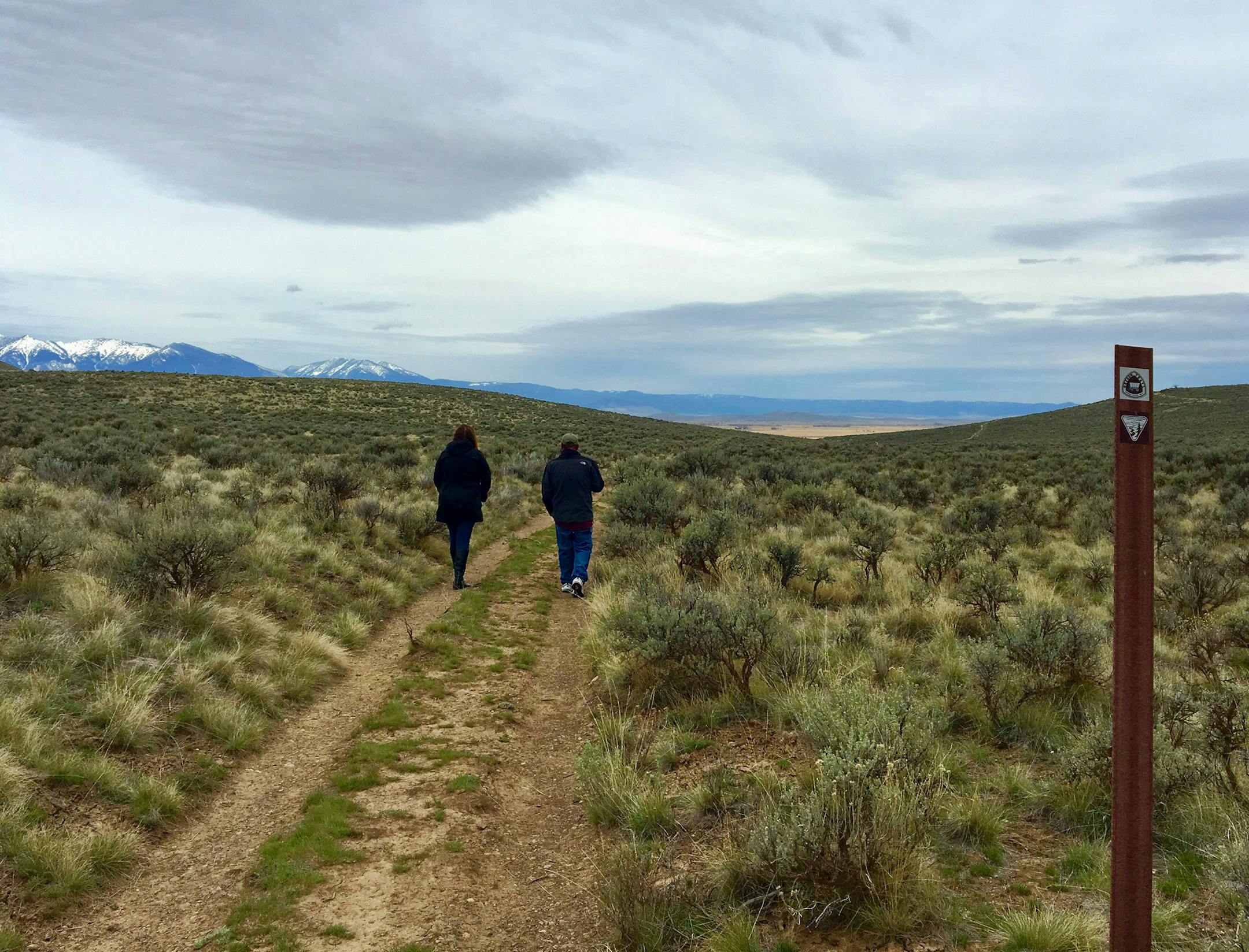
A cold wind carries the scent of sagebrush as it whips your face. Each step stirs dust on the dry path in this high desert plateau in eastern Oregon, where hundreds of thousands of American pioneers walked, changing the course of history.
A roadside sign beneath Flagstaff Hill points the way to this path, where you can walk in the actual ruts made during the mid-1800s by wagon trains on the Oregon Trail.
The vista is the same as that seen by the adventurers who made the 2,000-mile, six-month trek to the Oregon Territory. A tan-and-green valley covers the foreground, and the majestic and imposing forested Blue Mountains dominate the sky.
It's impossible to ignore the ghosts of pioneers who walked this way and helped shape America's destiny. With at least a month's journey still ahead at this point, did they appreciate the beauty of the mountain view? Or was it just stark evidence of another nearly impossible task to master?
This year, Oregon is marking the 175th anniversary of the trail, commemorating the first large, organized wagon train that left in late May of 1843 near Independence, Mo.
There were diary accounts made at the time and shortly thereafter, but still, details about that group vary widely. Some say as many as 1,000 people began the trek; others say it was between 500 and 700 people in 113 wagons, with as many as 5,000 head of livestock along for good measure.
What's clear is that the U.S. government encouraged people to make the journey, hoping that a greater population of Americans in the Oregon Territory would help wrest control of the disputed land from the British.
Politicians were determined to expand the United States "from one ocean to the other," but individuals were looking for a better life after economic woes hit during the 1830s, said Kelly Burns, supervisory park ranger at the National Historic Oregon Trail Interpretive Center near Baker City.