
Remembering NASA pioneer Katherine Johnson

She broke barriers for women, girls in math and science.

February 26, 2020 at 12:04AM
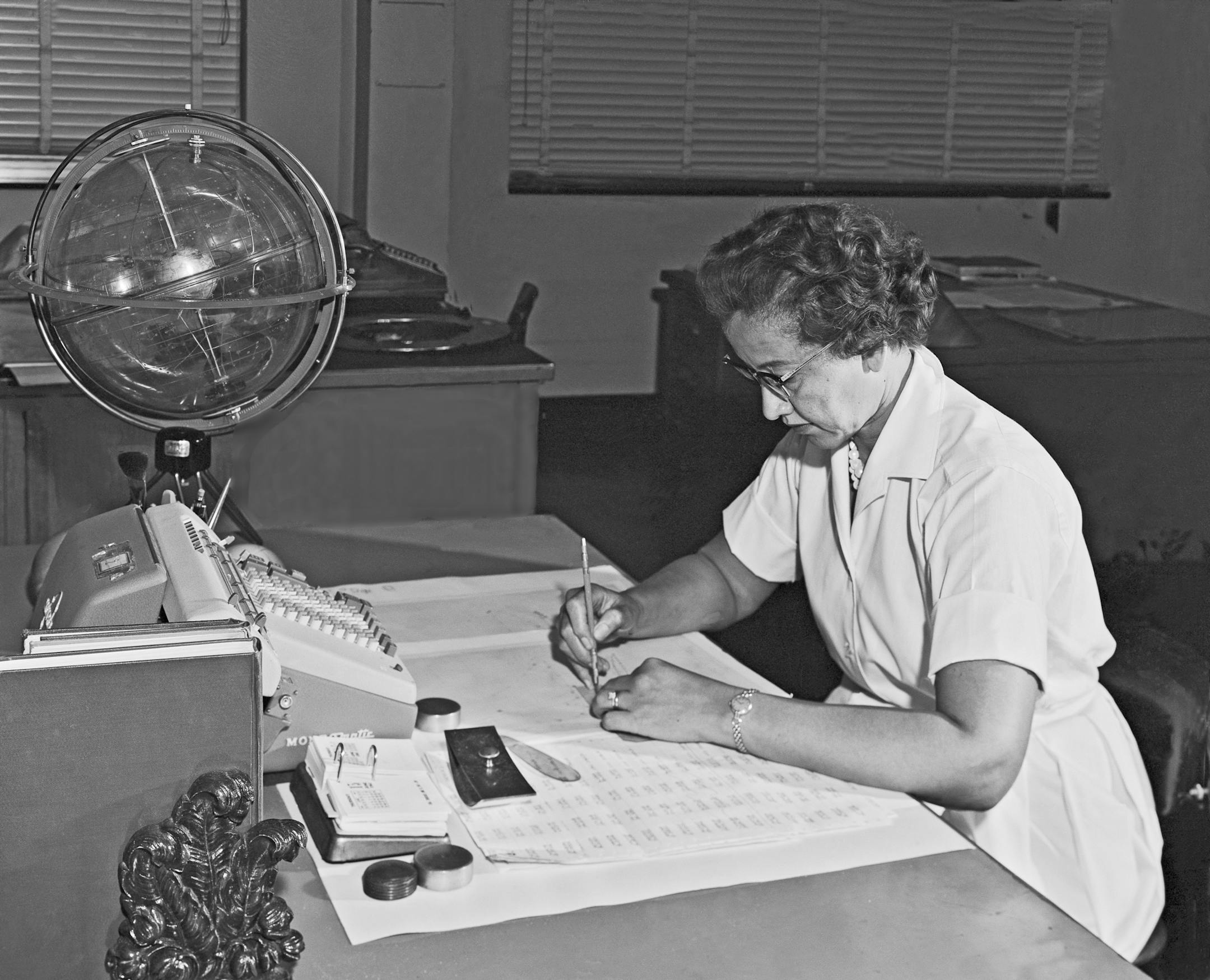
FILE -- In an undated photo provided by NASA, Katherine Johnson at her desk at NASA's Langley Research Center in Hampton, Va. Johnson, one of a group of black women mathematicians at NASA and its predecessor who were celebrated in the 2016 movie "Hidden Figures," died on Monday, Feb. 24, 2020, in Newport News, Va. She was 101. (NASA via The New York Times) -- FOR EDITORIAL USE ONLY
In an undated photo provided by NASA, Katherine Johnson at her desk at NASA's Langley Research Center in Hampton, Va. Johnson, one of a group of black women mathematicians at NASA and its predecessor who were celebrated in the 2016 movie "Hidden Figures," died on Monday, Feb. 24, 2020, in Newport News, Va. She was 101. (The Minnesota Star Tribune)

If women and girls in this country are making any progress on shattering the negative stereotypes of what they can do in mathematics and engineering, they have Katherine Johnson to thank for helping to pave the way.

Johnson was a pioneer at NASA and the National Advisory Committee for Aeronautics between 1930 and 1970. She, along with other black women, helped make critical calculations that launched our astronauts into orbit.

But as important, the challenges they fought through inspired generations of women, and especially women of color, who came after them to believe that they too could succeed.

We join a nation in mourning Johnson's death Monday at the age of 101. Hers was a life well-lived — an example of how talent, perseverance and hard work can benefit all mankind.

It's encouraging that the world finally came to recognize this important pioneer and her colleagues. Johnson, Christine Darden, Dorothy Vaughan and Mary Jackson were celebrated in the movie "Hidden Figures." Johnson was awarded the Presidential Medal of Freedom in 2015 from President Barack Obama. And all four were awarded the Congressional Gold Medal when President Donald Trump signed the Hidden Figures Act into law last year.

They've received such accolades because they represent the possibilities of overcoming obstacles and the potential for success in STEM fields for women and girls.

We know we still have a long way to go to improve the number of women in such jobs. Women are still underrepresented in STEM fields, with estimates of about a quarter of the workforce. The percentage of women of color is far less than that.

Studies show that gender biases and stereotypes that girls are not good in math present barriers that continue to block women's progress.

But these are lucrative fields that drive our economy and can help women earn more to potentially close the gender pay gap. Not to mention that women can contribute mightily to advancements in technology and engineering.

The Hidden Figures bill authored by U.S. Rep. Eddie Bernice Johnson of Dallas credited Katherine Johnson and other black women with contributing to World War II aircraft testing, supersonic flight, the Voyager probes and landing the first humans on the moon in 1969.

"The stories of these four women exemplify the experiences of hundreds of women who worked as computers, mathematicians and engineers at NACA beginning in the 1930s," the bill's text reads.

Who knows how many more Katherine Johnsons might be out there today. We have to do everything we can to find them and give them the opportunity to succeed.

FROM AN EDITORIAL IN THE DALLAS MORNING NEWS

about the writer

about the writer

Editorial, Dallas Morning News

More from Commentaries

See More
card image
Carlos Gonzalez/The Minnesota Star Tribune

It seems like we’re now heading in the right direction under the leadership of White House border czar Tom Homan.

Opinion | What happens after our shock fades?

card image
card image