

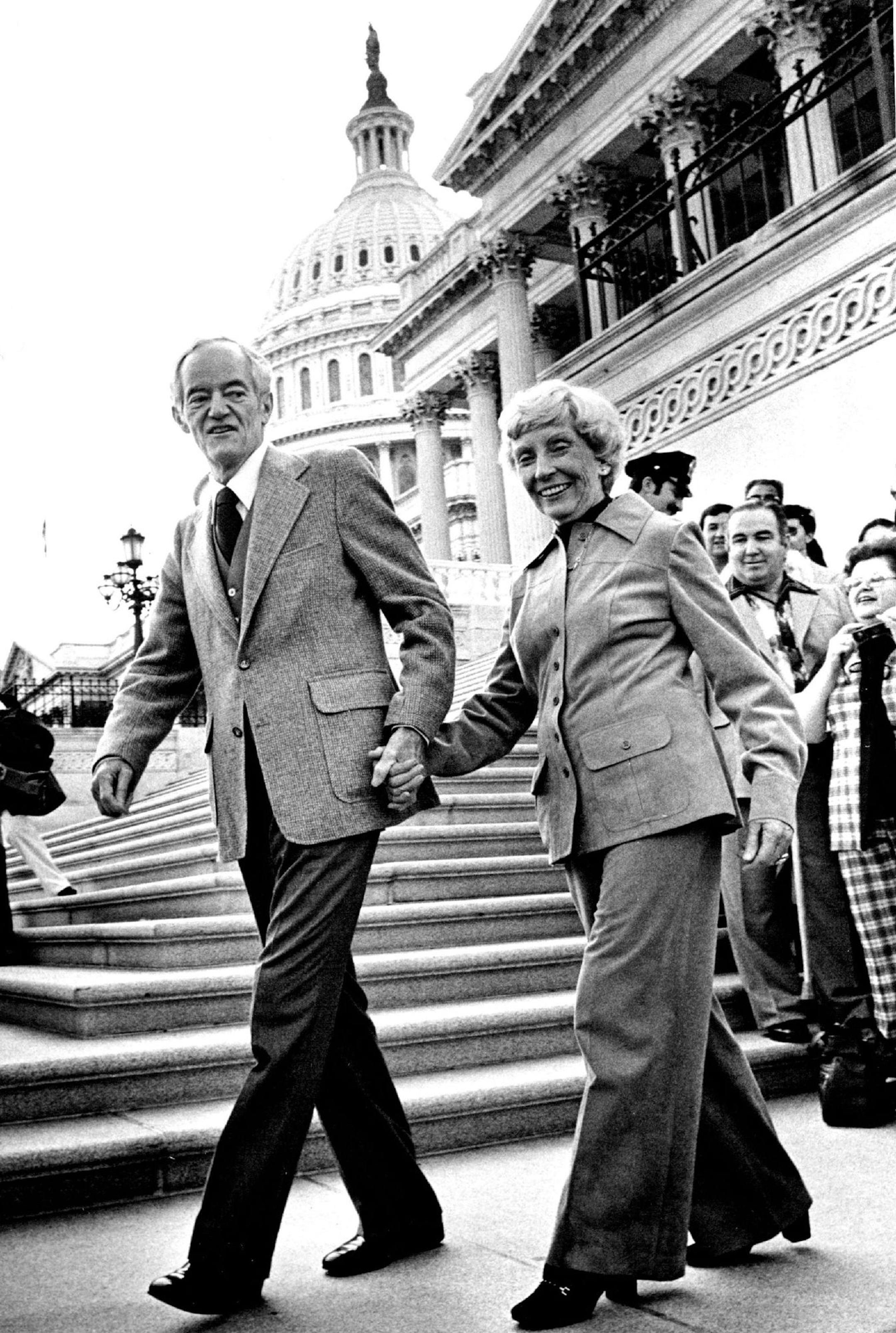
In the pit of the Great Depression, with purple dust clouds and grasshopper swarms descending on parched South Dakota, two newlyweds stood at a crossroads in the 1930s.
Unable to afford tuition, Hubert Humphrey had dropped out of the University of Minnesota to help his father keep his pharmacy afloat in Huron, S.D. They'd often accept hogs and chickens for payment from cash-strapped customers.
His father needed him and paid him $15 a week. But Muriel Buck, whom Humphrey married in 1936, had higher hopes. She insisted her husband return to college to further his political aspirations.
"Fortunately, in the tug of war over my loyalty Muriel won," Humphrey wrote in his 1976 autobiography. He credited "the strength of her determination" — plus the $675 Muriel had saved as an electric company bookkeeper — for pushing them down the fork in life's road that would include stops as Minneapolis mayor, U.S. senator and vice president.
Nearly 40 years ago, in January 1978, Hubert Humphrey died and Gov. Rudy Perpich appointed Muriel to fill his seat for the next 10 months. Suddenly, she stepped out from the shadow of her "happy warrior" husband to become Minnesota's first female U.S. senator and the only woman in the chamber at the time.
"Half of what we credit Hubert for we should credit Muriel, because they were a team from beginning to end," former Vice President Walter Mondale said when Muriel died in 1998 at 86.
In an early interview in 1960, when Humphrey lost his first Democratic presidential run to John Kennedy, Muriel said: "I enjoy campaigning so much I think I should have my head examined. Hubert and I both get a lift out of meeting people."
She logged more than 650,000 miles campaigning for her husband over the years while raising their four children and shuttling between Washington, D.C., and Minnesota. She often sewed her own dresses and was an accomplished pianist and water-skier.


