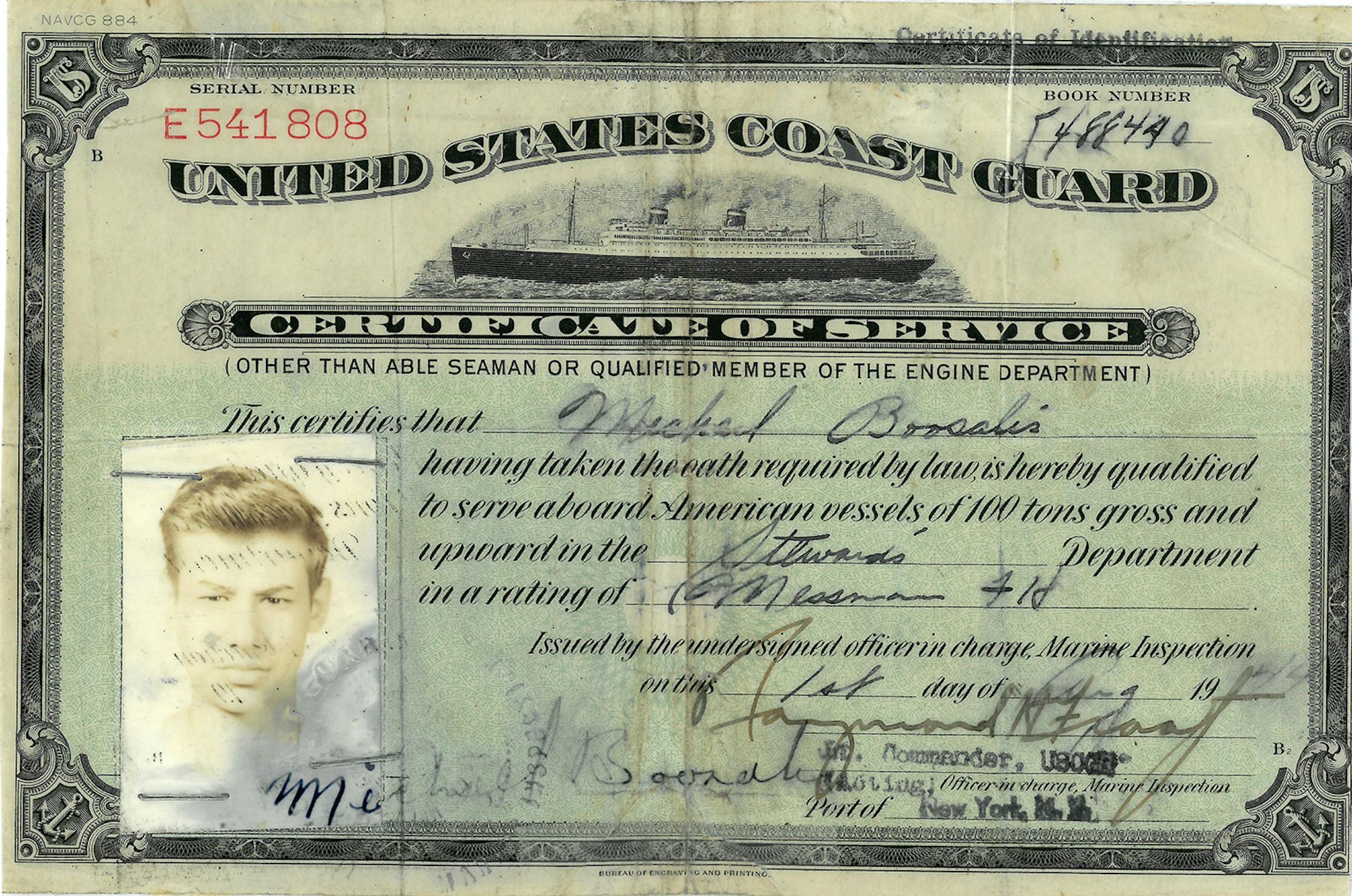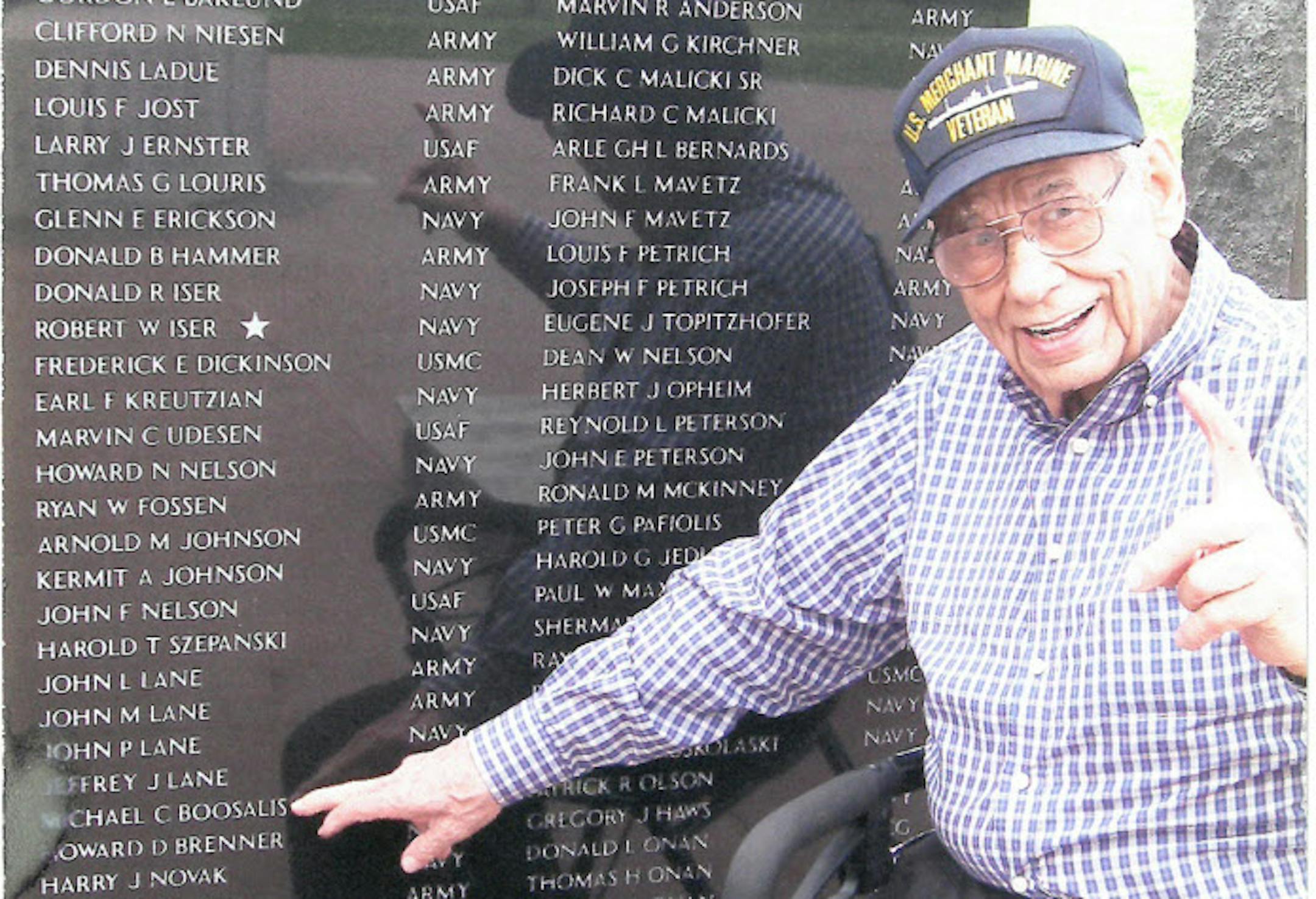
The life of Michael Chris Boosalis will be celebrated Sunday at a memorial service at St. Mary’s Greek Orthodox Church in Minneapolis. The date honors a tradition of gathering on the Sunday closest to the 40th day after a loved one’s death.
But anyone who knew “Big Boo,” who died in March, knows how tickled he’d be that his family will gather on what is also the eve of Memorial Day, a time to honor those who died in service to our country.
While Boosalis lived 88 rich years, I knew him as a man whose passion was his military service during World War II. That service began at age 16, when he snuck out of his house to enlist, before his “old man” yanked him out of line. Four months later, President Franklin Roosevelt legalized military service at age 16½, and Boosalis was back in line.
Now that he’s gone, I wonder who will tell the special, and still largely ignored, stories of the branch in which he served from 1944 to 1947: the Merchant Marine.
“They influenced my life forever,” he wrote in his self-penned obituary, titled “Duty, Honor, Country.”
“It was a privilege to get to meet, to know and to serve with selfless young men with guts.”
Approximately 240,000 men, and a handful of women, served in the Merchant Marine during World War II. They sailed the cargo ships that delivered supplies and personnel all over the world for U.S. and Allied forces —bombs and gasoline, guns and ammunition, food, planes, medicine and millions of barrels of oil.
More than 9,000 of their members died in battle. Another 12,000 were wounded. Despite these losses, detractors viewed them as “draft dodgers” or lesser fighters because some had health limitations, such as asthma or colorblindness, that prohibited them from serving in other branches.