

A political sea change at the State Capitol has emboldened conservative religious groups, who believe they'll have the support to get on the 2012 ballot a constitutional amendment that would define marriage as a union between a man and woman. A bill to end taxpayer-funded abortions is also expected to get more traction now that Republicans control both houses of the Legislature.
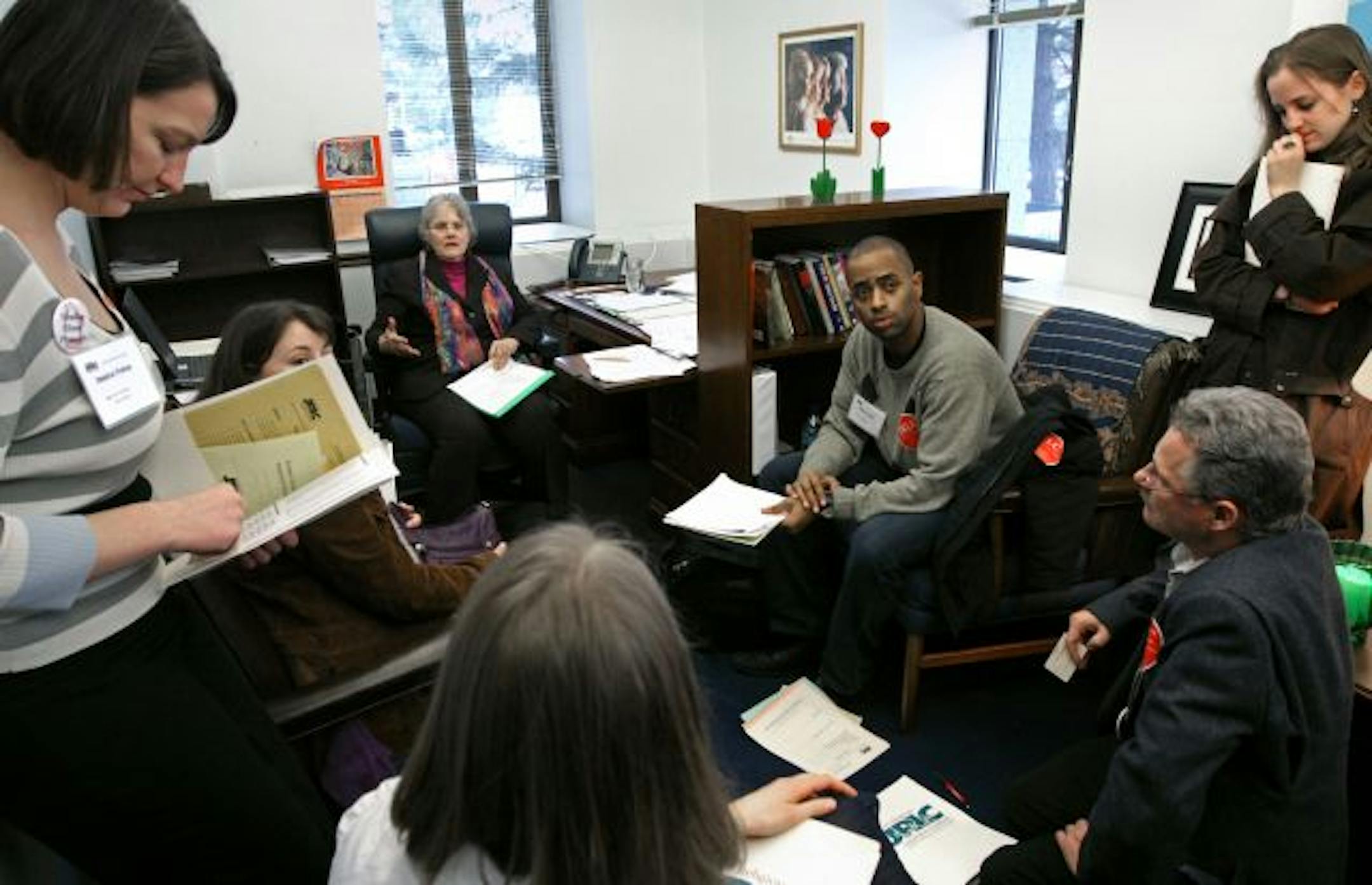
But on Thursday, another religious group was in St. Paul, pressing a different agenda. Nearly 900 members of one of Minnesota's largest religious advocacy groups, the Joint Religious Legislative Coalition, observed the group's annual Day on the Hill to lobby legislators on issues like universal health care, increasing the minimum wage and other initiatives dealing with poverty and vulnerable groups.
For both sides, the state's $6.2 billion budget deficit will be a factor.
"I think clearly the budget is the top priority," said Tom Prichard, president of the Christian-based Minnesota Family Council, which favors the amendment banning gay marriage. "We've argued there will also be time to address other issues. I don't think it precludes dealing with the marriage amendment or other issues."
Brian Rusche, executive director of the Joint Religious Legislative Coalition, is encouraged by Gov. Mark Dayton's budget calling for a $4 billion tax increase on the state's wealthiest 5 percent. But he criticized the $775 million in cuts for health and welfare programs and stressed that some 7,200 adults would lose MinnesotaCare coverage, state-subsidized health care for the working poor.
He's concerned that Republican opposition to the tax may lead to more cuts in programs that help the needy. "We will do what we can to help hold [Dayton's] position," Rusche said.
Republican response to base
Kathryn Pearson, a political science professor at the University of Minnesota, said Republicans could make headway on some social issues this session, but there are some risks.


