

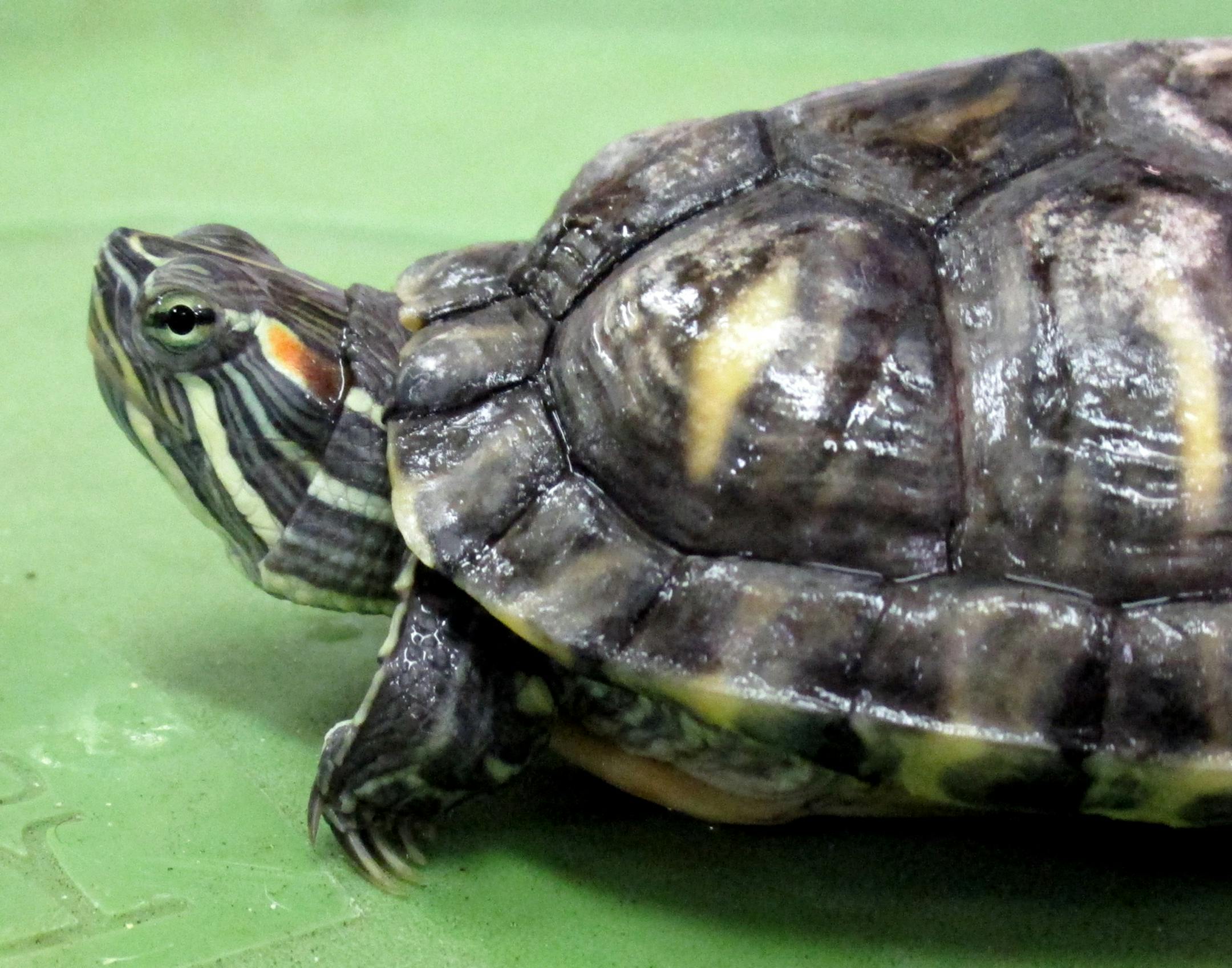
That cute pet turtle in the home or pet-store terrarium — the one with the distinctive red stripe darting back behind its eyes — has crawled into the ranks of creatures that aren't welcome in state waters.
Like the Asian carp and zebra mussels, the red-eared slider is not native to Minnesota and has come to pose a threat to species that are, the Minnesota Department of Natural Resources said Tuesday.
"They may compete with our native turtles, including the state-listed [threatened] Blanding's turtle, for resources such as food, nesting sites and optimal basking areas," said DNR nongame wildlife biologist Christopher Smith.
The red-eared slider is probably the most common turtle sold in pet shops nationwide, sometimes as a walnut-sized hatchling. The "slider" in the name refers to the turtle's ability to slide easily and quickly off rocks or logs when threatened by predators.
In captivity, the young turtles quickly grow to between 6 inches and a foot long, and eventually require a larger space to roam, Smith said. The result, he said, is that well-meaning pet owners decide to set them free.
That can cause a host of problems. The pet turtles, or even native turtles taken in temporarily as pets, can harbor diseases like salmonella or parasites that can spread to wild turtle populations, jeopardizing entire populations in an area, Smith said.
The sliders may also interbreed with native turtles, producing offspring with mixed genes that may not be hardy enough to survive winters.
John Moriarty, senior manager for wildlife at Three Rivers Park District, said that as the climate changes with warmer winters, red-eared sliders will stand a better chance of surviving in Minnesota. Already there are three known populations living year-round in southeastern Minnesota, said Moriarty, co-author of "Amphibians and Reptiles Native to Minnesota."


