

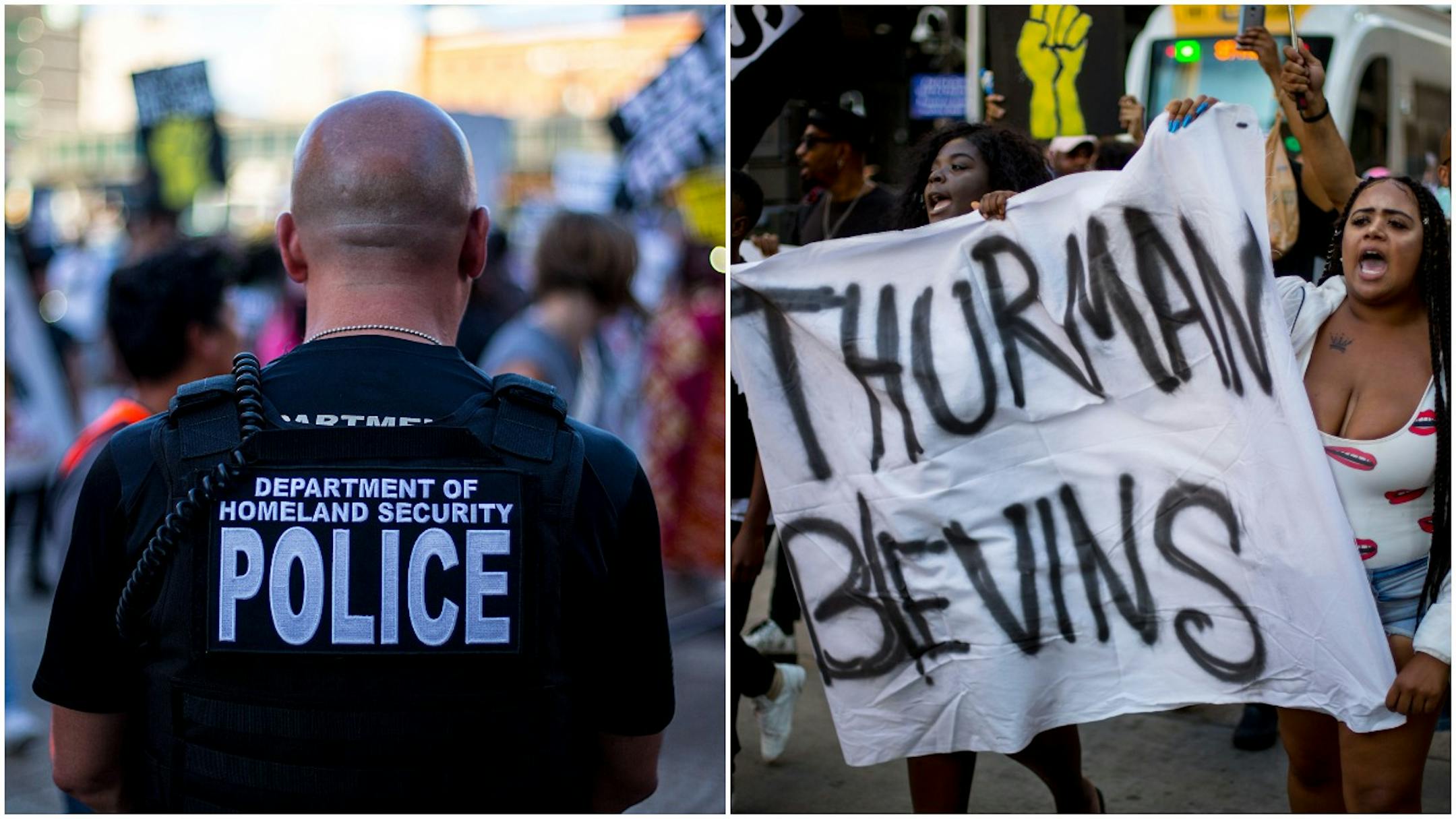
The police body-camera video showing the final moments of Thurman Blevins' life was supposed to provide clarity and answers surrounding his death.
Instead, it has reignited the debate about how police interact with minority residents and whether the two officers who shot the 31-year-old armed black man in north Minneapolis earlier this summer did everything they could to keep a tense encounter from turning deadly.
Authorities who viewed the Blevins footage say the officers acted appropriately when responding to a 911 call and found someone matching the description of an armed and intoxicated man reportedly firing his gun into the air. Once confronted by the police, Blevins led the two officers on a foot chase into an alley despite being told repeatedly to stop and put up his hands. The footage appeared to show Blevins pulling the gun from his pocket before police shot him.
"The police didn't create this situation, they didn't even have control of this situation," said Thomas Aveni, executive director of the Police Studies Council based in New Hampshire, adding that the vast majority of confrontations between police and citizens end peacefully. "When this guy took off running, de-escalation went out the window."
Justin Terrell, executive director of the Council for Minnesotans of African Heritage, said that the officers escalated an already strained situation by leaping out of their SUV with guns drawn.
Blevins "had a gun, but it's my understanding that Fourth Precinct officers have taken hundreds of guns off the street this year, so they know how to do it," Terrell said.
The debate comes amid the anticipated release of body camera footage after St. Paul police shot and killed William "Billy" Hughes, a member of the White Earth Nation, on Aug. 5.
The Blevins incident is the latest in a series of high-profile police shootings of black men across the country that has put a greater focus on police use of force.


