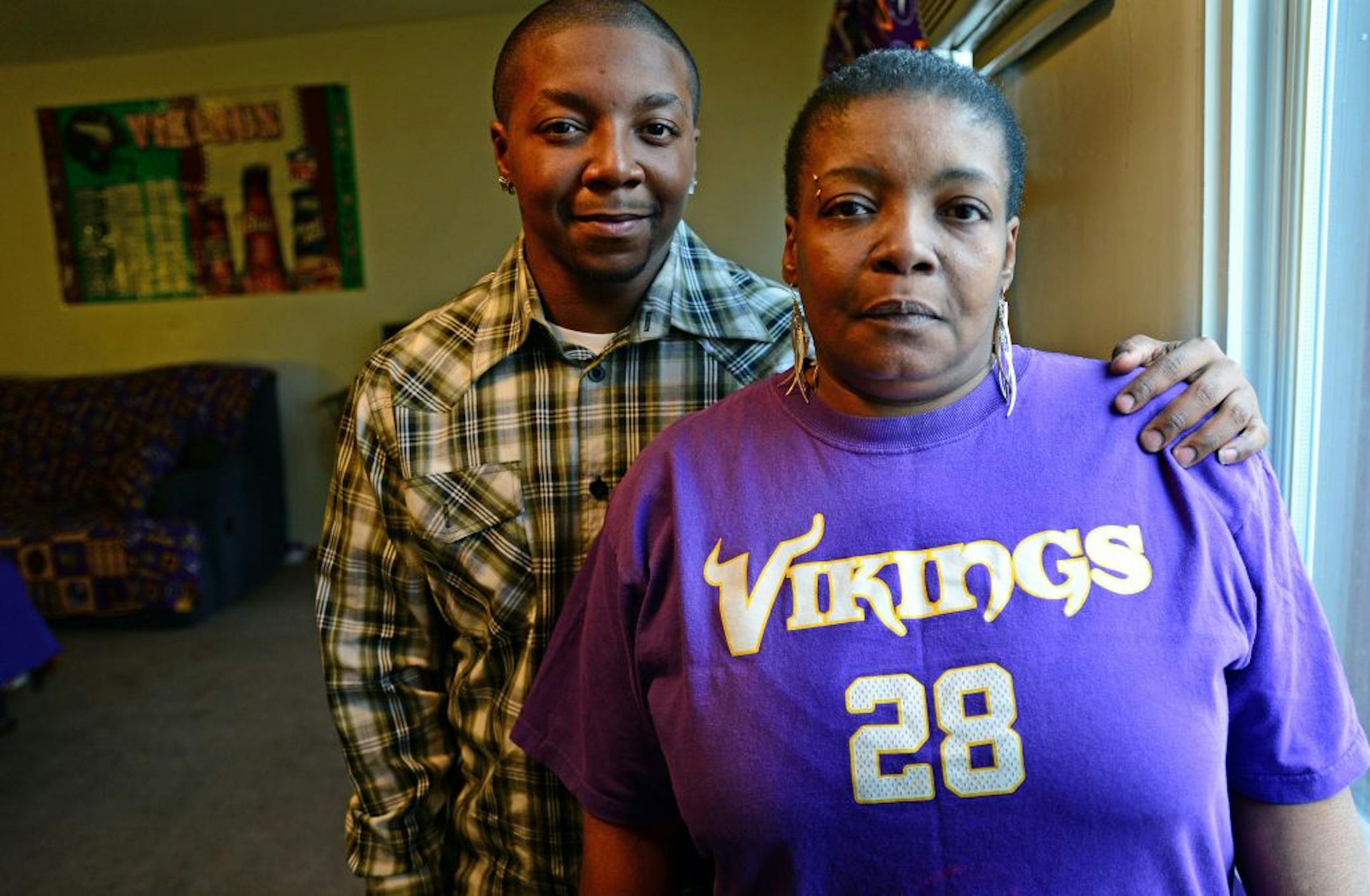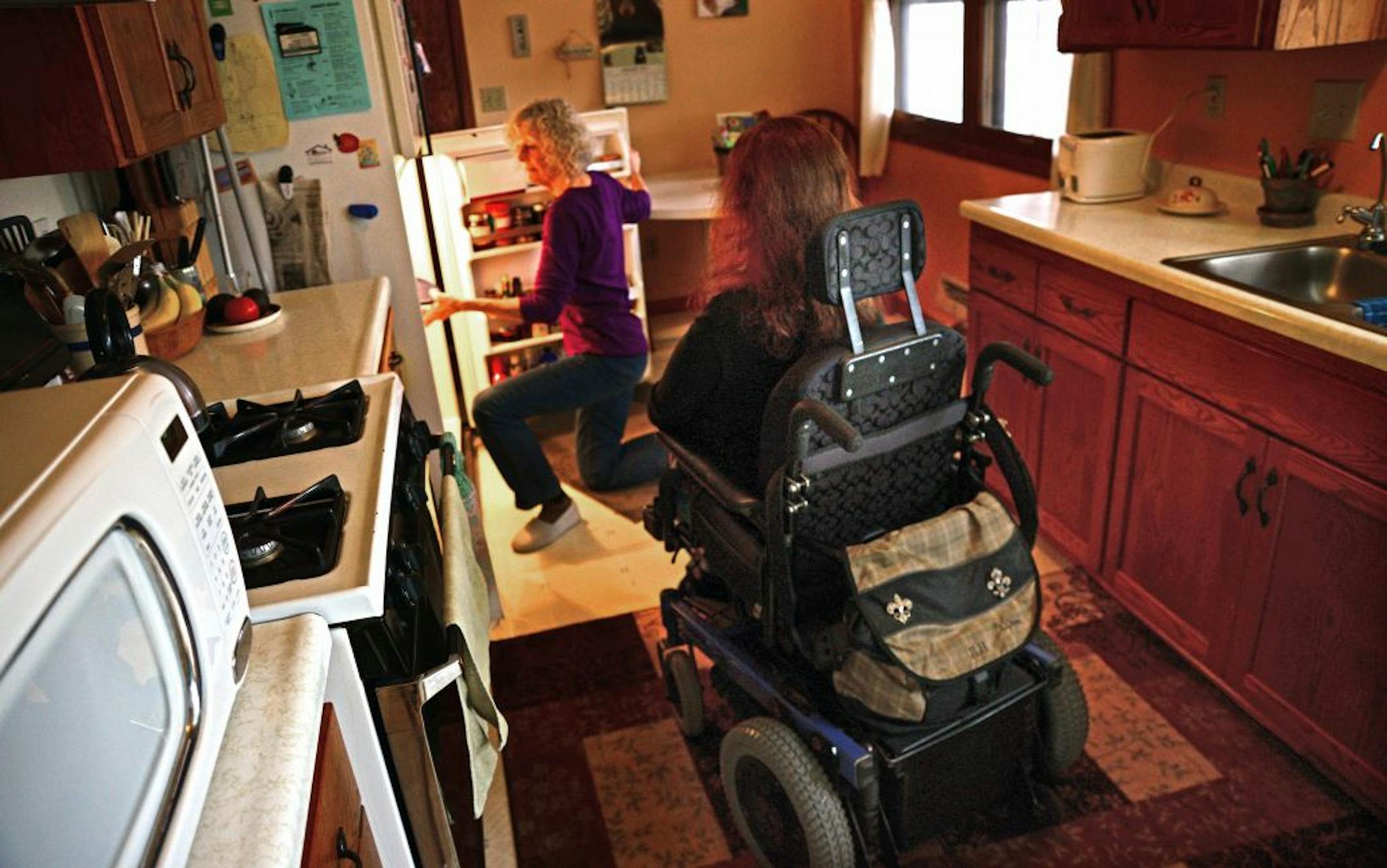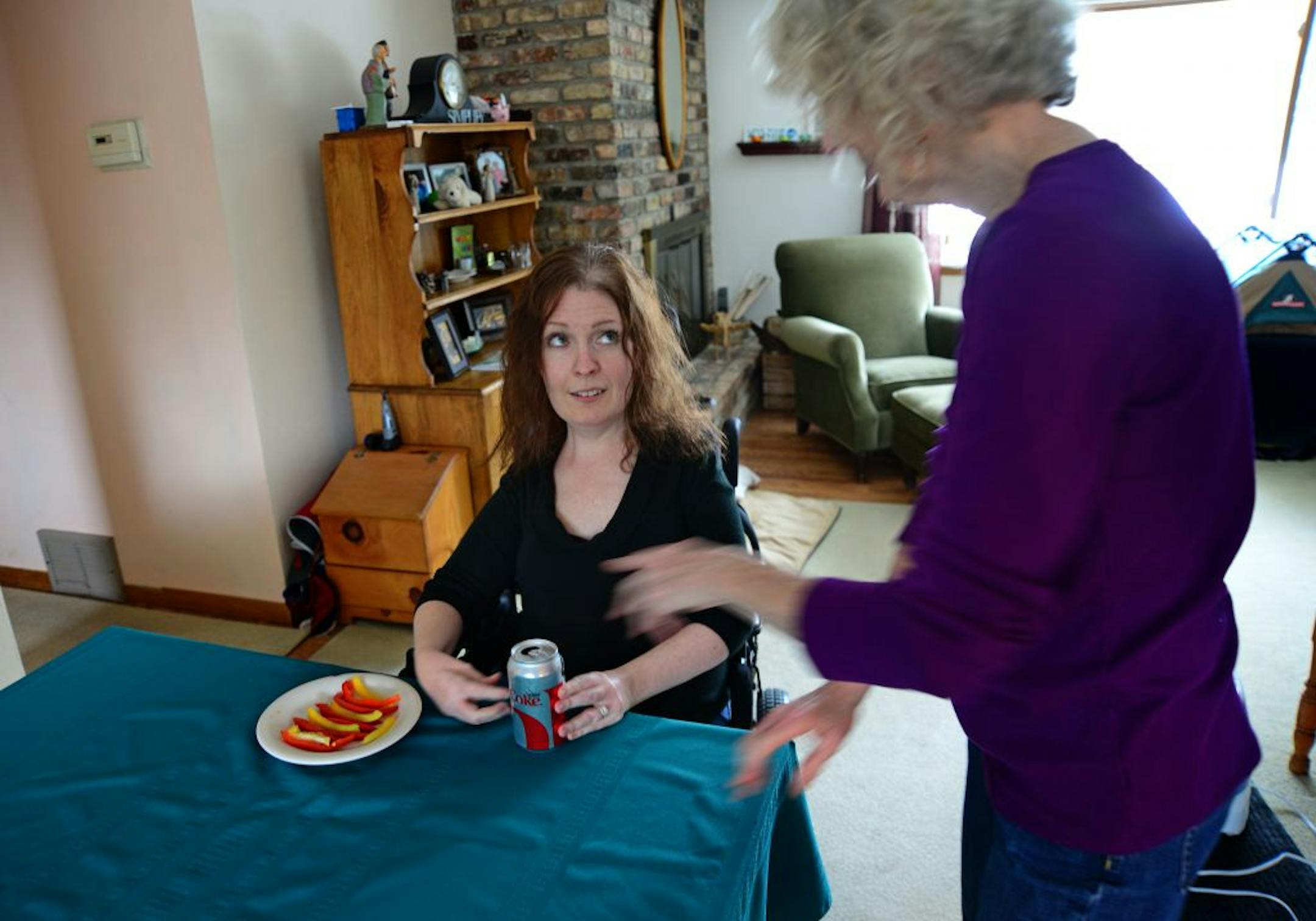
Mary Combs' average day caring for her only brother includes laundry, a Wal-Mart run and maybe a little cleaning of his northeast Minneapolis home. There's also the tube feedings, bathing and grooming. And the middle-of-the-night calls in case of emergencies. And the struggle of separating her duties from her own heartbreak as she watches him grow weaker.
Combs, 41, left behind a good-paying career in St. Louis to work as a personal care assistant for Billy, who has amyotrophic lateral sclerosis (ALS). She's paid about $11 an hour via a federal-state Medicaid program.
When the Legislature in 2011 passed a cost-saving amendment that would cut her wages by 20 percent simply because she's related to Billy, she was stunned.
"We're family and we care. We go the extra mile," she said. "I didn't really understand it."
More than 6,000 caregivers for the vulnerable or disabled and their relative clients cheered last month when the Minnesota Court of Appeals deemed the legislation unconstitutional, and exhaled last week when the Department of Human Services (DHS) decided not to appeal to the Minnesota Supreme Court. The cuts would have taken effect July 1, but many were already affected when their wages were pre-emptively cut by agencies that employed them. That back pay will be restored.
"It wasn't a very well thought-out stopgap measure," said David Bradley Olsen, an attorney who sued the DHS on behalf of eight home-care agencies and nine relative caregivers. "The Legislature didn't even determine that the value of their care was different. They assumed that relatives had some kind of moral bond and they would continue to work whether they were paid less or not."
DHS Commissioner Lucinda Jesson backed the decision not to appeal.
"In an ideal world we would have never done this," she said. "We had to cut about a billion dollars from our projected Health and Human Services budget in 2011 and we had to make a lot of difficult decisions. This is one that I'm glad we're able to move beyond."