

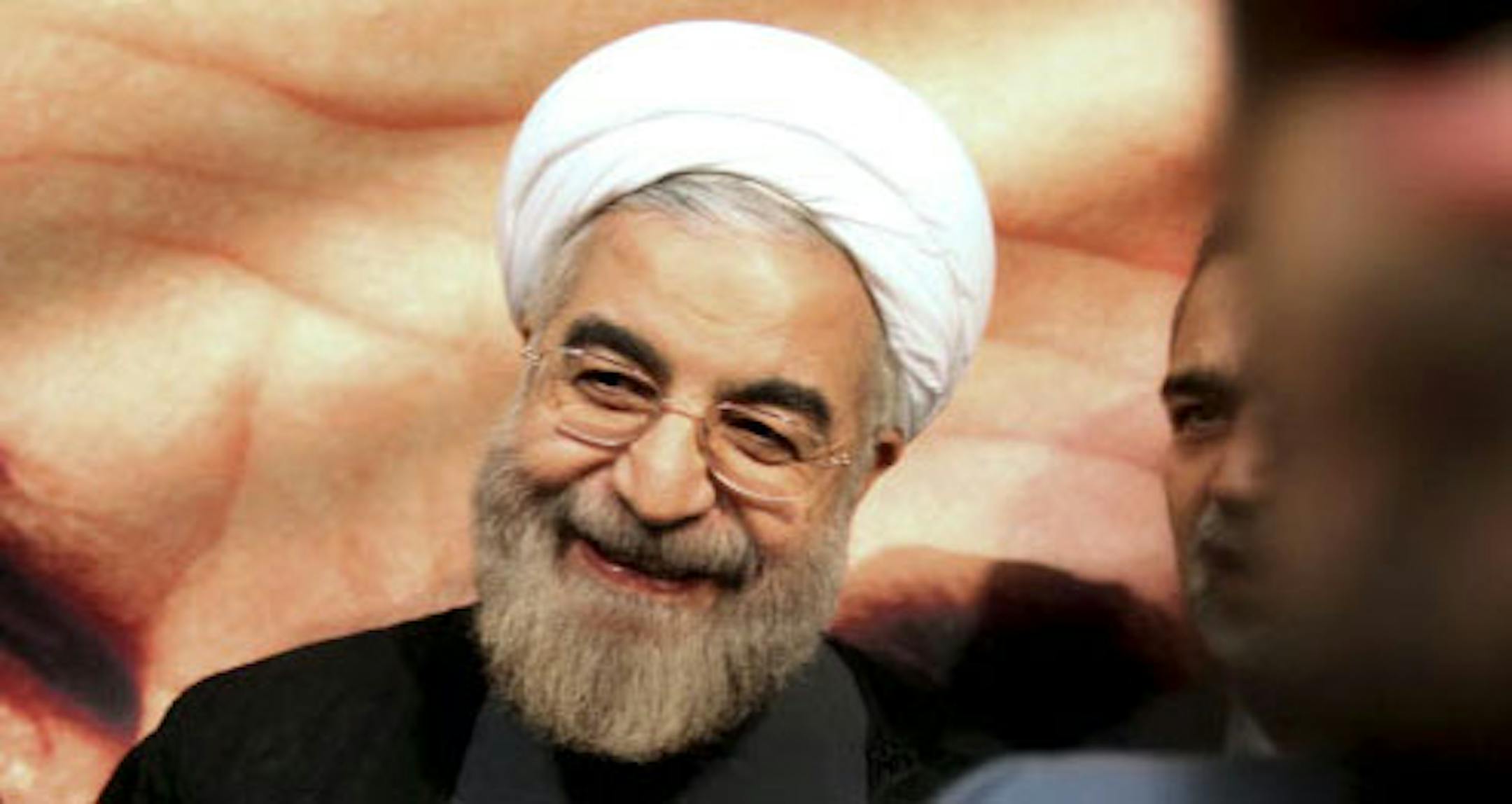
The election of Hasan Rowhani as president of Iran creates a chance for a diplomatic solution to the standoff over that country's potential nuclear-weapons program. But a diplomatic solution is far from a sure thing.
Perhaps the biggest surprise of Rowhani's election is that so many seem surprised. After all, he was widely perceived as the most moderate candidate of the six who were approved by the theocracy that rules Iran. And Iranians evidently elected an even more progressive presidential candidate in 2009 — only to have the election stolen in favor of outgoing President Mahmoud Ahmadinejad. So it seems logical that voters would opt for "the diplomat sheik," as Rowhani is nicknamed in Iran.
And these voters have every reason to be more motivated than four years ago. The economy is in shambles, and everyday life has dramatically deteriorated for ordinary Iranians, due in no small part to particularly punishing sanctions applied by nations pressuring Iran to verifiably forsake the development of nuclear weapons.
The sanctions didn't happen easily. It took deft diplomacy by the Obama administration, which convinced an array of nations that the best way to avoid a military confrontation was through concerted economic pressure.
President Obama would not have been so successful without internationally strategic initial diplomatic outreach to Iran that drew criticism at home. Although he was rebuffed, the approach buffeted Obama's credentials with other leaders, which was essential for success.
"It was only by being a little more forthright in the beginning that Obama was able to build an international coalition that resulted in all of these sanctions, and quite a bit of unity, which led to what we are seeing today," Barbara Slavin, a senior fellow at the Atlantic Council's South Asia Center, told an editorial writer.
It's important to discern what we are — and aren't — seeing today.
Many Iranians are jubilant over the possibility that their government may modulate its behavior, end the crippling sanctions and ease its isolation.


