
Opinion | Teaching: Oh, the humanity, part 2

A continuation of a commentary published near my retirement from the profession in 2014.

July 27, 2025 at 12:59PM
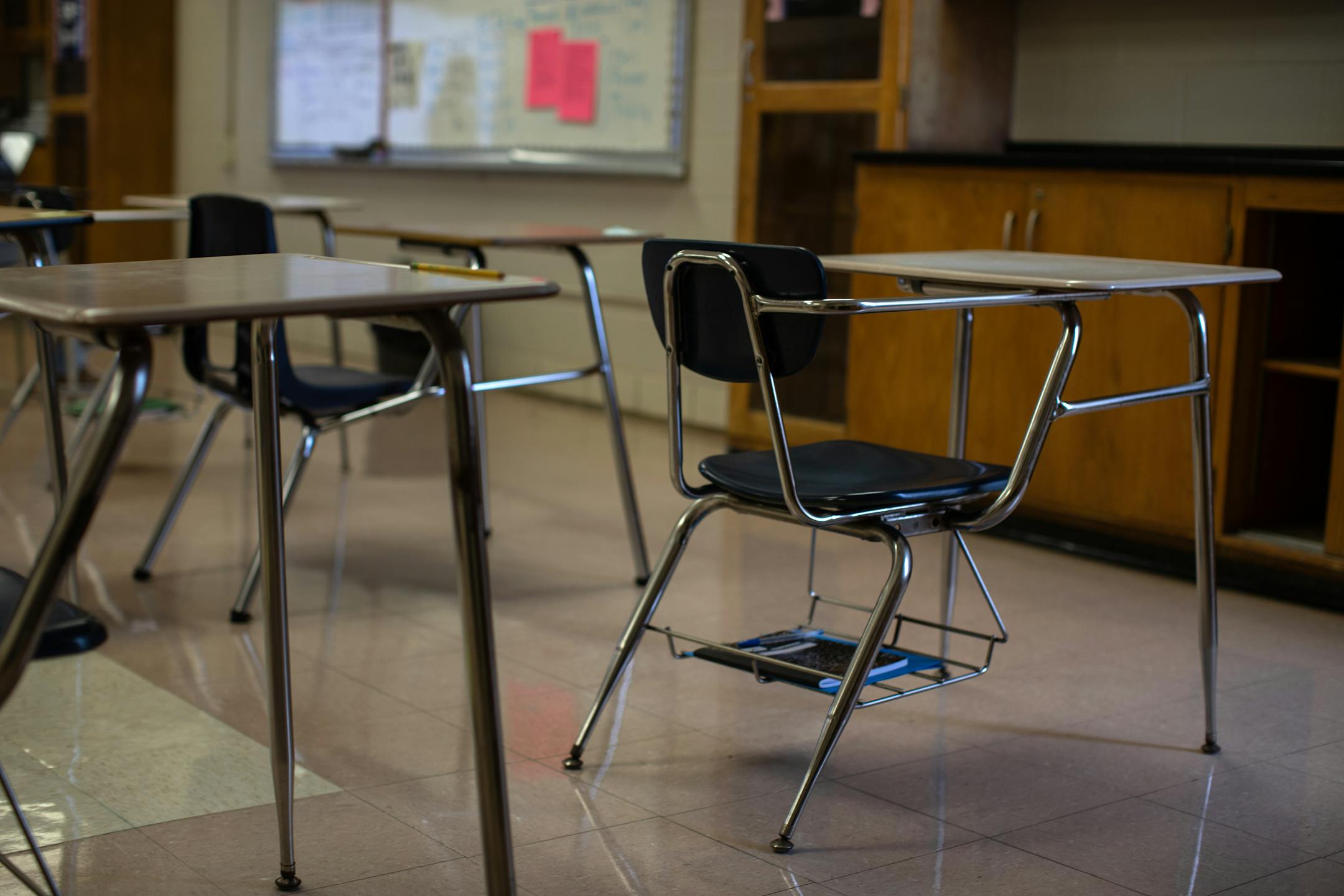
A classroom at a high school in Victoria, Texas, on March 18, 2024.
Contributor Dick Schwartz shares a few memories from his 41 years of teaching. (KAYLEE GREENLEE BEAL/The New York Times)

Opinion editor’s note: Strib Voices publishes a mix of guest commentaries online and in print each day. To contribute, click here.

•••

Star Tribune opinion editor’s note: Readers of this publication may know the name of Dick Schwartz from the many holiday-themed recollections of his that we’ve published over the years. In 2014, he also wrote a commentary that began as follows: “This June, I will retire from teaching. Here are some moments from those 41 years. Not the ‘big moments,’ necessarily. Well, maybe they were … .”

Eleven years later, he has a few more memories to share.

•••

Once: The fiery contract negotiations between the custodians’ union and school district folks aren’t going well. My 10th-graders worry that some of “our janitors” might lose their jobs. I say, “OK, write letters to the editor.” They do. The Strib publishes one: a wise, passionate letter submitted by a normally demure sophomore. She receives a standing ovation from the class. That morning, Mr. Gonzalez, our head custodian, brings his crew to the classroom. They, too, cheer for her. Each one shakes her hand. Other kids read their unpublished letters to them. The crew, some teary-eyed, nod in agreement. More importantly, Mr. Gonzalez and his crew humanize their letters by explaining to the students why they love their jobs.

Once: My junior classes are reading “The Adventures of Huckleberry Finn.” About the same time, Auburn University English Professor Alan Gibben has edited the novel by substituting all of the 216 “N-words” with “slave.” Some students applaud the newly published edition (NewSouth Press, 2012). Others consider it a sacrilege, even censorship. The debate rages until one exasperated student suggests, “Let’s call this professor dude.” I say, “Good luck with that, kids, but …”

They do. The next week, they speak to the professor dude via “teleconferencing” (as we called it back then). Gibben stands by his arguments for the massive edit. Afterward, the kids can’t believe: 1) that “a real professor” has taken time to speak with them, and 2) the respectful way in which he has, void of any patronizing and condescension.

Once: My mostly liberal-minded seniors were often at odds with a then-frequent commentary contributor to the Strib opinion pages, Katherine Kersten. One day, Kersten graciously agrees to meet with the students about her perspective on several global issues and, most important at the moment to the students, a current local hubbub concerning the school principal’s banning the wearing of tank tops in school. The Star Tribune has just published Kersten’s commentary about it, followed by many (many) letters to the editor in response. Her take-no-prisoners, biting tone (she calls girls “lemmings” and “desperately conformist”) has them (and boys, too) incensed, itching to butt heads with her.

Kersten stands her ground, of course. But what the students didn’t expect is how she listens carefully, counterpoints patiently and even sometimes agrees with them. When the hour is over, Kersten takes me aside and asks for more time with the students. In the end, there’s still little agreement and resolution. But much more enlightenment — and respect — on both sides.

“She’s very nice. I liked her!” is a student’s assessment. “These students are sharp” is Kersten’s.

Many times: My school’s seniors attended Minneapolis’ Westminster Presbyterian Church-sponsored Town Hall Forum, there to witness, listen to and often meet notables like: Tom Brokaw, Walter Mondale, Salman Rushdie, Michael Feinstein, Branford Marsalis, David Brooks, Tom Friedman, Cory Booker and Caroline Kennedy. One time, several students join the extremely long line to meet the legendary Pulitzer Prize-winning historian David Halberstam following his talk entitled “America Then and Now.” When it’s their turn, this happens:

Seeing them, Halberstam immediately stands and shakes their hands. Then he chats with them, at length. You can tell he’s genuinely interested in hearing about their visions of America past and present. Most obvious is his interest in knowing if and how they are learning to discern truths over lies — especially in history and government. He listens more than he speaks. That says it all.

When Halberstam dies a year later in a car wreck, my students are devastated.

Once: Jake Sullivan, deputy chief of staff to Secretary Hillary Clinton at the State Department (who later will become national security adviser to President Joe Biden), is lecturing at the University of Minnesota’s Humphrey Institute. I’ve taken my students to hear him in part because he’s an alumnus of their high school. After his lecture, Sullivan introduces himself to the group. They forgo international politics talk and instead swap stories about teachers they both had and have, war stories about their struggles completing the (in)famous right-of-passage 5,000-word “Extended Essay” required of all high school International Baccalaureate Program Diploma candidates, the ongoing trials and tribulations of their school’s football and soccer teams, and whispered somethings about their prom nights.

Once: The director of the University of Minnesota Medical School’s Anatomy Bequest Program speaks to my students about the acquisition and use of cadavers. He awes the students with his grace and professional frankness and invites them to attend what turns out to be a life lesson on the spirit of humankind goodness: It’s called the Anatomy Bequest Service of Gratitude Program in which: “Faculty, staff, and students of the University of Minnesota’s Academic Health Center host a service of gratitude to recognize and honor the individuals who have gifted their remains to the University for the advancement of medical science. … Donors are honored through music, poetry and dance pieces, selected and performed by the health science students. The service recognizes all donors who have made a gift of their remains … .”

Many family and friends of those being honored warmly thank our students for attending.

Once: As director of a junior high production of “Romeo and Juliet,” I forbid our Romeo and Juliet from kissing in the clandestine marriage vows ceremony scene. Neither our Romeo nor Juliet expresses interest in the real thing. “Ewww,” moans one of them, loud enough to make sure I hear. To provide at least some titillation for the audience just before the Big Moment, the student director instructs our Friar Lawence (Shakespeare’s mastermind of the harebrained, star-crossed scheme to reconcile the feuding Capulet and Montague families) to unfurl in front of our “lovers’” faces a parchment fashioned from crêpe paper representing the “marriage contract.” Legend has it, that was a well-planned ruse. The Kiss happened behind the crêpe paper.

Bravo to the scheming cast, who knew better than their teacher that art and life are often — and should be — the same.

And bravo to students and grown-ups — past, present and upcoming — who love learning from each other.

Dick Schwartz taught at Southwest High School in Minneapolis.

about the writer

about the writer

Dick Schwartz

More from Commentaries

See More
card image
Leila Navidi/The Minnesota Star Tribune

In government leadership, young people need to be ready to accept the torch, but previous generations can’t slow down their leg, or delay the pass.

card image
card image