

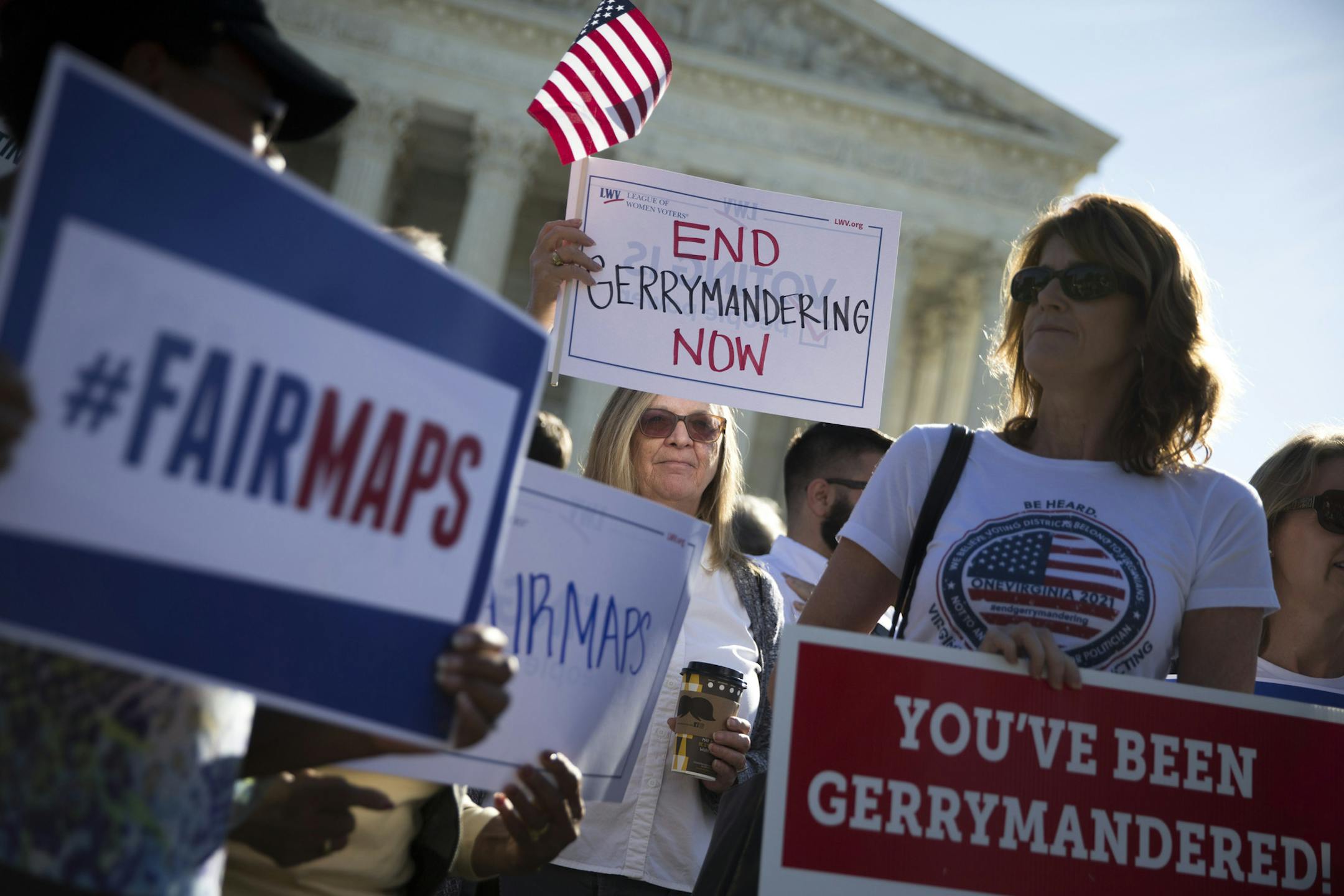
Last week a case was argued before the U.S. Supreme Court. It will be decided in June. The case goes directly to the heart of the problem that is destroying our political system. If it is decided correctly, that problem can be largely overcome.
But nobody on the court seems to have seen that. Neither did the attorneys on either side, for that matter. It's almost beyond belief. It's as if Roe vs. Wade had been argued with nobody mentioning abortion.
The case is from Wisconsin, and it deals with the fairness of drawing district lines for its Legislature. It is claimed that the lines were drawn to give unfair advantage to one party, the Republicans.
They probably were, but that's not the issue — not the big issue, not the real issue. What the lawyers and the judges should have been discussing is not whether it's constitutional to favor one party, but rather whether it's constitutional to favor all incumbents. For far too long, most incumbents have been able to serve for life, or as long as they pleased. Where do you find approval for that in the Constitution?
Think of where you live. Who represents you in Congress? What percentage of the voters in the district are of the same party as their member of Congress? In most cases, it's so many that the incumbent can never lose in the general election — no matter how effective or ineffective he or she is, or what political winds are sweeping the country. This protection of incumbents is not as pronounced in state legislative districts, but it's bad enough almost everywhere.
American voters have been dealt a very bad hand politically, because the deck is shamelessly stacked. Here's how it happens. Every 10 years districts must be redrawn. Who draws them? Who do you think? These are self-portraits. Those in office get to draw the lines that decide who stays in office.
Naturally, they want more voters of their own party. Let's say the district is 65 percent Republican, or Democratic. The incumbent, who naturally is of the party with its finger on the scale, sees some merit in changing the percentage of his party's faithful to 70 percent.
So let it be written, so let it be done. Let's say the district becomes even more Republican. You do that by drawing some Democrats out of the district. But where do you put them? No problemo.


