"Yank-yank."
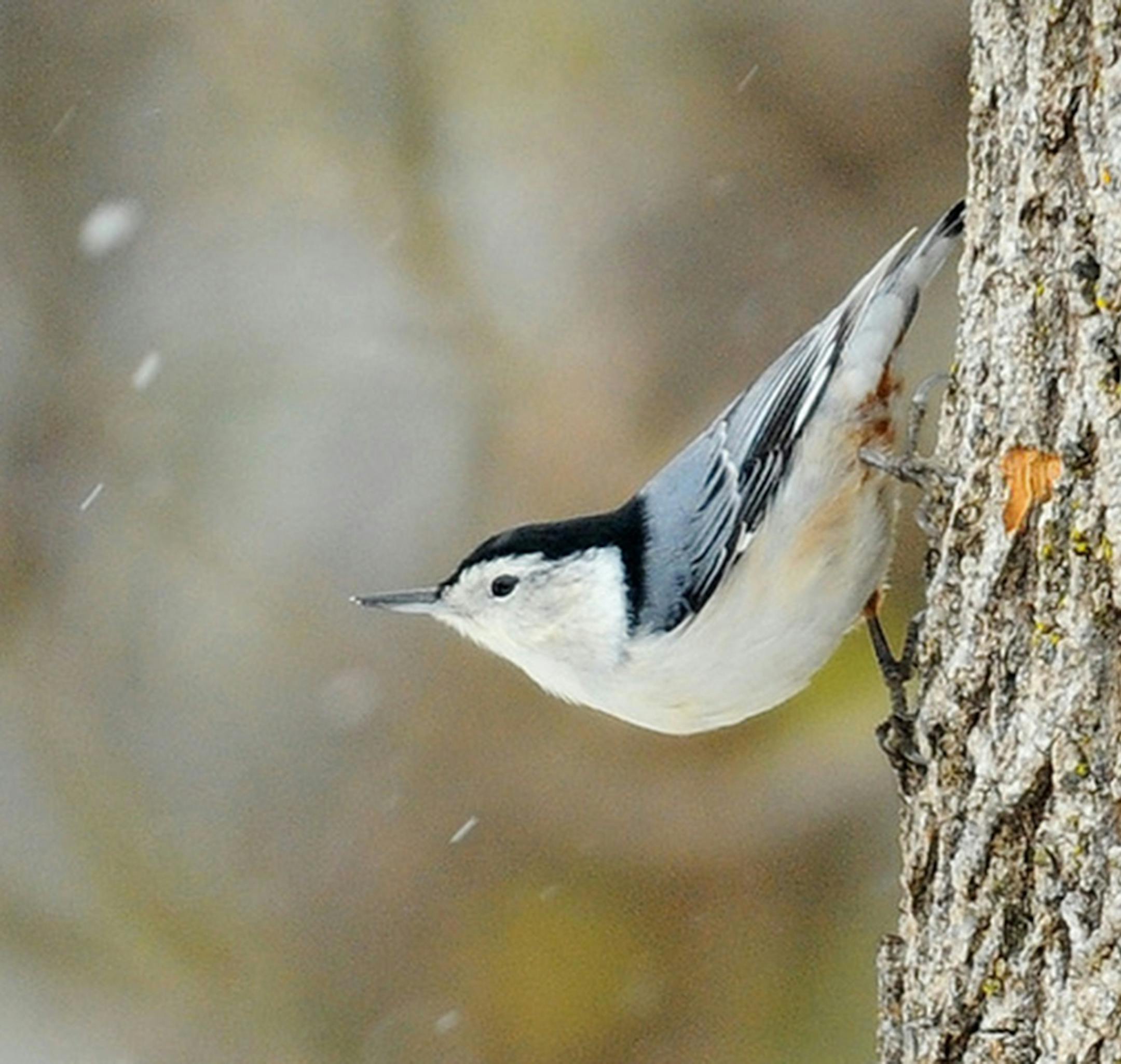
This nasally call should be familiar to everyone who feeds birds or tromps through the woods. It's the sound made by a white-breasted nuthatch staying in touch with a partner, as these natty birds probe tree bark for a meal.
White-breasted nuthatches are resident birds, meaning they stay around all year, like chickadees and downy woodpeckers do. But this winter they seem to be having a family reunion, as their smaller, more vibrant-looking cousins travel down from the north.
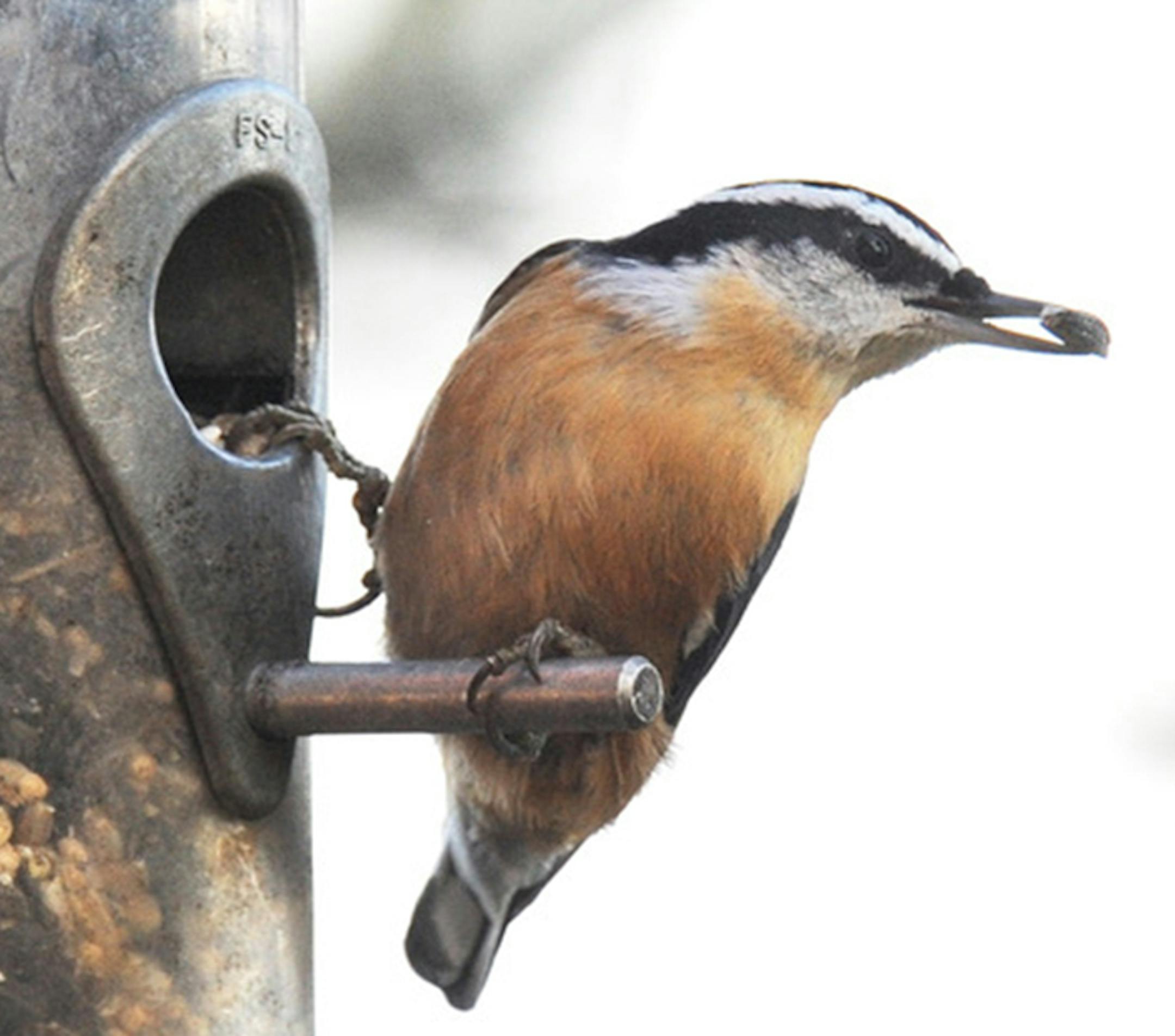
Red-breasted nuthatches are beginning to appear in wood lots and at suet and seed feeders in the metro area, and you needn't be a bird expert to tell there's a new bird in town.
Red-breasted nuthatches are significantly smaller than the white-breasted birds (an inch or so shorter, which in the bird world is a big difference — you will notice how shrimpy they are), with a warm cinnamon color on chest and belly. A dramatic white eyebrow above a strong black line through the eye also sets them apart from the larger nuthatch.
They make a "yank-yank" call, too, but it's higher and more nasal — some say they sound like a toy trumpet.
They're acrobatic little birds, with the same unusual feeding habit as white-breasted nuthatches: They spiral down and around tree trunks, head down, in search of insects or stored seeds. Many people who see nuthatches for the first time can't help laughing at their frenetic antics in search of food, as they're so unlike other birds, especially woodpeckers, which move up tree trunks.
Red-breasteds' preferred food is the seeds of cone-bearing trees, not surprising for birds that breed in the northern boreal forests. Their long, thin beaks push aside cone scales to snag the high-energy seeds inside. Nuthatches spend a great deal of time hiding food away for later consumption, an activity called caching. They'll grab a seed, and then fly off to stash it in a bark crevice or other opening, hour after hour. Other birds know they do this and hairy woodpeckers have been recorded watching a nuthatch, and then flying in after the cacher leaves to steal its larder.