

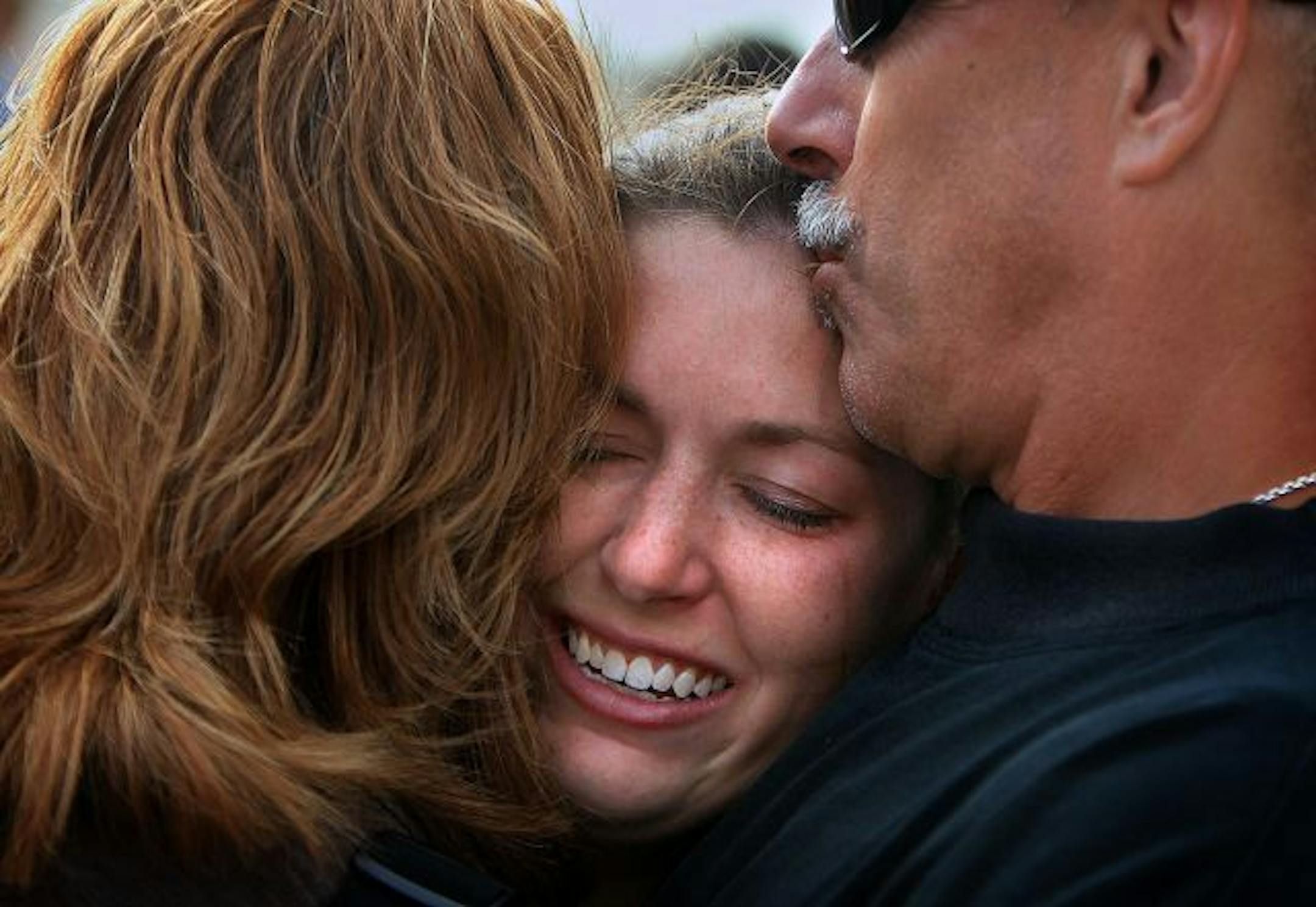
Alicia Perry has had her head in the clouds for as long as she can remember. She speaks passionately about the wonders of flying.
"I really enjoy being in control of the aircraft and being up there," she said. "It's just a whole different view of the world."
One gray morning this fall, the 24-year-old recent college graduate took a step closer to realizing her dream when she climbed the steps of a waiting C-130 cargo plane and became part of a crew from the 934th Airlift Wing of the Air Force Reserve, bound for Afghanistan.
The 120-day deployment was the first for the senior airman. No doubt, she was the only member of the crew heading overseas with a new purple tote stuffed with playing cards and the latest exercise magazines, courtesy of her boss back home, Master Sgt. Shirley Smith.
Perry's tour of duty is beginning at a time when the U.S. military, having learned hard lessons over the past decade about the role of women in combat zones and the perils and frustrations they face even from their fellow troops, is enhancing services for female soldiers and vowing to better police how they are treated.
The military is expanding its gynecological and maternity care and instituting new programs for parenting and care giving. Faced with jolting statistics that show female soldiers have double the rates of depression and post-traumatic stress disorder of their male counterparts, military officials also say they are being more aggressive in looking for signs of trouble during a deployment, including new initiatives for reporting sexual assault.
Women have served in every war and conflict since the American Revolution, but their numbers and roles have grown significantly during the wars in Iraq and Afghanistan, bringing new challenges and opportunities.
14% of active-duty force


