

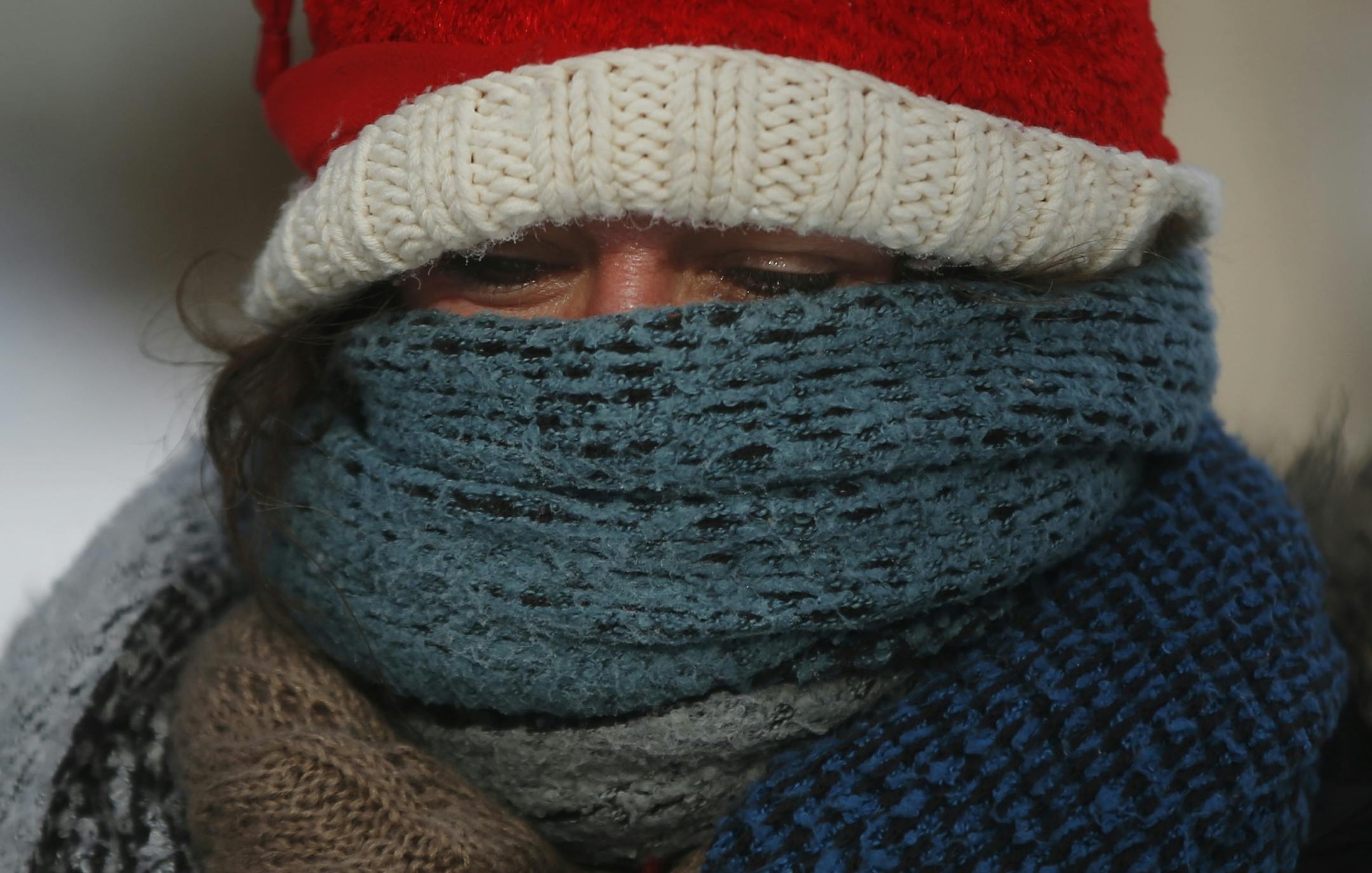
Adjusting to Minnesota weather is an acquired skill. So is predicting it.
So when Minnesota meteorological sage Paul Douglas heard Thursday that national forecasters had predicted a colder, wetter winter with a swoop of polar vortex, he responded with a pause. Then he said, "Well, it's a little like predicting now how your fantasy football team is going to be doing in January. You can't do it."
That didn't stop him from venturing a prediction: This winter will be "a little more formidable" than last year's.
Compared to the National Weather Service's newly released outlook, that's downright tame. The U.S. government agency forecast a warmer and drier-than-normal season in the South and West and unusually cold, wet conditions in a swath of northern states from Montana to Michigan.
And other privately owned forecast companies went so far as to predict a return visit from the dreaded polar vortex conditions of two winters ago.
Driving the forecast, the Weather Service said, is the incipient La Niña, which causes cooling of Pacific Ocean water and typically follows El Niño, which brings ocean warming.
Judah Cohen of Atmospheric and Environmental Research in Lexington, Mass., on Thursday predicted an unusually cold winter for the eastern and middle two-thirds of the nation, with especially raw weather east of the Mississippi River. Cohen, whose research is funded by the National Science Foundation and closely followed by meteorologists, linked North America's winter weather forecast to Siberian snow cover in October.
AccuWeather, a private firm based in State College, Pa., forecast early snow in the Great Lakes region and bitter cold in the northern states.


