

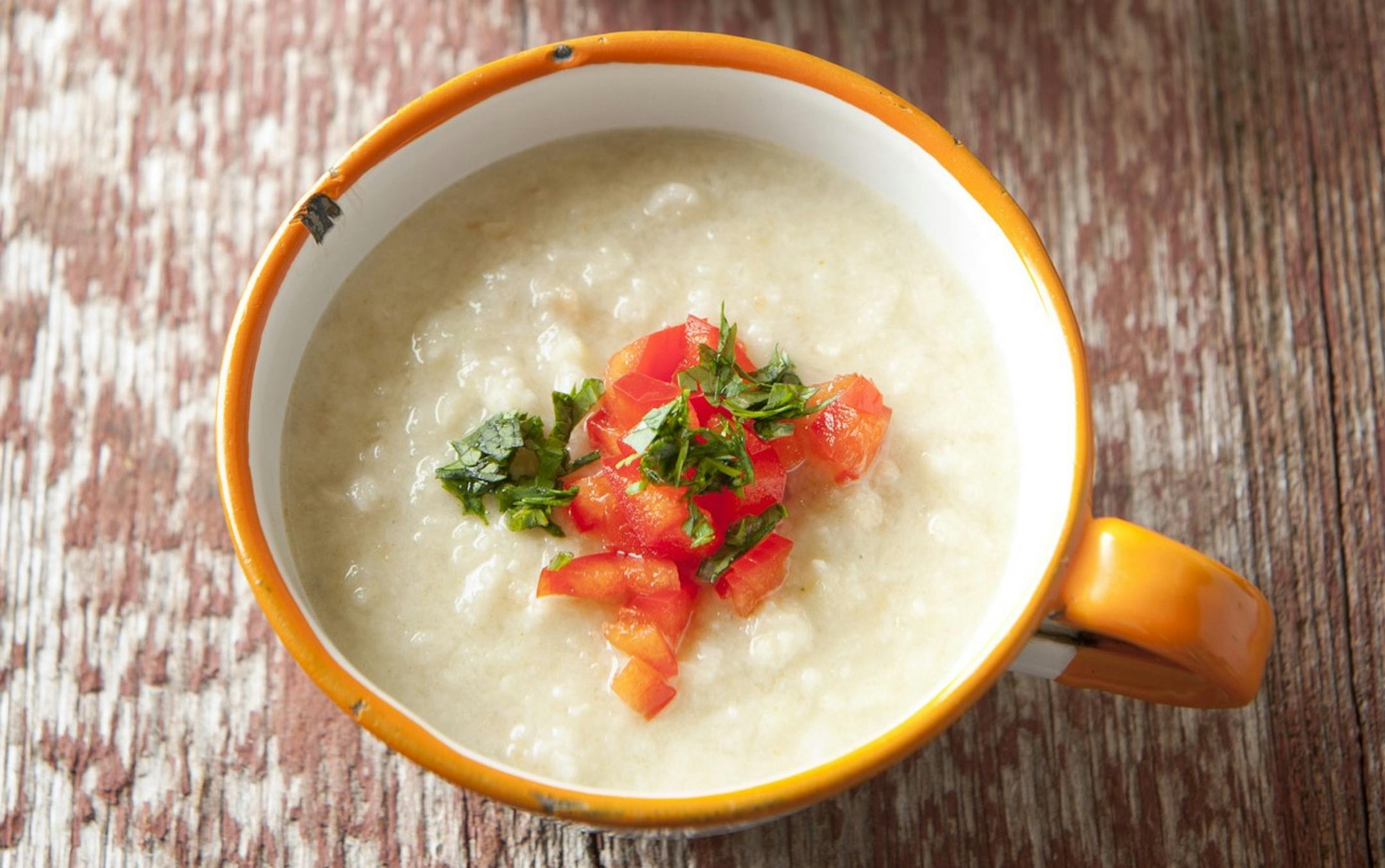
When I think of gazpacho, I think tomatoes. But this cold soup from southern Spain defies definition.
In Seville, each cook has her own version. Some varieties are white while others are green or gold. It can be made thick and chunky, more of a salad than a soup, or when whirred in a blender, it's like a vegetable smoothie to sip from a frosty glass.
These days, gazpacho is also made with melons, avocados, peaches or nectarines, and sometimes sparked with a shot of vodka or gin. It was once the humble lunch for those who worked in the vineyards, olive plantations, citrus groves or cork farms, and remains a reliable, satisfying, cooling meal on these lovely warm days.
The only hard and fast rule of gazpacho is that the ingredients be local and very fresh. Take tomatoes. Right now, they're super-ripe. The tomato flavor will depend on the variety and when they came in from the field. It's best to taste them before you begin to get a sense of how to season the soup. Cherry tomatoes tend to be sweet and snappy, while those big beefsteaks are mellow and smooth. Try using a mix of tomatoes. Taste the other ingredients to be sure the peppers are crisp and juicy and that the cucumbers are firm and not bitter.
Cold pressed, extra-virgin olive oil is essential to a "real" gazpacho. Choose one that's smooth and fruity to give the soup a lush, silky texture. Vinegar adds the snap that pulls the dish together. Sherry vinegar is the traditional choice, but balsamic or a good-quality white or red wine vinegar will also work well.
Bread gives the soup texture and body. Choose a plain white baguette or country loaf, and remove most of the crust. Sourdough can overwhelm the flavor; whole-wheat breads are just too brown.
The texture of the soup is up to you. The original gazpacho was made in a mortar and pestle, the ingredients pounded together in batches. Today a blender does the work.
For a completely smooth soup, let the motor run until all the ingredients are nicely puréed. Or for a thick, chunky medley, hold out half of the vegetables, chop them by hand, and stir them back into the purée.


