
Readers Write: Vacant land, NASA’s libraries, Waymo, gun violence

Vacant land is devoid of some things, but not others.

The Minnesota Star Tribune
January 10, 2026 at 7:28PM
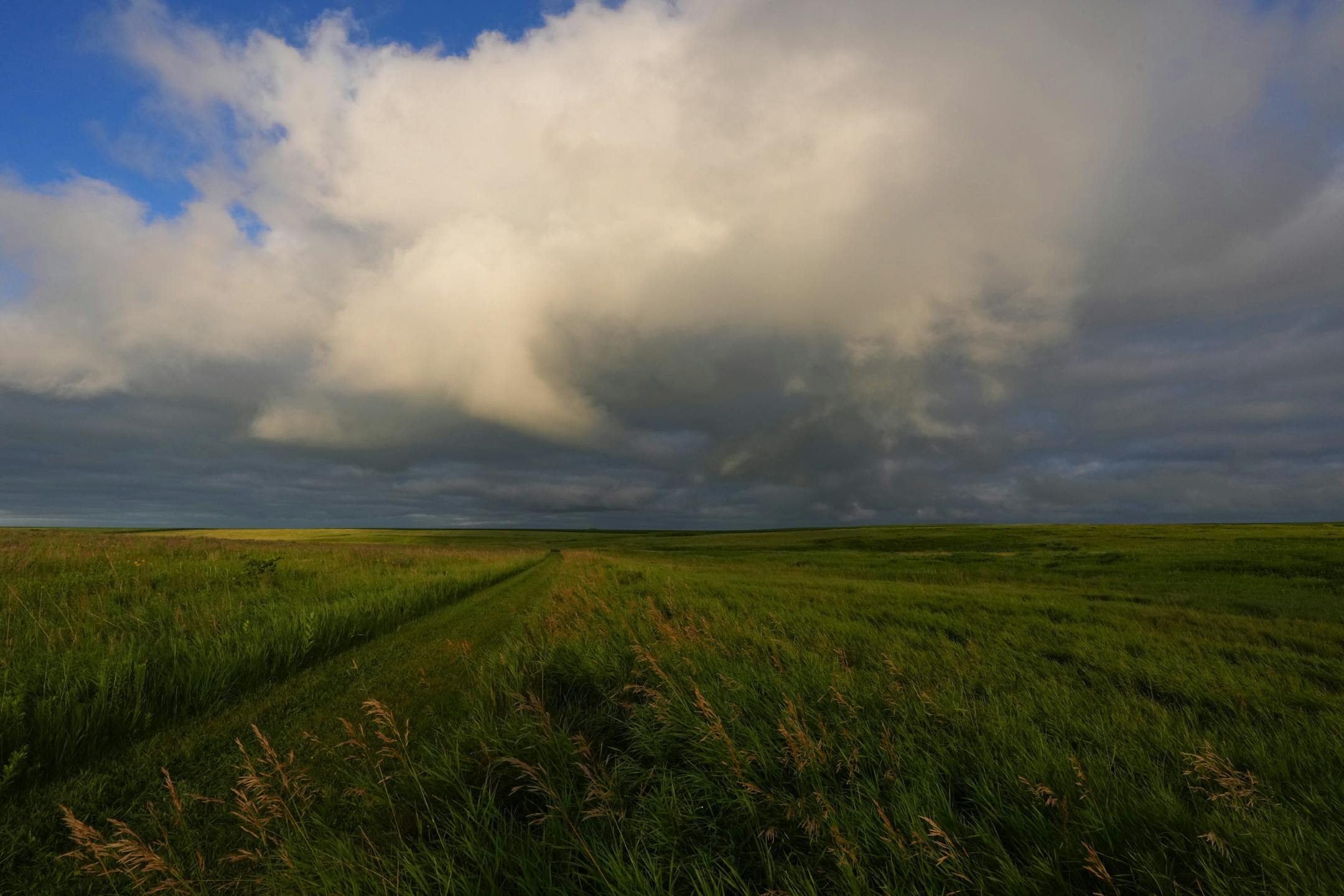
Supposedly vacant land has its uses, argues a letter writer. Here, the sun rises over Touch The Sky Prairie Unit National Wildlife Refuge in Luverne, Minn., last summer. (Anthony Soufflé/The Minnesota Star Tribune)

Opinion editor’s note: Strib Voices publishes letters from readers online and in print each day. To contribute, click here.

•••

In a Jan. 2 article promoting the A1 International Horticulture Exhibition to be held in Dakota County in 2031, the CEO notes that it will spur permanent development on land that is vacant (“This international expo could bring the future to Dakota County”). While the exhibition may be a worthy project, let’s think a little about the meaning of “vacant.”

Way back in the 1950s and 1960s, my father’s uncles Pat, Mart and Enos still lived on the Gallagher farm in Burnsville. We drove out there one Fourth of July. Grandparents, aunts, uncles and cousins appeared. While the adults chatted, we kids ran around chasing (and sometimes being chased by) chickens, ducks, geese and guinea fowl. Oh, let’s not forget the burro and the peacock! We went up to the barn and held onto a rope to swing from one pile of hay bales to the other. We threw sticks for Brownie the dog until he tired and fell asleep in the cool, spidery space under the porch.

After dinner, the adults sat out front in heavy, white, fan-shaped chairs, kids mobile again, but sometimes listening. We heard about how the house had burned down early in the century and that 14 kids had been farmed out to families nearby. In the spring, relatives and neighbors gathered to rebuild. We learned one of the uncles had ridden behind the famous Dan Patch! Then, quietly, when he stepped inside, how he’d been engaged when young, but the lady had died of a burst appendix.

When it got dark and cigars no longer kept the mosquitoes away, we lit sparklers. Before going home, my sister, brother and I ran out of breath scattering fireflies up the hill to the north. At the top we gazed at city lights and the stunning Foshay Tower 30 miles away.

One day, decades later, without consulting kids or fireflies, trucks began hauling the hill away for gravel.

The farm could no longer hide from the city. I remember my grandmother’s sadness when reflecting on its loss. Still, sometimes, on a warm summer night, I can see us coming down from that pasture. Brownie’s barking. People are saying goodbye. A 1957 Chevy Bel Air is winding its way down the dirt track to Hwy. 13.

Ah, yes, vacant land.

James M. Dunn, Edina

NASA

Don’t trash accumulated knowledge

The article “Trump administration is closing NASA’s largest library” (Jan. 2) brought back memories of my work in the high-tech field. A major bugbear in American technology today is the issue of capturing and retaining corporate knowledge. As the graybeards leave a company, they walk away with a vast database in their heads, leaving behind a mountain of reports and data vital to the work they did. Trump’s mass terminations and early retirements simply compound that problem. Losing all that documentation is another nail in the coffin.

It is essential to retain those library holdings. The termination of staff is literally throwing years of collective knowledge out the window. Again, losing this corporate knowledge gives NASA a major handicap in its legacy work, not to mention new projects. They may have to reinvent much of a very successful technology base at great cost and waste of time, making all the same mistakes as the first round. Indeed, over the years, my company had to recall a number of retirees to help reconstruct technologies and processes that had gone astray that new employees would have taken too long to fix.

The NASA problem is enormous. Over the 30-some years working at my job, I alone had accumulated six file cabinets of essential technical data, project and production reports, as well as a plethora of seminal scientific articles. Imagine reconstructing the library holdings representing the work of thousands of engineers.

If these libraries are dismantled, after long-experienced technologists have resigned or are terminated, I would argue this is simply foolish, dare I say stupid, to intentionally lose all of that history. As retired planetary scientist Dave Williams asserted, and I know firsthand, “If you lose that history, you are going to make the same mistakes again.” And again and again.

Harald Eriksen, Brooklyn Park

SELF-DRIVING CARS

Soon, they’ll be normal

I read with great interest the stories in these pages about the arrival in Minneapolis of Waymo for testing, followed by the predictable chorus about “drivers losing jobs” or “it will be carnage on the roads with autonomous vehicles” (“Waymo is coming; winter’s tests await,” Jan. 5).

I lived in Phoenix when Waymo was testing its operations there, both with safety drivers behind the wheel and then autonomously. On my frequent trips to visit family and friends back in Phoenix, I use Waymo as a way to get around. Seeing what the sensors see in day and night, including taking evasive action at night against a pedestrian who decided to dart out onto Central Avenue in dark clothing on a dark stretch of road, is reassuring.

I was originally a skeptic of autonomous vehicle technology. Are we displacing workers? Is it safe? But disaster did not ensue in Phoenix. Waymos are now just an unremarkable piece of Phoenix life and yet another way to get around. Other ride-hailing companies are still vibrant and thriving in Phoenix. It is OK; it is boring.

My only question is this: When will they come over to St. Paul?

Edward Jensen, St. Paul

•••

Any driver familiar with the hazards of driving on Minnesota’s icy roads wouldn’t want to be near a Waymo robotaxi during a Minnesota ice storm, and certainly not as a passenger! Reading “Waymo is coming; winter’s tests await” puts me in the “trepidation” column, if not abject fear!

During the winter, icy roads are insidious, giving many drivers a false sense of security. Take, for example, signal-controlled intersections in subzero temperatures where exhaust moisture from waiting cars freezes into an invisible and unexpected coating of glare ice. Will Waymo’s sensors detect that?

Waymo currently operates its driverless taxi service in temperate cities like San Francisco where fog can be a problem. I’m guessing that Waymo’s radar sensors may see through fog better than human drivers. But that advantage isn’t likely to help on slippery, slushy Minneapolis roads, or during heavy snow, when it’s important to yield to huge plow trucks. According to the article, May Mobility, another robocar company, has operated vehicles semiautonomously in Grand Rapids, Minn., since 2022, but here the operative word is “semi,” meaning a human driver is ready to take control.

Many years ago, I was in the cockpit of a DC-6 airliner filming an automatic landing system test. Human pilots were ready to resume control instantly if needed. Today, Category III — near-zero visibility — landings of commercial airliners are possible, but there are important caveats such as specially equipped aircraft, certified crews and compatible airport infrastructure. No doubt the same will be true of robotaxis: They will operate within pre-programmed areas on carefully marked roads and, most important, service will be suspended when conditions exceed safety minimums.

William Steinbicker, Minnetonka

•••

Ride-sharing services have gutted the taxi business, resulting in significant job losses. Ironically, those same services are now lobbying the Minneapolis City Council to prevent Waymo self-driving vehicles from operating in the city. Studies have shown that a Waymo is in fact safer than a rideshare vehicle, both on the street and inside the car. Who feels safe getting into a stranger’s car, especially late at night? I’ll take the sober autonomous driver.

Sheldon Anderson, Edina

BEST OPINION PIECES

One especially stands out

While I appreciate the 25 for ’25 summary of most-read opinion articles in 2025, its criteria missed a recent submission that I found to be the most memorable, insightful and impactful piece published all year: Jackie Flavin reflecting on Christmas without her daughter, Harper Moyski, who was senselessly killed in the Annunciation Church shooting (“This is our first Christmas without our daughter, Harper Moyski,” Strib Voices, Dec. 23). Out of her deep heartache, sorrow and despair, she somehow crisply highlights “How we got here,” “How we begin again” and a path forward in “Choosing who we want to be.” In doing so, she transcends trite political talking points by explaining the inexplicable and charting sensible first steps we can all take toward addressing preventable violence.

I will find myself referring to this article for grounding each time senseless violence rears its ugly head.

Jim Moore, Minneapolis

about the writer

about the writer