

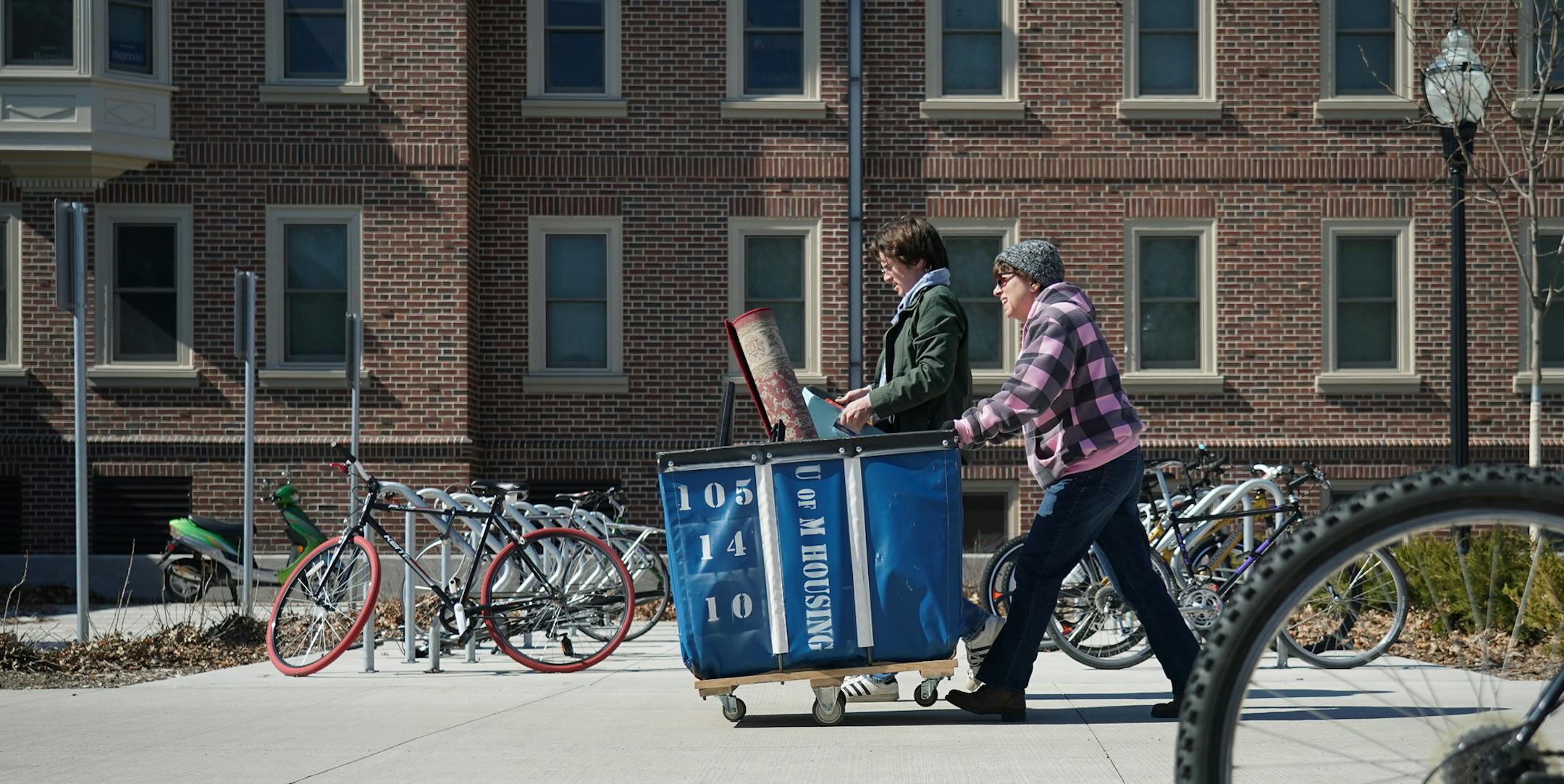
It's awkward and uncomfortable for me to find myself on the same side of an issue as state Rep. Pat Garofalo. But this is exactly where the University of Minnesota's tawdry decision to shift the burden for added expenses to its students puts me ("U president to propose new fee refund," April 2). It's on these same skinny financial shoulders that the university has in the last 20 years balanced its need for exorbitant salaries with the Legislature's diminishing allocations.
How on earth can university administrators justify returning less than half of what the students paid for room and board they now won't receive? Well, according to President Joan Gabel, this was based on "guidance from internal and external experts and peer institutions." I believe these are the same sources that support million-dollar retirement packages for past presidents.
Before they make tone-deaf decisions like this one to shift the burden of extra COVID-19 expenses to students, do university administrators ever consult with taxpayers, parents and students, legislators or regents?
I do believe that the regents, exercising their legal and fiduciary authority, should overturn this outrageous decision. And when awake, I pray that they also do away with the concept that university administrators can be made unavailable for comment. This is a public university, isn't it?
David M. Flannery, Minneapolis
• • •
I see that Gabel is offering slim recompense to students affected by the COVID-19 outbreak. I guess it's something, but in my opinion, not enough. I would like the president to consider lowering tuition for the fall 2020 term. Think about all the layoffs that have occurred, and the lost wealth that has happened on Wall Street. It might be very difficult for people to help send their kids to school by years' end. I would recommend that the U review the data of what's happened to 529s during the outbreak. Value in those accounts alone have shot downward significantly. A reasonable approach to lower tuition for the fall is in order.
Michael Austin, Minneapolis
FLOODING
We've been hit by coronavirus, and other disasters are coming
Our business, like many across Minnesota, has been hit hard by COVID-19. Supply lines cut, concerns for employee safety, and a declining end market means our future is uncertain. While the immediate threat of COVID-19 will pass, it's a reminder of the devastating impact natural disasters have on our communities.
The National Oceanic and Atmospheric Administration recently released its forecast indicating that 200 million Americans in 23 states, including Minnesota, could be impacted by spring flooding. Every year our state is faced with catastrophic floods that destroy businesses, public infrastructure and personal property and in some cases cost lives. In fact, flooding is now the costliest and most common natural disaster we face.
With all natural disasters, planning and resilience are critical in mitigating the damage. Research funded by the Federal Emergency Management Agency has found that every $1 spent to prepare for a natural disaster saves $6.


