

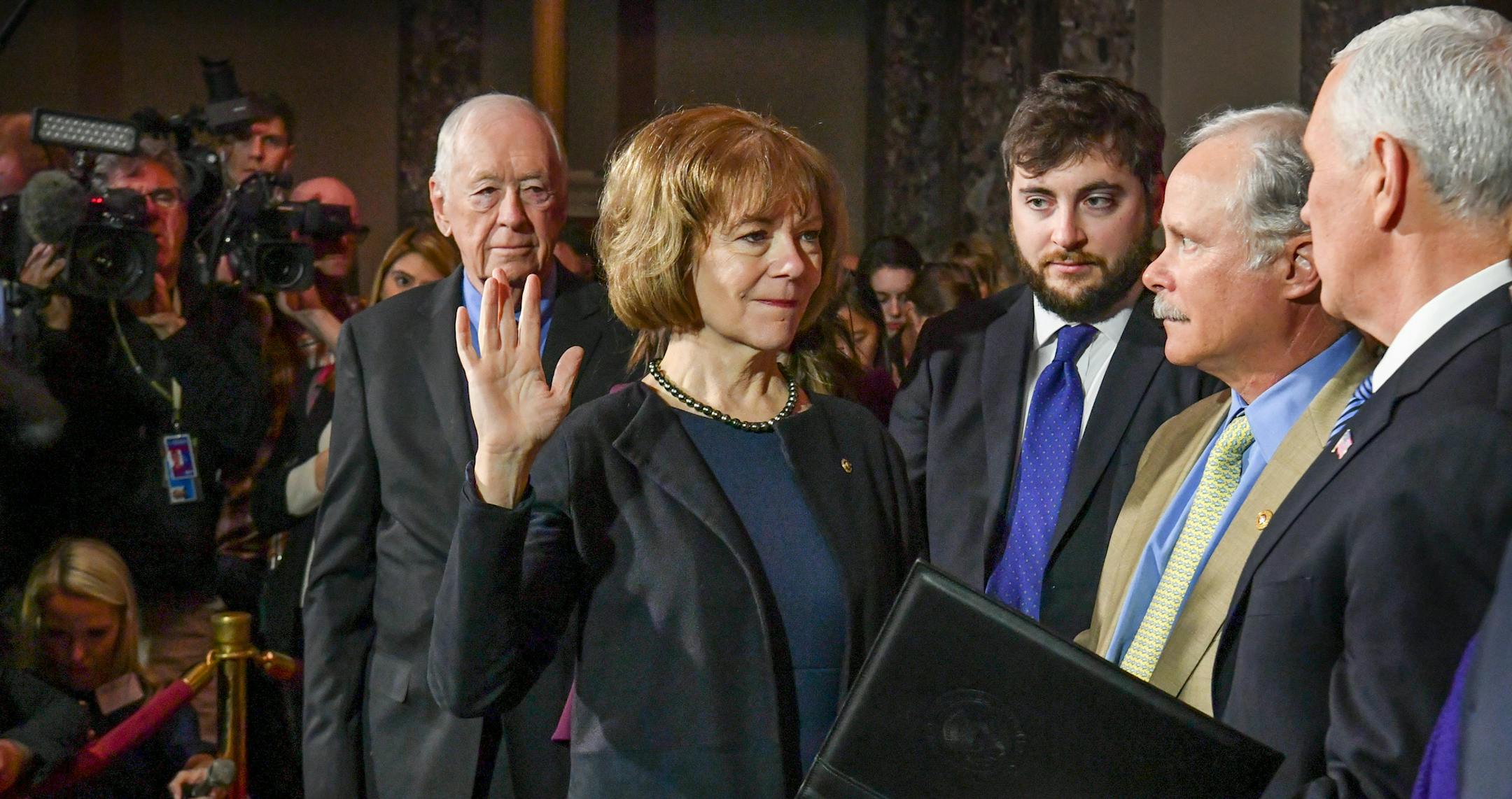
As Tina Smith steps into the U.S. Senate, we must not forget to recognize the importance of Minnesota's two Senate seats both being filled by women. We're joining the ranks of only California, New Hampshire and Washington. This is a significant moment in our state's "her"story.
Even though Smith was not elected by Minnesotans, hopefully her appointment will be a catalyst to our state to become a leader in advocating for gender equality, especially when it comes to politics.
Thus far, Minnesota does not have the best record in political gender equality. For instance, it has never had a female governor; only two women have been the mayor of Minneapolis and none has been the mayor of St. Paul; and just one of eight of our U.S. representatives is a woman. Furthermore, Amy Klobuchar was our first elected female senator, taking office in 2007 — but, now, she serves with another woman by her side.
Let's not take this moment for granted, Minnesota. Hopefully, in the near future, we will vote to put more women in positions of power.
Allison Agre, Corcoran
• • •
The Jan. 3 editorial was misguided in opining that Gov. Mark Dayton should have accepted the Republican plan on succession for the lieutenant governorship that Smith vacated. Smith's constitutional successor, state Senate President Michelle Fischbach, has a conflict of interest in acting both in a legislative and an executive capacity, as she intends, and should recognize her responsibility to resign her Senate seat. Having a Republican lieutenant governor should encourage bipartisanship, which is sorely needed. Before expecting political comity, Republicans as a party need to rectify their historic misuse of U.S. Senate power over Supreme Court nominations — to the continuing grievous harm to our democracy.
Jon Steinberg, Minneapolis
• • •
If Fischbach says it is OK to be both lieutenant governor and president of the state Senate, then I propose a better idea: Smith can be both our U.S. senator and lieutenant governor.


