

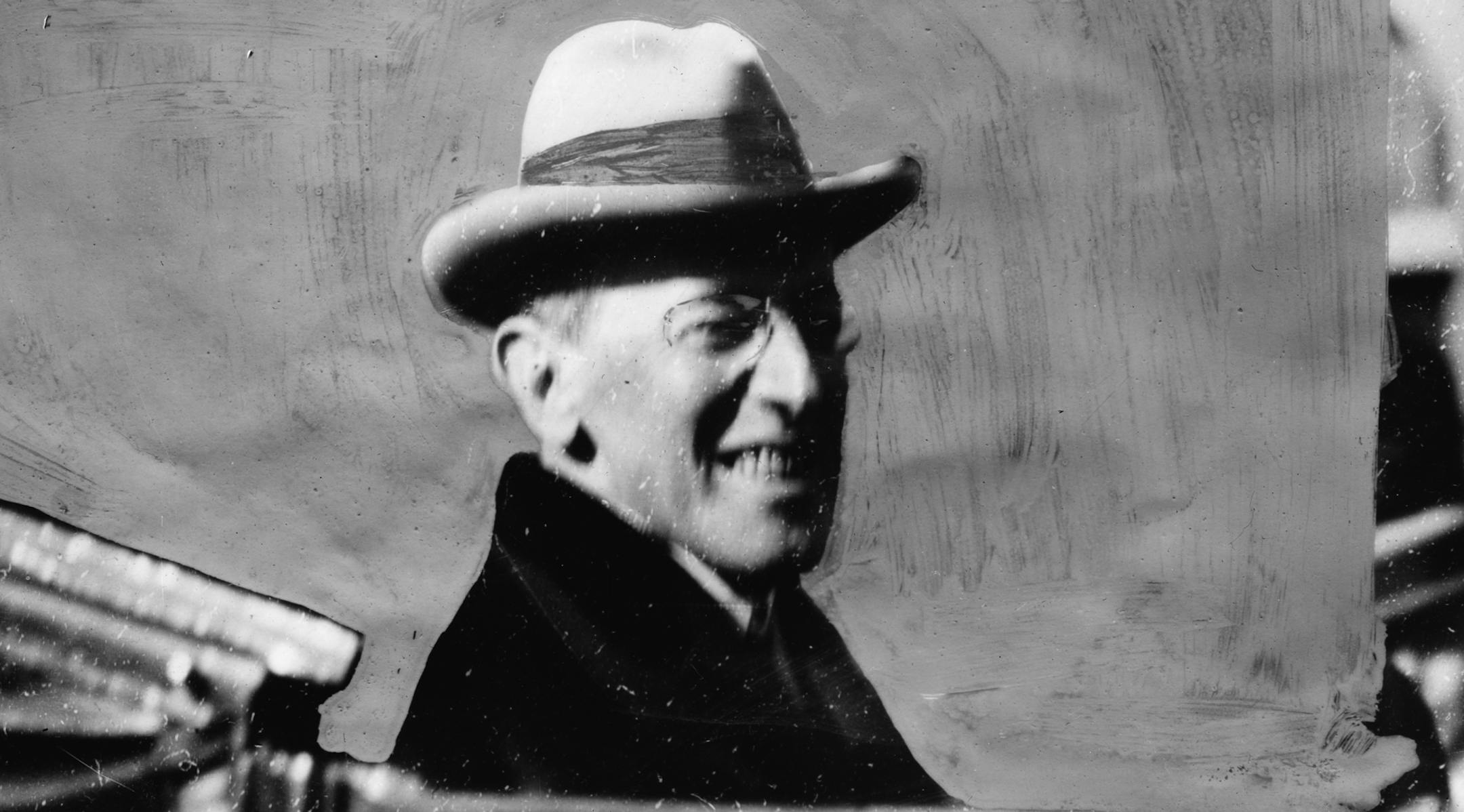
John C. "Chuck" Chalberg's commentary "The Wilsonian Dilemna" (July 30) outlines President Woodrow Wilson's struggle to enter World War I, and the equal tension, after the Armistice, to never again go to war. He mentions the international Kellogg-Briand treaty, engineered by Minnesotan Frank Kellogg, and signed in Paris in 1928 to outlaw war. He points out that this treaty, and the excoriation of arms manufacturers, were applauded while ignoring the "looming threat of Nazi Germany." Left out was that the massive push leading to the forbidding of war began with the concern that most small businesses, like most individuals, were irreparably harmed by the "war to end all wars." Also AWOL was that Congress attempted serious legislation to eliminate profit from arms sales, when it was learned that World War I weapons manufacturers profited immensely, some as much as 800 percent. Meanwhile, as arms merchant lobbyists worked diligently to defeat those efforts, scores of arms dealers, in the U.S. and allied countries, maintained lucrative markets, selling arms to Nazi Germany in the early 1930s.
As someone drafted to serve as a medic during the Vietnam War, I have long argued that if war is perceived necessary, the arms suppliers should be asked to show the same sacrifice expected of us. Make what's needed and pay the workers, but absolutely no profits to CEO types or shareholders. Certainly no profit selling to the "enemy", something still kept secret, but not slowing down any time soon.
Larry Johnson, Golden Valley
• • •
I applaud Chalberg's effort to put our politics in historical perspective. Still, while Wilson certainly embodied a host of familiar tensions in American political culture — especially where issues of race complicate professed commitments to equality — it is misleading to portray him as representative of the city-on-a-hill/army-on-the-march dichotomy of democracy promotion. From the moment war broke out in Europe, Wilson spent enormous energy on mediating the conflict. His injunction that Americans remain neutral was not a way of avoiding a role in the conflict, but of preserving his nation's credibility as an honest broker. When the course of events revealed that Germany was the largest impediment to a lasting peace and that the United States risked being dragged by some catastrophe into a war for vengeance rather than stability, Wilson intervened militarily. But he had been intervening all along.
The difference between Wilson and his successors — Trump included — is that Wilson made no artificial distinctions between America's role as example to and partner with other nations. His perennially misquoted war address expressed this sensibility perfectly. Wilson never pledged "to make the world safe for democracy." What he said — in perhaps the most anguished call to battle by any American president, including Lincoln — was that "the world must be made safe for democracy" if Americans wanted it to continue thriving at home, and that the U.S. must act as "but one of the champions of mankind" in securing such safety.
Trygve Throntveit, Minneapolis
• • •
Chalberg wonders if President Donald Trump may turn out to be another Woodrow Wilson. Let's review Wilson's activities:
• Vicious racist? Fired all the blacks working in the federal government upon assuming office; resegregated federal agencies where he couldn't simply fire all the blacks.


