

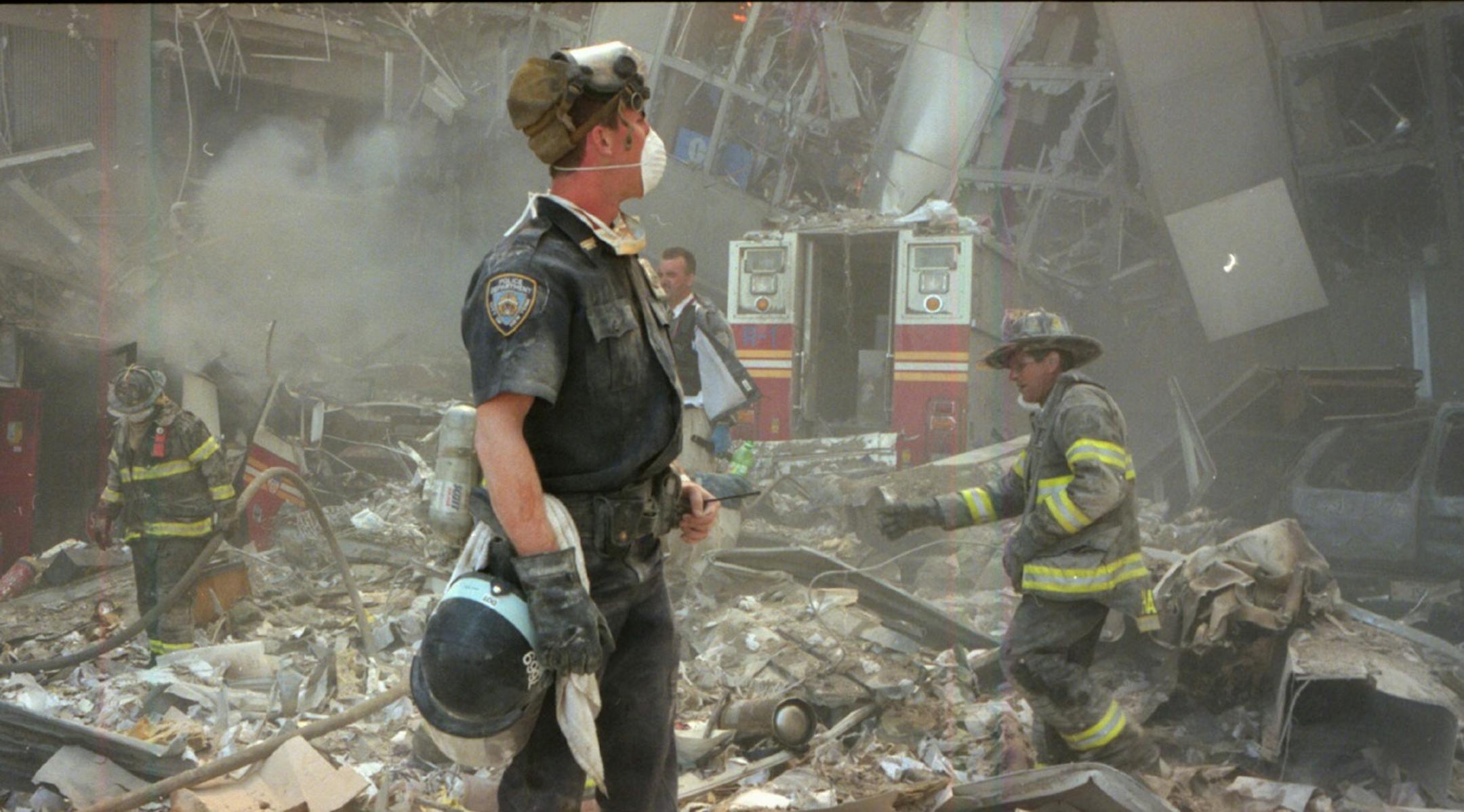
We all have our memories from 9/11. For me I remember crying for days, glued to the TV, unable to tear myself away. All I could do was think about my police officer brothers and the fact that so many families and sisters just like me were mourning the loss of their police officers who ran into those towers never to return. I was crushed in an indescribable way. But the country rallied and police were rightly recognized as our heroes. And the profession walked tall despite the grief they felt over losing their own.
Tonight I cry again for my brothers and our country. It's so wrong and shouldn't be this way! How can police now be the country's villains? It makes me sad, frustrated, angry and feeling helpless trying to scream with my voice not heard. Stop vilifying our heroes! Stop inflicting such mental pain; they endure enough. To all my law enforcement friends, walk tall. Walk really tall! The silent majority respects you as much if not more than ever. We are sad for you, we hurt for you and we respect you. We appreciate you more than you know. We will never forget.
Caryn Addante, Mendota Heights
• • •
A recent letter writer chastises journalists for not seeking to determine why so many Black men are being shot by police ("What happened to digging deeper?" Readers Write, Sept. 10). He implies that these shootings might be explained by things such as Black-on-Black crime. Black-on-Black crime is a problem that deserves analysis, but it is separate from police shooting Black men. As the writer is a former police officer, I doubt that he would not arrest Person A for shooting Person B because Person C shot Person D. Both instances are wrong and need to be addressed independent of each other.
Determining if systematic racism exists in a police department cannot be determined by analyzing why Black men shoot other Black men. The writer appears to have adopted President Donald Trump's routine of "don't look at what I did wrong, look at what someone else did wrong." That approach doesn't solve either problem.
Phil Anderson, Burnsville
• • •
Brian Peters, executive director of the Minnesota Police and Peace Officers Association, expressed deep frustration over DFL support for candidate John Thompson because of Thompson's obnoxious actions in front of the home of Minneapolis Police Federation President Bob Kroll ("Police group reverses backing of several DFL incumbents," Sept. 11). Mr. Peters: Rational people around the world are deeply frustrated by the inability of police officers to refrain from engaging in police brutality. You, your association and its members can stop police brutality today. You don't need legislation to do so; you don't need policies to do so. You simply need common human decency.
We are frustrated by police officers' failure to exercise common human decency in refraining from engaging in police brutality and in refraining from turning in those officers that are witnessed engaging in police brutality. When you clean up your own house and end police brutality — especially as it relates to Black Americans — you can begin to complain about the stupid comments of a candidate for office. In the grand scheme of things, police brutality, which can be criminal, is a much more serious issue than stupid comments, which are not a crime. It is time for police officers to get their priorities straight.
JOHN ELLENBECKER, St. Cloud, Minn.
TRUMP AND THE VIRUS
I haven't felt calm. Have you?
It is of course impossible to credit President Donald Trump's explanation du jour that he withheld the truth about COVID-19 from Americans so as to, in the exercise of Churchillian prudence, "avoid panic." His entire political career has been predicated upon instilling unreasonable fear in the populace. Some have concluded that he withheld the truth so as to avoid spooking the stock market.
Permit me to suggest a different possible motive. I believe that Trump really did hear the warning of his national security adviser on Jan. 28 and took it seriously, but unlike Winston Churchill he lacked the humility to acknowledge that the dangers posed by the virus were beyond his capacity to control. Churchill told his people that the battle would be difficult and the outcome uncertain, but they were all in it together. I believe that Trump is so wedded to the narrative that "I alone can fix it" that he cannot publicly acknowledge the scope of our common danger.

