

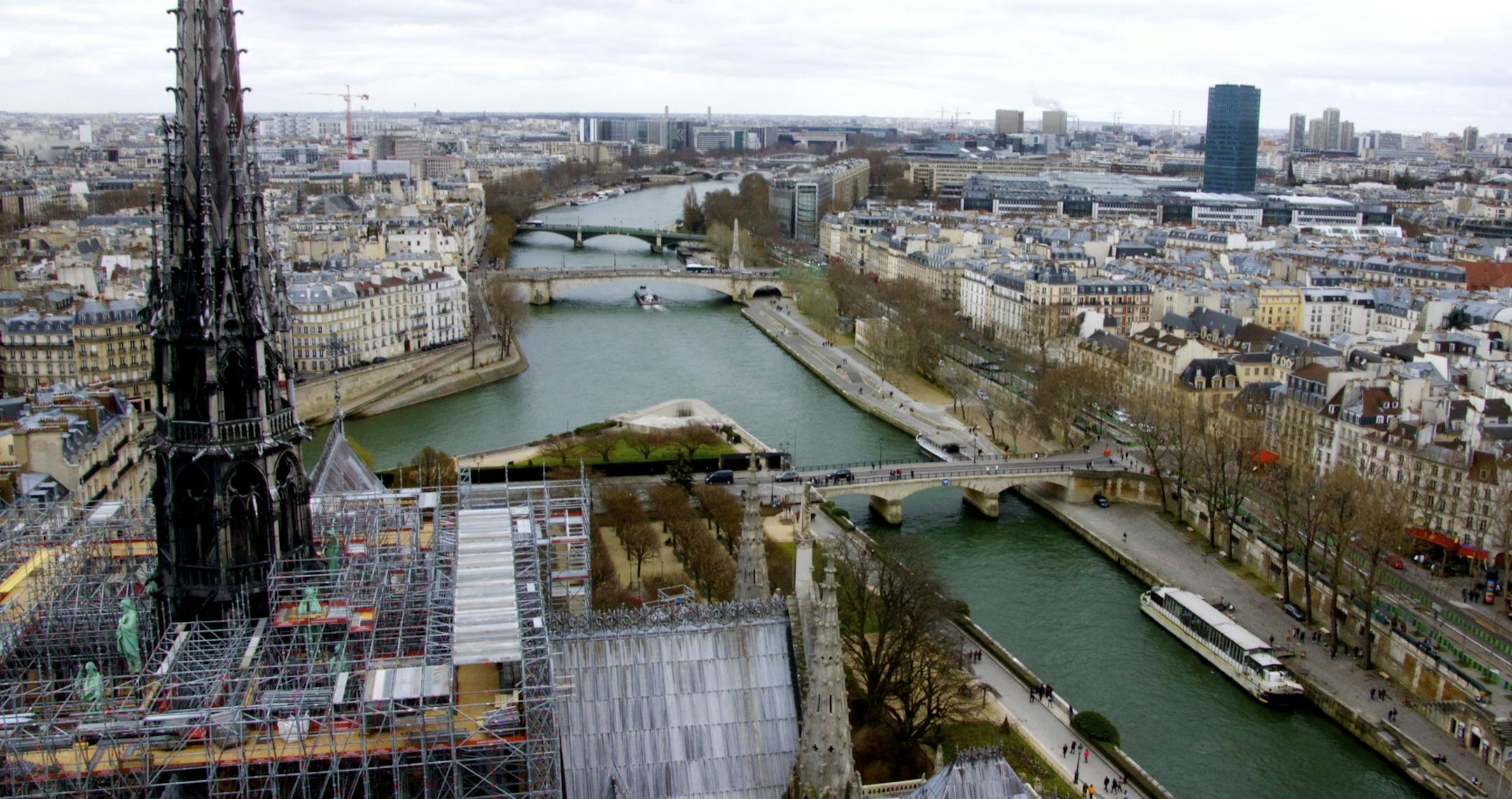
The Notre Dame Cathedral means something to me, as it does to many, yet the myriad posts and articles of people reminiscing about time spent there or lamenting the loss have prompted a strangely divisive response. Supporters of Notre Dame are being accused by some of valuing a building over more pressing social or environmental issues. It seems we live in an age where caring about Gothic architecture can somehow be construed to mean you do not care about climate change. To shame people because they haven't also publicly acknowledged every other problem in the world only serves to silence self-expression. It creates a society where people are afraid to talk about what matters to them in an authentic way, which is no society to aspire toward.
Go ahead and question the very large sums of money coming from a handful of specific donors; it's fair to ask if the dollars could be better used elsewhere. But don't belittle the rest of us for expressing concern and compassion. Don't circulate memes implying we're ignorant for loving art, architecture or history.
When Nipsey Hussle died, sorrow spread through social media just as it's doing now. Yet most of the people posting didn't know him personally; they knew his music. To mourn the loss of a musician and his or her artistry is quite similar to mourning the loss of architecture and its experience. For many of us, there is a sense of being and a spirit to buildings — something that can't just be rebuilt any more than a musician can be replicated by a hologram. At its best, great art unites us and inspires us to care about humanity more, not less. It should be celebrated and protected.
A defining aspect of Gothic architecture, in simple terms, is that many structural members work together for the building to become taller and to let in more light. Just think of it — each different piece of stone supporting the next, and all of them supporting each other to reach incredible heights. Losing that from the world is something worth mourning.
Leanna Kemp Kristoff, Minneapolis
• • •
The fire at Notre Dame literally tears at the heart because the cathedral is a physical representation of what many people need — a sense of community, ties to our past and shared experiences. It teaches us that we can achieve great things when we set aside selfish interests and work together on visions that may take more than one lifetime. That is why this tragedy ripples out to all who have been touched by Notre Dame — the congregation that worships there, the city that loves it and the visitors who marvel at its beauty.
It represents a form of community that is more important than ever in these increasingly factionalized times. It breaks boundaries and creates moments of shared wonder as people from all over the world and from all faiths stand on that plaza and marvel at the human story behind its construction. The work of 800 years of loving artisanship and inspired conservation.
I have personally been there twice in my life, and it was nothing less than awe-inspiring. You could feel the hearts that went into every carved stone, every span of oak and every pane of glass. It took the work of generations of human hands to build such beauty; it took the dedication of centuries of human hands to preserve it. Much of that gone in an instant. However, I believe in time, the community will pull together and eventually they will put those human hands to work once again and repair this broken heart. Je suis de tout cœur avec vous.
Wendy Menken, Minneapolis
UNIVERSITY OF MINNESOTA
Legislators' focus on diversity among regents goes too far
I was shocked and saddened to read the April 17 article "Diversity concerns threaten process to select University of Minnesota Board of Regents." While my first reaction was that the Legislature should elect regents like it's supposed to, I became alarmed that House Majority Leader Ryan Winkler and other DFL legislators take the approach that only minorities should be considered to serve as regents.


