

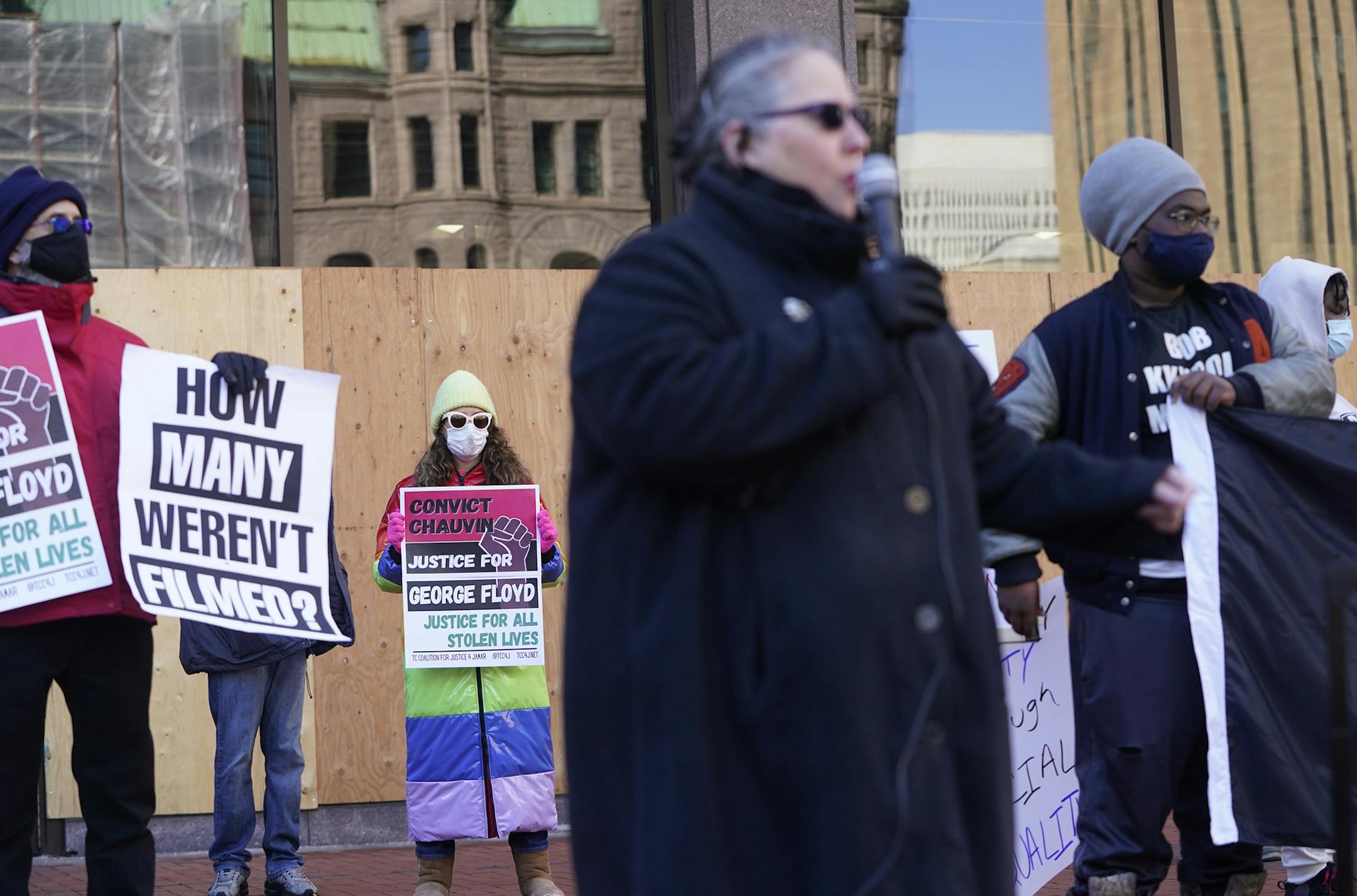
In his Feb. 21 column "The challenge of a fair trial for Chauvin," D.J. Tice says, "Another basic question that could become complicated concerns how [George] Floyd died." No, it won't.
Tice says that's because the medical examiner found "the presence of heart disease and dangerous drugs." But as he notes, the death is listed as "homicide." Homicide is the killing of one human being by another. Chauvin's actions, intent and state of mind are surely going to be scrutinized, but he did take Floyd's life, of that there is no doubt. Floyd died on that day, at that time, because Chauvin put a knee on his neck.
There is no enfeebled-victim defense. If there were, running over an elderly pedestrian could be defended on the grounds that if the victim had been young and spry, she could have jumped out the way in time, and besides, she wouldn't have been injured as badly and killed.
Consider also the cases of a husband (it's almost always the husband) who kills his wife to alleviate real and serious pain from terminal illness. What do we do in those cases? We charge the husband with homicide, because it is still the taking of the life of a human being by another human being. It's no defense to say that the wife had not long to live.
Conservative media has been trying to muddy up the cause of Floyd's death since that May evening, but in the eyes of the law it's crystal-clear.
Steve Timmer, Edina
• • •
Tice is right that it will be difficult seating an unbiased jury for the trials of Chauvin and the others. Not only that, but once seated, the jury will have to deal with many confusing details.
Tice brought up a couple of them. They will have to decide exactly what a "chokehold" is in this case and what the coroner meant "by no physical signs of suffocation." From the name, it's easy to think a chokehold causes death by closing off the airway. That is not necessarily so. Did the coroner look for evidence only in the trachea and lungs? Or was the chokehold Chauvin used a form of the old "sleeper hold," long-outlawed from wrestling and sometimes still used on the street? This form of chokehold interrupts blood supply to and from the brain and can render a person unconscious, quickly leading to brain damage and death.
As for the finding of drugs in Floyd's system, would he have died on that corner and at that time from an overdose if he had not been restrained in that manner? Did the officers suspect he was on drugs? If so, could or should they have administered Narcan? What about heart disease? Again, would the suspect have died then and there from his heart problems? A lot of us take drugs to keep our hearts from giving out too soon.


