

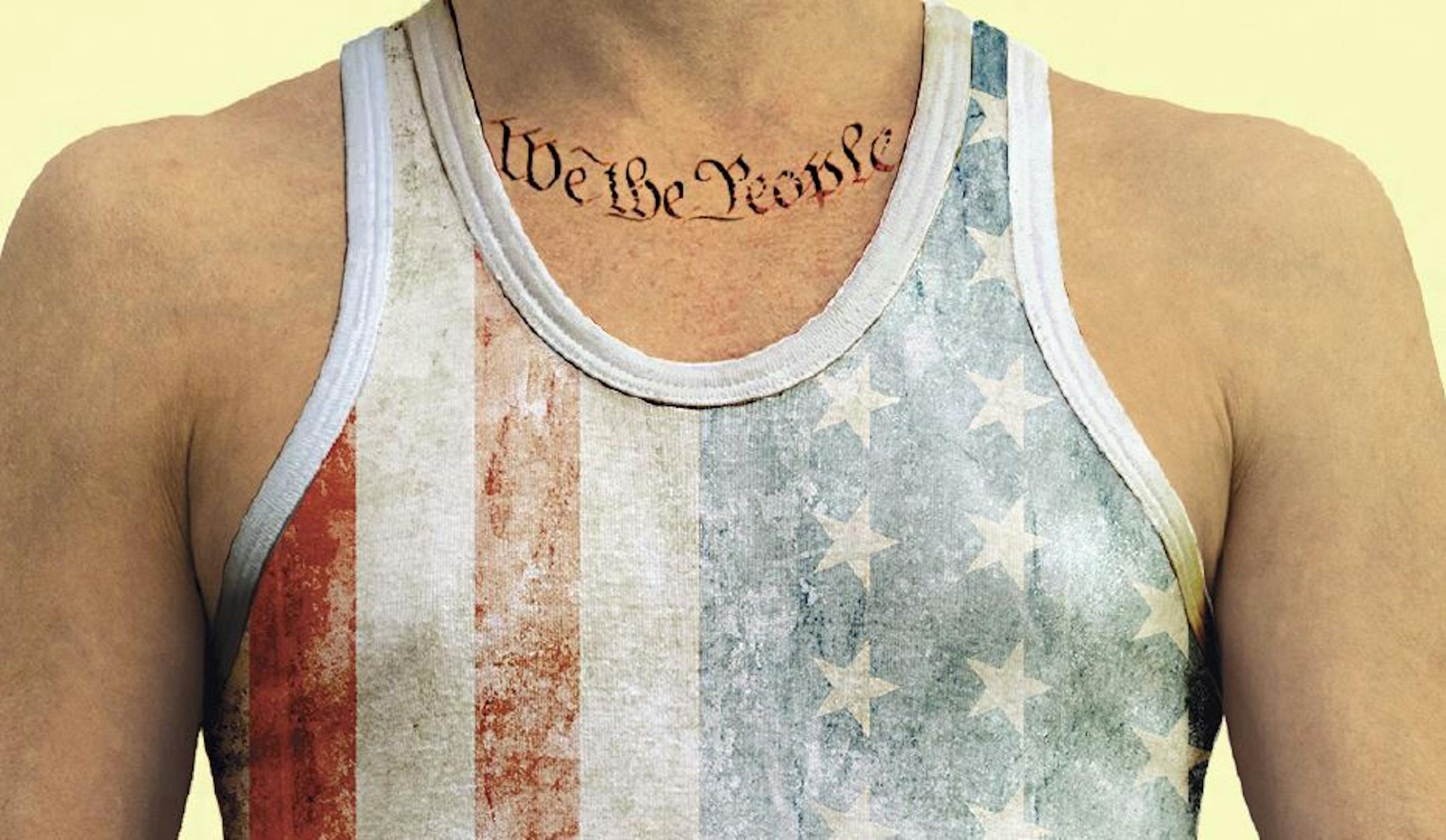
Ron Way ("The casualization of America," Feb. 25) connects the relationship of the way Americans dress these days with the general societal attitude toward education, government, person-to-person respect and matters of overriding significance. Quoting an image expert, he writes that the "casualization of America is about the general decline of civility."
Whew, I wish that statement wouldn't rattle my chains, but it does so much to the point that it makes one want to grab people by the throat and demand they pull up their pants to at least near their waist, ban shredded jeans and outlaw breast-baring blouses. What do those things say about society's values?
Our society is, indeed, headed down the tubes if this is the true expression of what's inside people. As Ralph Waldo Emerson put it, "What lies behind us and what lies before us are tiny matters compared to what lies within us."
I'm no connoisseur of finery, but I can judge what is presentable, whether it be a pair of freshly washed jeans or a three-piece Hart Schaffner Marx. It behooves me to express my philosophy of personal responsibility and respectful conduct through what I wear as well as how I behave and what I say. What about you?
Carleton Molin, Coon Rapids
• • •
I ask Way to consider the general "America" he is addressing. How can such a broad statement be made about a country consisting of so many people with varying aptitudes and professions? A plumber or truck driver may not wear the same clothing to work as an accountant or psychologist. And in their off time, why would dressing up or down in stark comparison to what they wear on a daily basis be necessary?
I don't deny that dressing well boosts confidence. But, generalizing appearance standards without considering our economic standpoint (i.e., 12.7 percent of the U.S. population living below the poverty line, according to 2016 U.S. Census Bureau reports), can lean toward the side of oversimplification. Though clothing may be a morale booster, it does not land high on the list of things needed to fully function.
Though I agree with the general sentiment surrounding the benefits of dressing well, whether Americans choose to do so or not may only be a small sliver impacting the larger changes in our democracy at hand.


