

•••
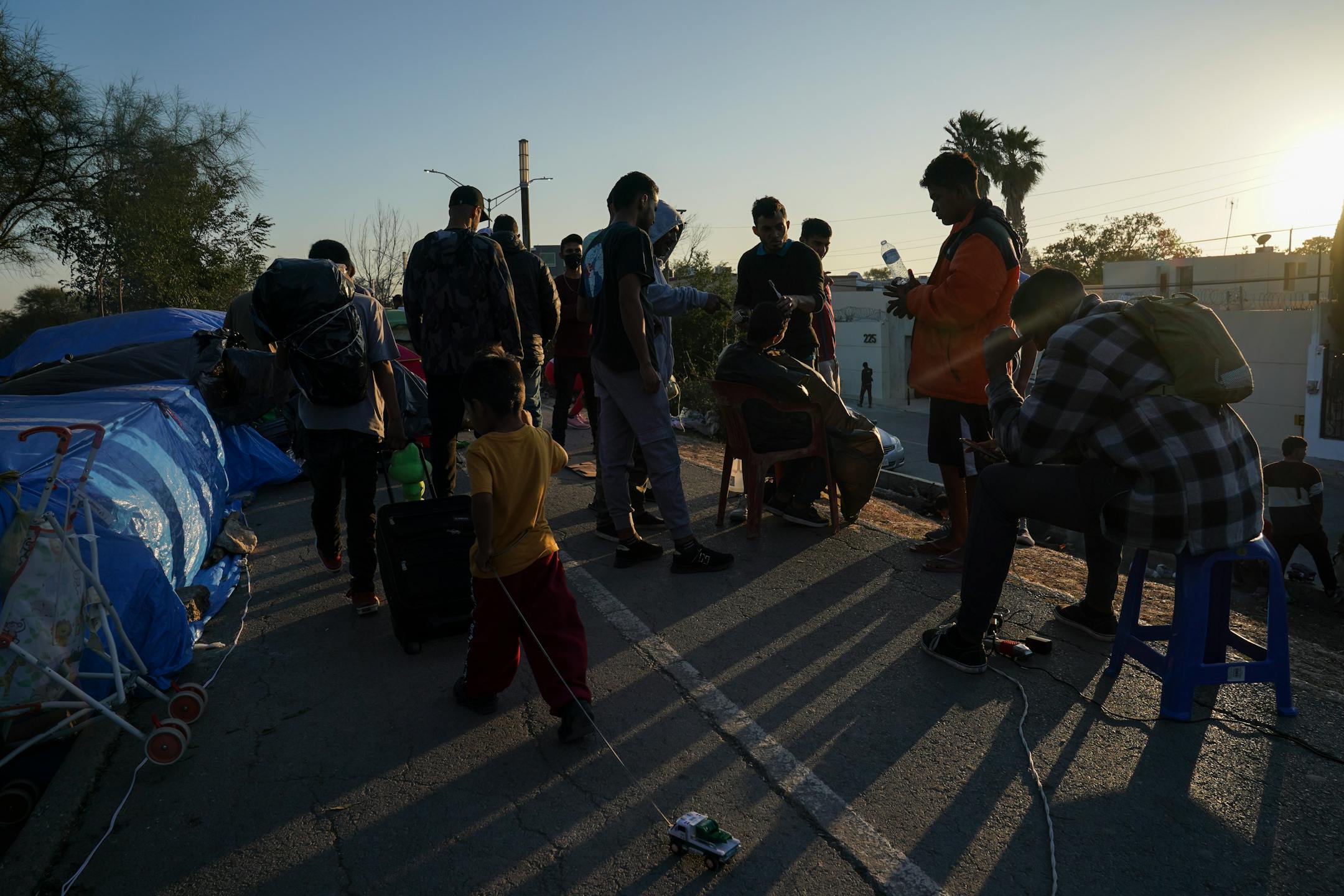
It is painful to watch the current Supreme Court majority destroy one of the greatest concepts created by our country's founders. As conservative members of the court decry questions of the court's legitimacy, they continue to take actions showing that there is more than a crisis — it has become illegitimate already. In the latest move, conservatives issued an unsigned opinion ordering that a policy of the executive branch, Title 42, remain in place despite being nonsensical in content and devoid of reason ("Justices keep asylum limits," Dec. 28). This action was so extreme, even Justice Neil Gorsuch protested, stating that this was nothing less than Republican policymaking by the judiciary, outside of the bounds of the court's power and purview. This was not an interpretation of the law by a neutral umpire but the establishment of an administrative policy of the executive branch by the judicial branch — a raw exercise of power because they had the votes.
The Supreme Court is called the least dangerous branch because it relies solely on respect and goodwill to enforce its dictates. This, it has clearly lost. The court is undeserving of the respect that would prevent its expansion and reconstitution at the earliest opportunity. At the very least, the musings of the current majority should be met with doubt and skepticism, and ultimately a paraphrase of the words of Andrew Jackson: They have issued their opinion, now let them enforce it.
Kelly Dahl, Linden Grove Township, Minn.
ELECTION REFORM
A good first step, but no time to rest
I applaud the editorial staff for their comments in "A needed safeguard on future elections" (Dec. 29). The act specifically mandates obvious and previously unquestioned election guardrails for lawful, ethical and moral political behavior in our democracy. Despite this mandate, there will be no pause in the will or actions of the enemies of democracy to assault elections in smaller and more pernicious measure. Politicians are currently advocating to erect all manner of barriers to voter participation under a vague and unsupported allegation that our elections are somehow insecure. Allegations are not evidence, and any politician advocating for restrictive action on voting access prior to providing actual evidence of any meaningful corruption occurring should be voted out of office at the next available opportunity.
Peter Rainville, Minneapolis
POPULATION
Too many people, too few resources
The Dec. 23 article on state population ("Minnesota population growth has stalled") raises some interesting questions. It relies substantially on the views expressed by Laura Bordelon, Minnesota Chamber of Commerce senior vice president of advocacy. The underlying assumption is that continued population growth is needed and required for economic growth and well-being in the state. But is that assumption warranted? What is the right number of people who can live in Minnesota (or on the planet for that matter) without destroying the planetary systems that we need? There is no definitive answer to that question, but we know that today Earth is undergoing a global extinction crisis (the sixth in geologic history) caused by human activities, we are seeing the climate warm rapidly with increasingly catastrophic results (due to humans use of fossil fuels) and our life-support systems are stressed in many places and in many ways. Human population recently surpassed 8 billion but growth rates in Minnesota, the U.S. and many other places have dropped below 1% per year. Sounds like a small rate of increase, but at 1% per year, the human population would more than double to nearly 18 billion by the end of this century.


