

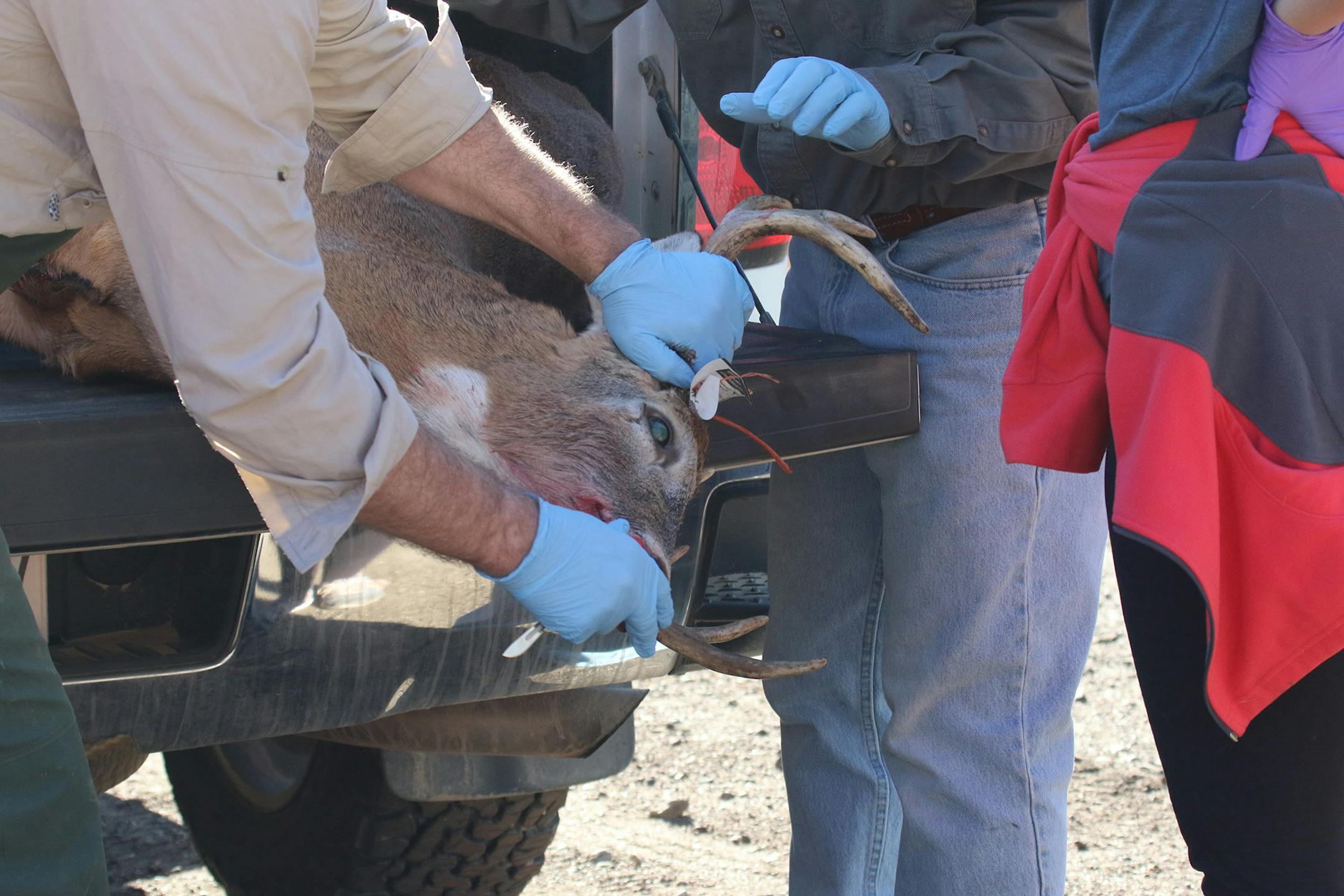
Researchers at the University of Minnesota have adapted a test for some human neurodegenerative diseases to detect chronic wasting disease (CWD) prions in live deer, fecal matter and soil. Deer carrying prions that cause CWD shed the pathogenic proteins for months before showing signs of illness, and because currently available tests are extremely difficult to administer to live animals, scientists usually find cases after the fact. But because this new and rapid infield test has not been approved by the U.S. Department of Agriculture, it has been reported that the Minnesota Department of Natural Resources and state Board of Animal Health have declined to use it.
As a veterinarian following the progression of this disease in North America, I find it appalling that these responsible agencies are taking such a position. So I advise deer hunters and venison consumers to take every precaution and appeal to Gov. Tim Walz to investigate and override this bureaucratic paralysis. There is urgency since this disease is spreading through deer herds across the U.S., and it may be only a matter of time before it mutates and infects other species, including us.
Michael W. Fox, Golden Valley
CLIMATE CHANGE
Reconsider pipeline expansions
After years of obfuscation and outright denial, fossil fuel industries have begrudgingly acknowledged that there is a direct relationship between climate change and the products they bring to market — products so intertwined with human existence that we are told that we cannot "flip a switch." We are told a shift of energy sources will be a transition. Let's take a look at recent local history.
The Alberta Clipper pipeline was put into service in 2010 with a crude oil capacity of 450,000 barrels per day (bpd). In 2015, it was expanded to move up to 880,000 bpd.
The Sandpiper pipeline was proposed in 2013. It was designed to deliver 375,000 bpd to Enbridge's Superior terminal. The project was scrapped in 2016 when Enbridge opted to buy a large interest in the Dakota Access pipeline. It started moving 570,000 bpd in 2017 and expanded it to 750,000 bpd in 2021. There are plans to expand it to 1.1 million bpd.
The new Line 3 pipeline transports an additional 370,000 bpd to Superior, bringing the Line 3 capacity to 760,000 bpd. Concurrently, Line 61 was expanded from 996,000 bpd to a 1.2 million bpd capacity to move Line 3's additional capacity south from Superior.
Gov. Tim Walz has said, "One pipeline is not going to be where we win this battle on climate change." The governor mischaracterized the issue. If the objective is transition, the very first thing we would do is discontinue permitting expansions that bring more fossil fuel to market. This is the low-hanging fruit.

