
Readers Write: Summit Avenue redo, federal deficit and baby boomers, winter

Kill trees, save the planet?

February 17, 2023 at 11:45PM
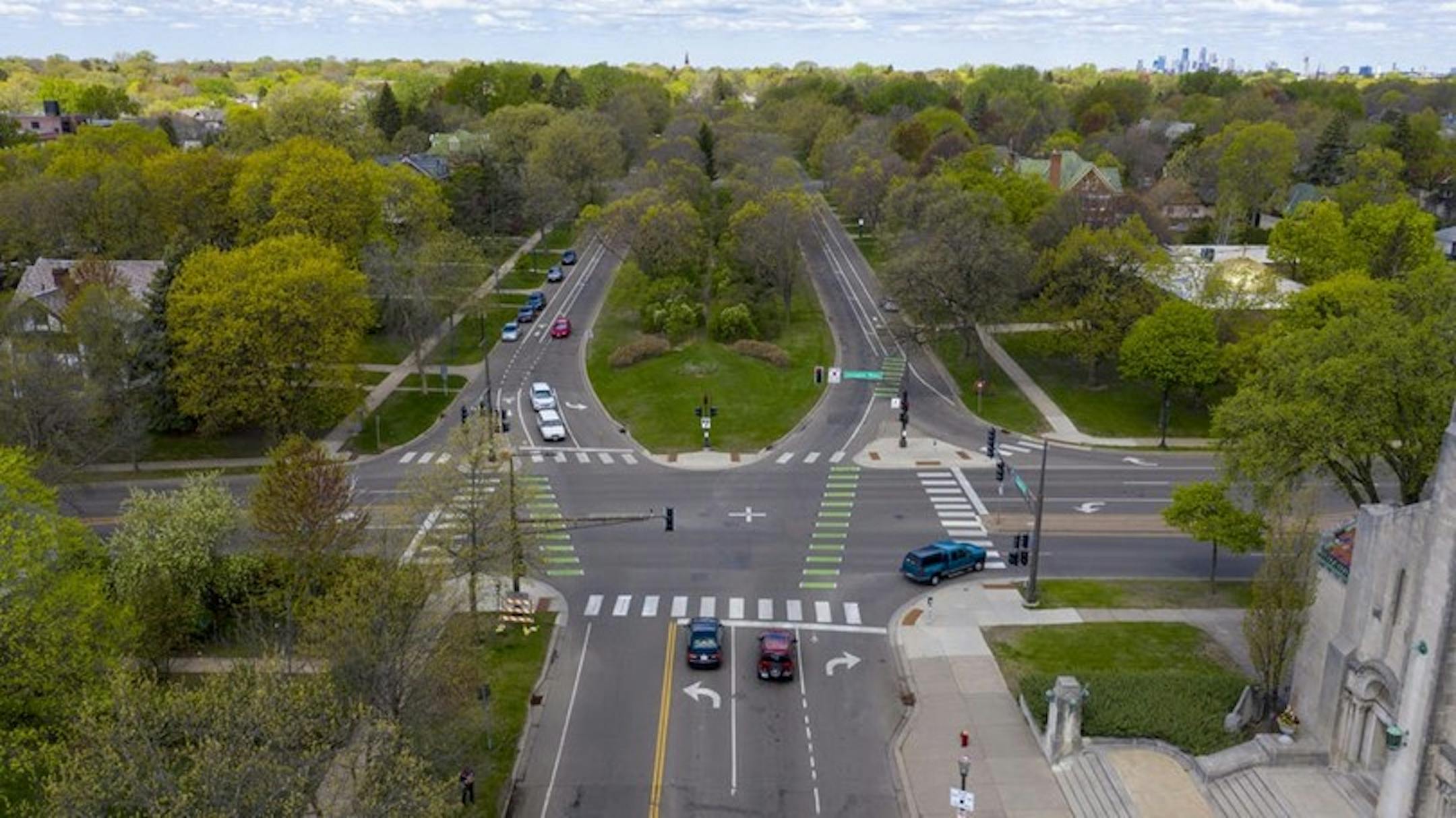
Summit Avenue where it intersects Lexington Parkway, seen in greener times. (City of St. Paul/The Minnesota Star Tribune)

Opinion editor's note: Star Tribune Opinion publishes letters from readers online and in print each day. To contribute, click here.

•••

Fascinating. Below the fold on the front page of the Feb. 16 edition of the Star Tribune there is an article about the scant ice on Lake Superior due to climate change ("Lake Superior's scant ice sends a message"). Right next to this article is one about changes to Summit Avenue ("Can St. Paul keep tree lovers, cyclists happy?"). The article states that the proposed changes include destroying hundreds of mature trees. It is established science that trees are one of the most effective devices to pull carbon out of the atmosphere. Essentially, they are earth's natural air purifiers.

There are so many questions about this project that remain unanswered. Parks and Recreation Director Andy Rodriguez states that "having a separate trail is a desired amenity for many." How many? Where are these respondents from? Did he speak with residents who live on and around Summit? This plan is also being funded by the state through the Metropolitan Council. The same Met Council that cannot control crime on the Blue and Green lines. The same Met Council overseeing the Southwest light rail project that is $1 billion over budget and years behind schedule.

Here's my suggestion: Take some of the $90 million meant for this project and resurface Summit. Then paint bright, clearly delineated lines for the bike trail. Leave Summit as it is: a stunningly beautiful thoroughfare in one of the most attractive areas of St. Paul.

Doug Stelzner, St. Paul

•••

The front-page article regarding St. Paul's controversial Summit Avenue reconstruction plan misleadingly frames the issue as a choice between trees vs. safe cycling. Only late in the article, on page A8, comes the revelation that, according to Public Works Director Sean Kershaw, nearly all of the project's anticipated threat to trees stems from the basic street reconstruction itself, which will happen regardless of what's done (or not) regarding safe cycling, and not from the proposed modifications to improve cyclist and pedestrian safety. But opponents to the plan have seized on the estimated total number of threatened trees and attributed it all to the safe-cycling features. Thus, unless I'm missing something, the real issue here isn't about trees vs. safe cycling, it's about fact-based reality vs. propaganda-based fear mongering and sensationalism, fanned by the press.

James R. Johnson, St. Paul

•••

What is it about the mind-set of "urban sprawl" among St. Paul's elected city-stewards that seems permanently bedazzled (perhaps disabled) by ancient Rome's invention of concrete to the detriment of the environmental longevity of our planet? Widen your imagination. Consider Summit as a parcel of land in our very own "North Star Rainforest." Could we not take this opportunity to honor the oldest member residents of this proud historic neighborhood, many over a century old, by doing what we can to keep them alive — with them, by the way, being our world's finest known storage system for carbon? Could we not also risk the suggested compromise of narrowing traffic lanes and twice a year putting down paint in a bright strip alongside the designated bike path, warning both motorists and cyclists, all those much younger, those who dream of breathing this shared precious air into the next century?

And while we're at it, let's license cyclists over the age of 12 who, like four-wheel vehicle owners, should be expected to share in some small way the tax burden and overall responsibility for maintaining our city streets and roadways. Let's "pedal" good stewardship!

Finally, how about a new mind-set of city service, an ethics of "conservation sprawl," of maintaining inner city parks, whether formally designated or not? Let's give every living being — both trees and humans — a chance to live longer. My fellow citizens, this isn't rocket science. For better or worse, this is our only planet, our last chance to choose to save what we hold dear — civilization, trees and people, not concrete!

Judith Monson, St. Paul

FEDERAL DEFICIT

An entirely foreseen problem

The headline says "Boomers swelling federal deficit" (Feb. 16). In a sense, that is true. The fact that there are more baby boomers retiring has changed the ratio of people paying into Social Security and Medicare, which is causing the deficit to swell. But this is an entirely predictable effect. We've known about it since the baby boom happened. I've got a book on my bookshelf called "The Clash of Generations" that was written in 2012 and describes the problem in great detail.

In 2010, Alan Simpson, a former Republican senator, and Erskine Bowles, a Democrat who served as Bill Clinton's chief of staff, led a commission launched by President Barack Obama to figure out how to address the deficits. The commission's proposals failed to gain enough support in Congress to change federal spending.

The real reason that federal deficits are swelling is because Congress has failed to act to correct a significant problem that has been known for many years.

James Brandt, New Brighton

•••

I'm concerned about the headline "Boomers swelling national debt." Blaming boomers may be dangerous. Michael Osterholm reports that daily U.S. COVID deaths exceed 500 in recent weeks. Many are preventable if simple public precautionary measures are taken. He worries that the lack of public concern is because older people are dying. In Louise Penny's novel, "The Madness of Crowds," a Canadian statistician spawns a social movement linking Canada's future prosperity to killing the old and infirm. This week, in real life imitating fiction, a New York Times article cites a Yale-trained Japanese economist who says "the only solution" to the burdens of Japan's rapidly aging society is "mass suicide."

Blaming boomers for the nation's debt also distorts our understanding of causes and solutions. As a boomer, I believe my generation shares responsibility for many of the nation's current problems. Along with adult non-boomers, we supported unnecessary, costly, destructive wars, bloated military budgets and a dysfunctional for-profit health care system that account for a large portion of present and future deficits. We also dumped climate-change crises onto future generations and allowed wealthy individuals and corporations to prosper at the expense of average people and future generations, including our failure to subject all income to the Social Security tax, which would ensure the program's solvency forever. Older Americans should use our political power to address these issues, and serve the common good. This includes unabashedly working to protect the nation's three most important anti-poverty, social justice programs that are currently in the cross hairs of deficit hawks: Social Security, Medicare and Medicaid.

Finally, not all deficits are bad. Deficit spending used to invest in economically, ecologically and socially useful products is a public good and is vital to the well-being of present and future generations.

Jack Nelson-Pallmeyer, Minneapolis

THE COLD

Winter's poetry

Blue light soaks the cool air between dry brown trees. To walk among them is to see sun sparkles on snow, leaping deer tracks, the curving shadow of a hawk. Time loses power.

How many types of silence are there? The animals must know the difference between this blue stillness speaking of life's ending and the hushed white quiet with sharper edges, of watching, of being seen. They know winter's solemn drop into evening dark.

My boots make a noisy crunching on this snow. When I stop, the forest seems to wait, almost a prescribed pause, to settle into silence, like snowflakes dropping lightly to settle on snow.

The forest speaks to us about silence. The snow slows us down so we can hear.

Margot Storti-Marron, Maple Grove

about the writer

about the writer