

I am an inner-city Minneapolitan and have been an avid birder for many years. I lived in Washington, D.C., for a number of years and moved back here in 2006. I was excited to resume birding here, but gave up after a few years because the migratory bird "season" seemed incredibly short.
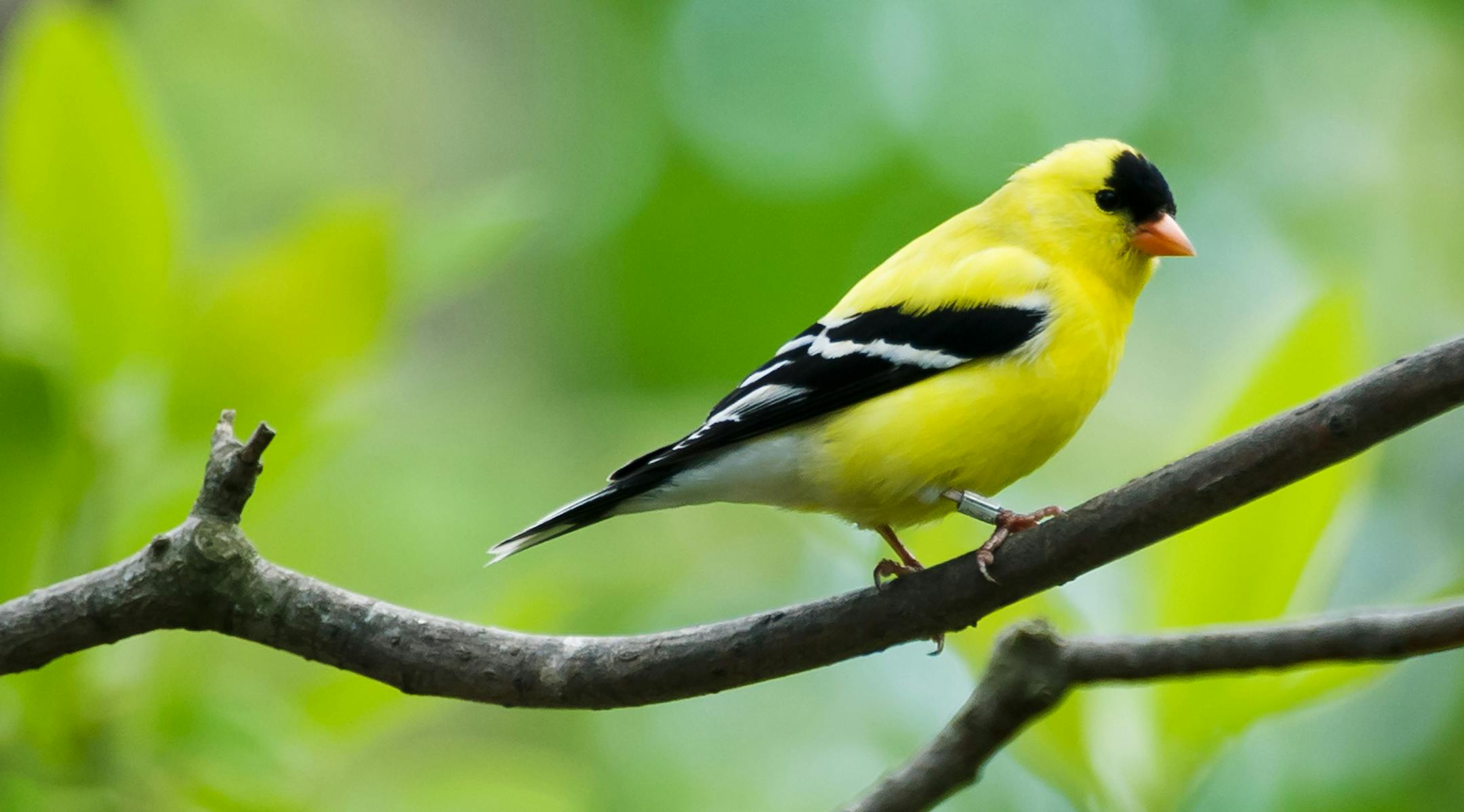
Worse than that, this year I'm not hearing any songbirds. I bicycle whenever possible and traverse many neighborhoods that used to have singing birds, but I hear nothing in my travels now. In my direct neighborhood (approximately Bloomington Avenue S. and E. 42nd Street), there used to be at least some purple and gold finches. I loved the goldfinches on hot summer days, flitting high in the sky saying, "I love this weather!" None now.
Am I dreaming, or is this akin to the "Silent Spring" by Rachel Carson? Do any birders monitor Minneapolis songbirds? I find this scenario very unsettling.
Ted Unseth, Minneapolis
NATURE, PART TWO
Fight the perception that insects only cause trouble
Jim Williams ("Birds are a natural form of insect control," On the Wing column, July 11) should take a basic course in entomology. (I've taken a few.) I've tried to fight his only-good-insect-is-a-dead-insect stance for a couple decades now, in part by bringing live aquatic insects into school classrooms for a hands-on learning experience emphasizing the beneficial role that insects in our moving waters play in stream ecology and keeping these streams clean and productive, in part for us to enjoy. I've done surveys under contract with the Minnesota Department of Natural Resources to look for specific butterflies on various Nature Conservancy and DNR prairie preserves, and on these surveys, and on visits on my own, I am constantly reminded of the important role insects play in any natural ecosystem. Pollination, control of invasive plants, parasitism of destructive insects — the list of beneficial activities of insects is endless. True, insects are small and easy to overlook, and, true, some insects do damage crops and carry disease. But to regard any insect killed and fed to a hatchling bird as a great benefit to the world (from the column: "that's another 61,000 insects [dead]") is a very myopic way to view the natural world. Or, sadly, what little remains of it.
Dean C. Hansen, Stillwater
The writer is an entomologist.
PUBLIC-SECTOR UNIONS
Those wanting to opt out should just consider fully participating
Prof. Kathleen Uradnik, who is suing to avoid paying a fee to the union that negotiates and administers her employment contract ("St. Cloud professor sues over union," July 7), claims to be an expert in "American government, law, American political thought, constitutional law and civil rights," but she apparently does not understand one very basic American value: democracy.
In a workplace, if more than half the workers vote to be represented by a union, the union is the exclusive bargaining agent for all the workers. It's called majority rule. For many years, the law has allowed individuals to opt out of actually joining the union but has required them to pay a "fair-share" fee for the "core" services they receive. By law, no part of their fee could go to politics or other noncore activity.
The recent Janus decision by the Supreme Court would allow nonmembers to avoid the fair-share fee altogether, getting union services without paying for them. Perhaps Uradnik does not understand that freeloading is not a particularly American value. A strange twist in the professor's complaint is that she has not been allowed to serve on union-controlled committees, when she is not a member of the union and thus ineligible to participate in its governance. It seems to me that the more "American" thing would be to pay her "taxes," remain a "citizen" and work within the organization to change its policies.


