

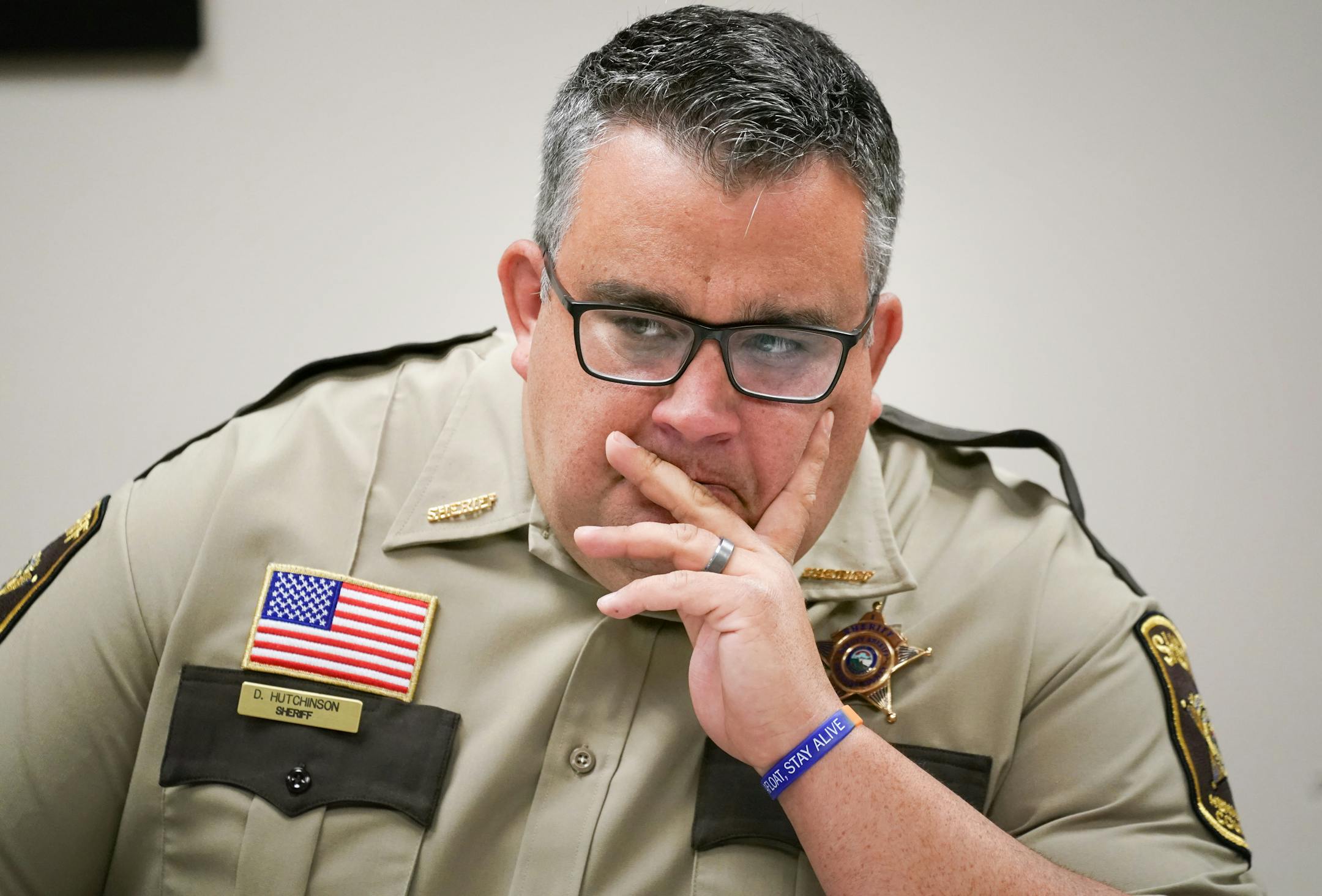
Sheriff David Hutchinson — a man elected by the citizens of Hennepin County who voted for him because they believed in his ability to uphold safety — got behind the wheel after drinking. He engaged in the kind of reckless behavior he is employed to confront; this is disheartening. It also helps clarify how we can increase road safety by adopting an approach that anticipates human error.
After sobering up, Hutchinson acknowledged his "inexcusable decision" ("Sheriff still in hospital, could face DWI charges," Dec. 10). When he was no longer under the influence of alcohol he was able to think a little more clearly, reflect on the situation and understand the danger that he posed to himself and others.
Alcohol impairs judgment, and for many people, it leads to increased risk-taking. Yet the laws surrounding drunken driving are blunt and relatively unforgiving, thanks in large part to the hard work and long-term advocacy of Mothers Against Drunk Driving. Drunken driving laws reflect an expectation that citizens will make rational decisions about their ability to operate a vehicle safely when their brains are impaired and incapable of doing so.
Those who kill others while driving under the influence are consistently held accountable and criminally charged. Yet killing someone after choosing with an unimpaired brain to speed, drive while distracted or haul a load illegally, for example, results in wildly inconsistent outcomes; some of these reckless drivers face criminal charges, but many do not.
This has been a particularly deadly year for road fatalities throughout the United States and Minnesota. As of Dec. 9, 472 people had lost their lives on Minnesota's roads, a nearly 27% increase (representing 100 lives) over 2020 year-to-date fatalities. Our roads haven't been this deadly in well over a decade.
In response, agencies employed to address issues of road safety have flooded social media with public awareness messages. These messages can't hurt, but no amount of urging to drive sober will keep drunken drivers off our roads.
It would behoove our public safety agencies to acknowledge that humans are inherently flawed and will continue to behave in predictable ways. They'd be more effective adopting what is referred to by road-safety advocates as a "safe-systems approach" and fully endorsing in-vehicle safety technologies including passive driver-impairment-detection systems as a means to control alcohol-use behaviors. This along with forward-thinking design measures — such as narrower streets and roundabouts — that make slower, safer driving more intuitive will save more lives than public awareness campaigns.
Sheriffs are human and, with all due respect to Sheriff Hutchinson, inherently flawed. We need an approach to road safety that fully acknowledges our collective humanity.

