

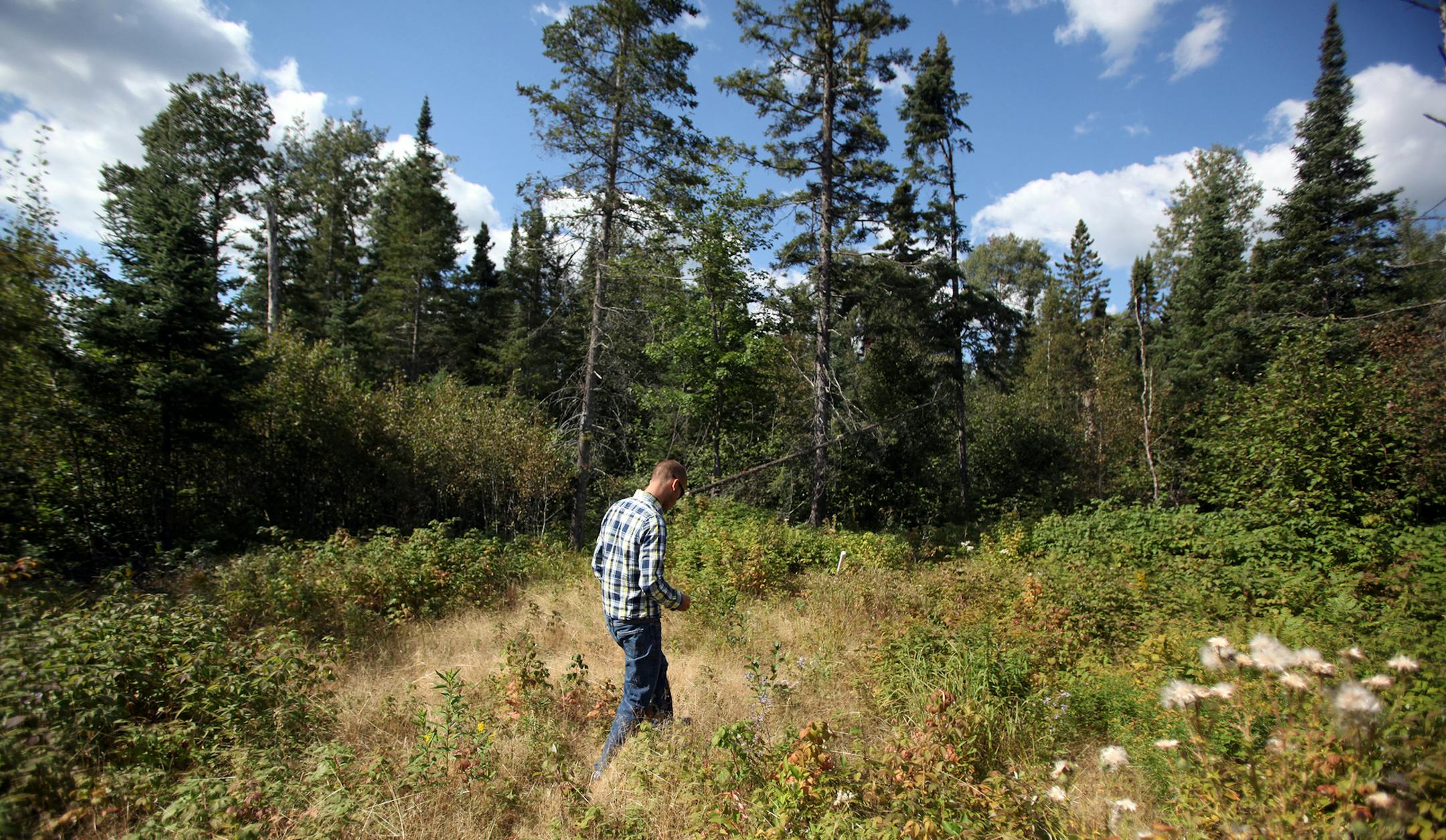
I must be a glutton for punishment: I just finished reading the reader comments about the PolyMet mine runoff flowing toward the Boundary Waters Canoe Area Wilderness (front page, Sept. 2). As expected, some are adamantly against the mining, and some are for it, just like the Enbridge pipeline issue. At some point, we have to come to a consensus about how we make decisions about Minnesota's water. We citizens can't come to a consensus on our own.
One of the board members at the Minnesota Public Utilities Commission once said that "a certificate-of-need proceeding is not the appropriate forum to mandate alternative energy development." She may be right, but what forum, exactly, is the appropriate one? Will our governor and relevant state agencies get together and decide, once and for all, which is more important: money or water? We'll all save a bundle of time and money if we have a forum, decide what we value most, and make it our state policy.
Janet Hill, McGregor, Minn.
• • •
I agree with Kathryn Hoffman, who is quoted in the Sept. 2 story as asking why, after 10 years, we do not know whether wastewater from the PolyMet mine would flow north or south? I have yet another "what are we getting here" question for the Minnesota Department of Natural Resources, which is leading the project's environmental review: What will be the state's financial gain from the proposed copper-nickel mine? Let's add it up. Assume that each of 350 new jobs represents approximately $85,000 to $100,000 in gross income.
According to the Minnesota Department of Revenue, an estimated $70,000 taxable (not gross) income would generate approximately $4,400 (an overall 6.3 percent rate) of new tax revenue. Multiplied by 350 jobs, that would increase state revenue by approximately $1.5 million per year, for a $30 million total revenue gain over 20 years. That's our trade-off for 350 jobs for 20 years. That's also, by implication, the value we place on nearby natural resources, including the BWCA.
Thirty million dollars. That doesn't include the cost of the 10-year study. It also assumes that nothing goes wrong. Given the latter scenario, how likely is it that any environmental cleanup would cost less than $30 million? Whether you're a jobs or environmental advocate, do the math. Then ask: Is it worth the risk?
Judith Monson, St. Paul
OIL-TRAIN SAFETY
Wouldn't 'all of the above' include pipeline transport?
Notably absent from the "all of the above" approach to rail safety promoted by U.S. Sens. Al Franken of Minnesota and Tammy Baldwin of Minnesota ("Avoiding an oil train explosion shouldn't be a matter of luck," Sept. 2) is any mention of the pipeline alternative to transporting crude oil. The basis for this omission is easily understood when one notes the senators' voting records with respect to the Keystone bill vetoed recently by the president. The senators' proposals contain the usual liberal formula of increased federal rules and regulations, while also raising the costs to the rail and oil industries of rerouting trains and reformulating the oil that's being transported. Reducing the actual volume of oil transported by rail and thus reducing the risk of the disasters they describe doesn't seem to register with them.
I am also one of the thousands of people living within a half mile of tracks carrying oil. I would appreciate some relief not only from the risk of explosive disaster the oil trains pose, but also from the intrusive noise they generate at all hours.


