

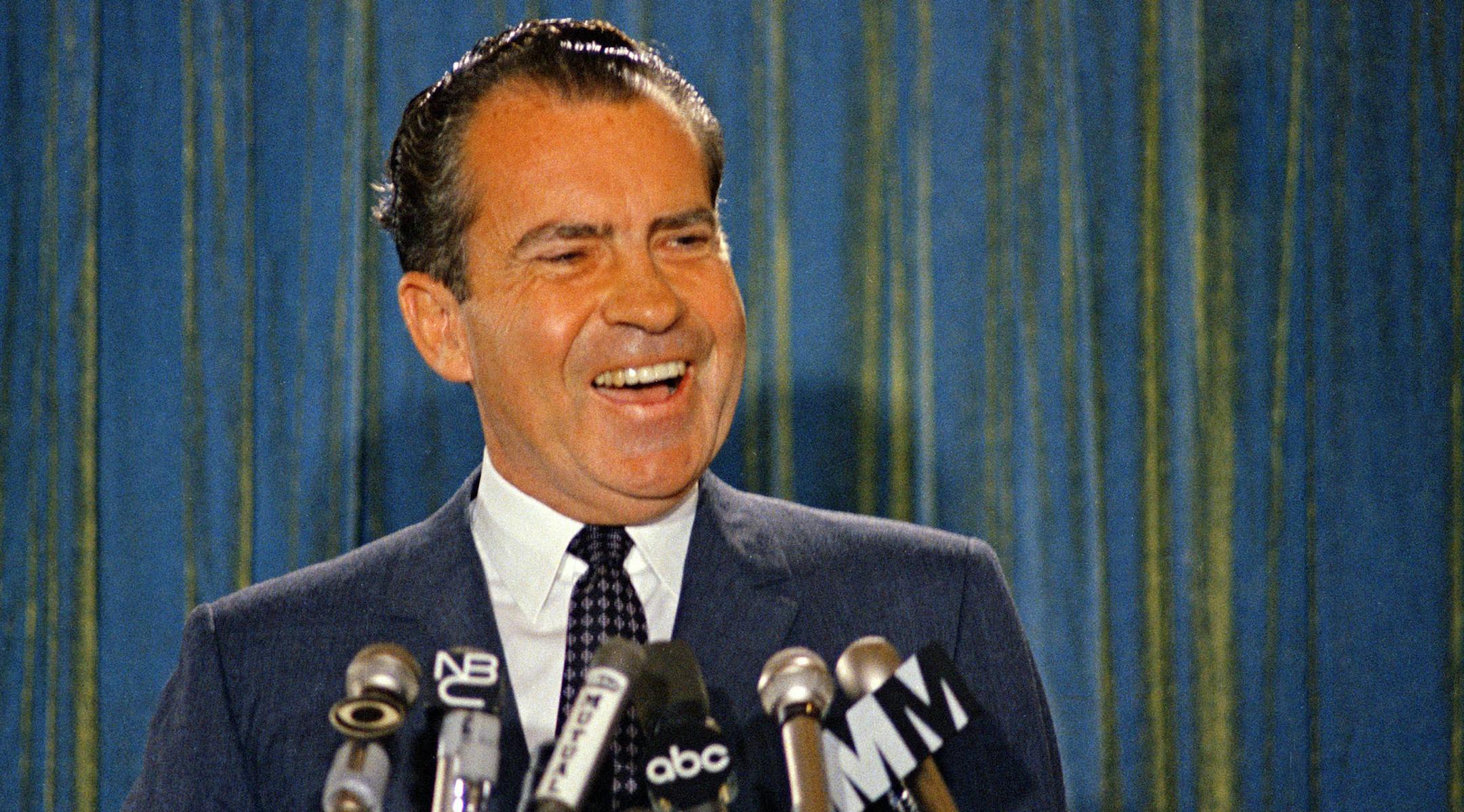
In 1968, Republican presidential nominee Richard Nixon ran his campaign on a platform of "law and order" and being "tough on crime." Nixon's message was clear to anyone listening: tough on crime equals tough on blacks. Nixon was a seasoned politician. He knew how to not alienate any potential voters, so he played to white America's lingering resentment toward African-Americans and their newly guaranteed voting rights. Granted, this population was a minority, but it was significant enough that Nixon knew he had to keep them.
They say there is nothing new under the sun, and this cliché seems to ring true here. Whether it is Donald Trump dodging a derogatory question about Muslims or Ben Carson saying he would not be comfortable with a Muslim running the country, the victimized group may have changed, but the strategy hasn't. The GOP candidates are taking a page out of Nixon's playbook, and playing to the minority of Americans who hold xenophobic views of Muslims.
I'm not suggesting the GOP candidates are Muslim-haters themselves, but the fact that they aren't standing up for a victimized group because of the fear of losing some voters is, to me, disgusting.
Steven Miner, Eden Prairie
SPEAKING OUT
Praise and response for articles on teen's clock, abortion
Kudos to the two writers who appeared on the opinion pages Sept. 22:
• Commentary writer Rebecca Cohen recounted her wrenching experience of carrying a child that had no future because of an embryologic malformation. She described in respectful and loving manner the bleak choices she faced, and her story is of importance in the debate about late-term abortions. Her story demonstrates that life sometimes takes ugly, irreversible turns and that adding to the suffering is not the "right" of any third-party interloper or government.
• Letter writer Nadia Shaarawi, who is a Muslim teen, demonstrated another form of courage: She voiced a politically incorrect opinion regarding a Texas teenager's homemade "clock" that looked like a bomb, to which the authorities in Texas responded cautiously. I smiled as Shaarawi described herself as an Arab-American, and her willingness to question the accepted narrative and publicly voice an opposing opinion added to this. She did more with her letter to help better relationships between Muslims and non-Muslims than the multitudes chastising people for voicing their fears and concerns.
I thank both of these people for their insights and courage.
Paul Bearmon, Edina
• • •


