

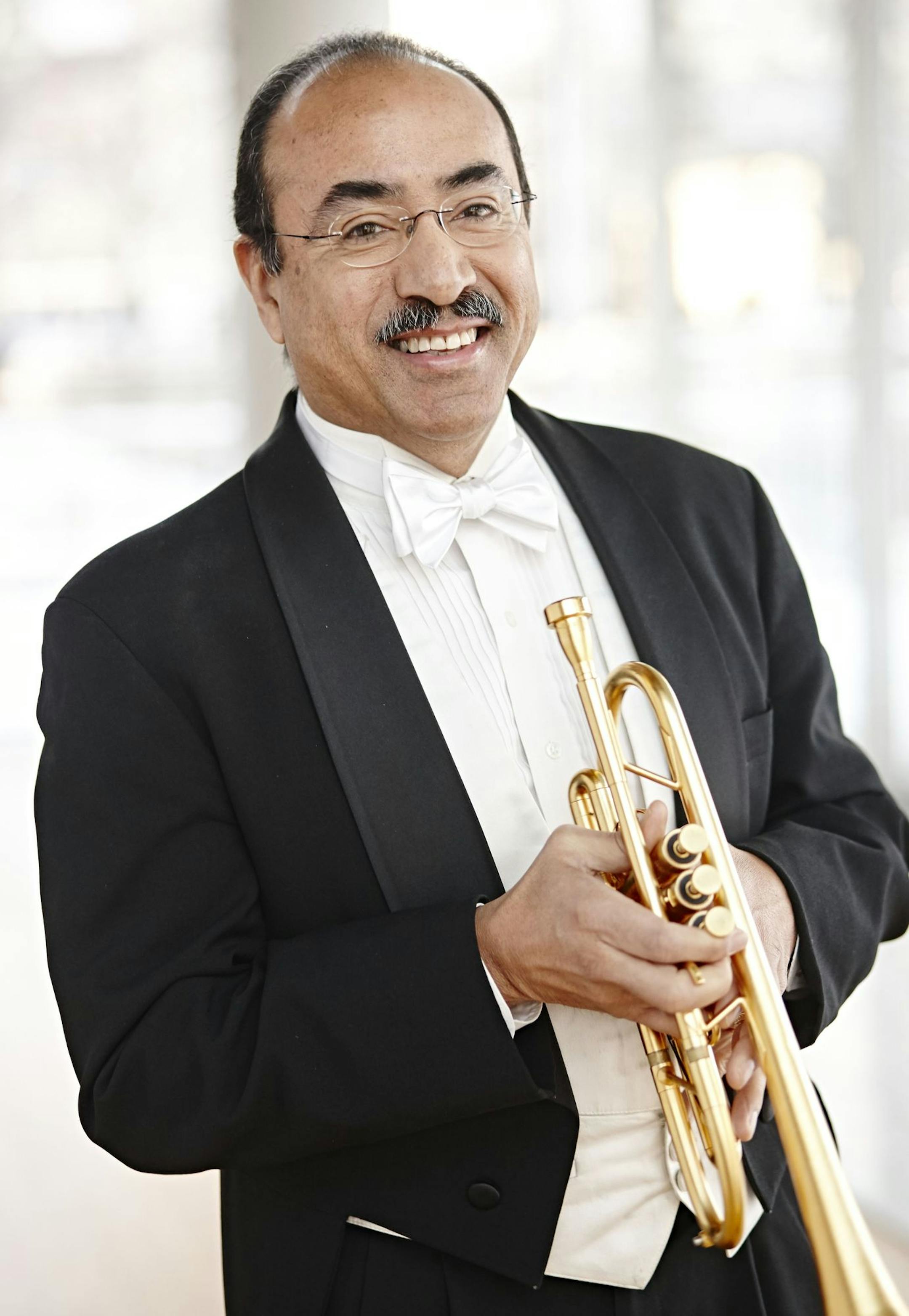
I've been following the "Minnesota Orchestra kerfuffle," (Readers Write, Dec. 6, 12 and 14, referring to events at the Dec. 2 Rufus Wainwright concert with the orchestra). Principal trumpet player Manny Laureano suddenly left the stage in protest of Wainwright's comments disapproving of the Republican tax bill. I'm surprised by the common thread among commenters, who seem to claim that music shouldn't be political. In a Dec. 9 article, Laureano said he "found [Wainwright's comments] to be beyond the pale of what that evening should be about. It's a time of the year we're supposed to all come together." A Dec. 12 letter brushed off Wainwright's comments as being of no consequence. A Dec. 14 letter argued that Wainwright "was paid to sing, not pontificate about politics."
The fact is that music has always been political, and it is naive to think that art can ever be divorced from the social and political context in which it is created. Giuseppe Verdi's "Chorus of the Hebrew Slaves" from his opera "Nabucco" became an anthem for the Italian nationalist movement in the mid-19th century, and many scholars believe Verdi intended this reading of the work. The opera "The Marriage of Figaro," arguably the crowning jewel of Wolfgang Amadeus Mozart's vast body of work, was adapted from a Pierre Beaumarchais play banned upon its publication in Vienna by the emperor for its message denouncing the privilege of the aristocracy.
I'm not convinced that either Laureano or Wainwright was wrong to take a political stand at the concert. This event highlighted the dilemma many orchestral musicians face as artists whose primary job is to interpret and perform the work of other artists. How can we reconcile performing the great operas of Richard Wagner, knowing that he was a vocal anti-Semite? Or performing Johann Sebastian Bach's epic cantata St. John Passion, whose portrayal of the Jewish chorus is often viewed as anti-Semitic? Carl Orff's choral work "O Fortuna," famous for its (and countless plagiarisms') use in movie scores, was written for the Nazi Party.
Is there merit to performing the work of artists with whose politics we don't agree? I say yes. Our work lies in thinking critically about the politics of the music we perform just as we wholeheartedly commit artistically to putting on the most convincing performance possible. We live in a moment when people don't want to empathize with the experiences that may lead others to the opposite end of the political spectrum. Maybe music and the concert hall can be a place where, as Laureano says, we "all come together" to face our differences head-on. How revolutionary.
Martha Mulcahy, St. Paul
The writer is a student at the Cleveland Institute of Music.
MINNEAPOLIS PARKS
Indeed in a 'strong position,' thanks to efforts by many
As a former (now retired) employee of the Minneapolis Park and Recreation Board, I feel that the Dec. 18 letter "As superintendent departs, consider spending patterns" was very misleading.
Neighborhood parks are at the core of the Park Board's recreational services and provide the critical building and site infrastructure to support recreational programming. Before Jayne Miller became superintendent, neighborhood parks had no funding stream for capital improvements other than playground and pool replacement. Funding was woefully inadequate to maintain and replace critical park components such as buildings (roofs, mechanical systems, etc.), paving, lighting and play fields. Despite the best efforts of planning and maintenance staff, the condition of our neighborhood parks was in decline and needed a massive infusion of capital.
Starting in 2014, Miller, along with the current board, the citizen group "Save Our Parks" and Park Board staff, worked tirelessly to research and develop a strategic plan ("Closing the Gap") and necessary support to address the deferred maintenance of neighborhood parks. In 2016, Miller and the board successfully negotiated an agreement with the city to provide $11 million per year for 20 years to address deferred maintenance in neighborhood parks. Neither Miller nor the current board received the credit they deserved for this visionary work.


