

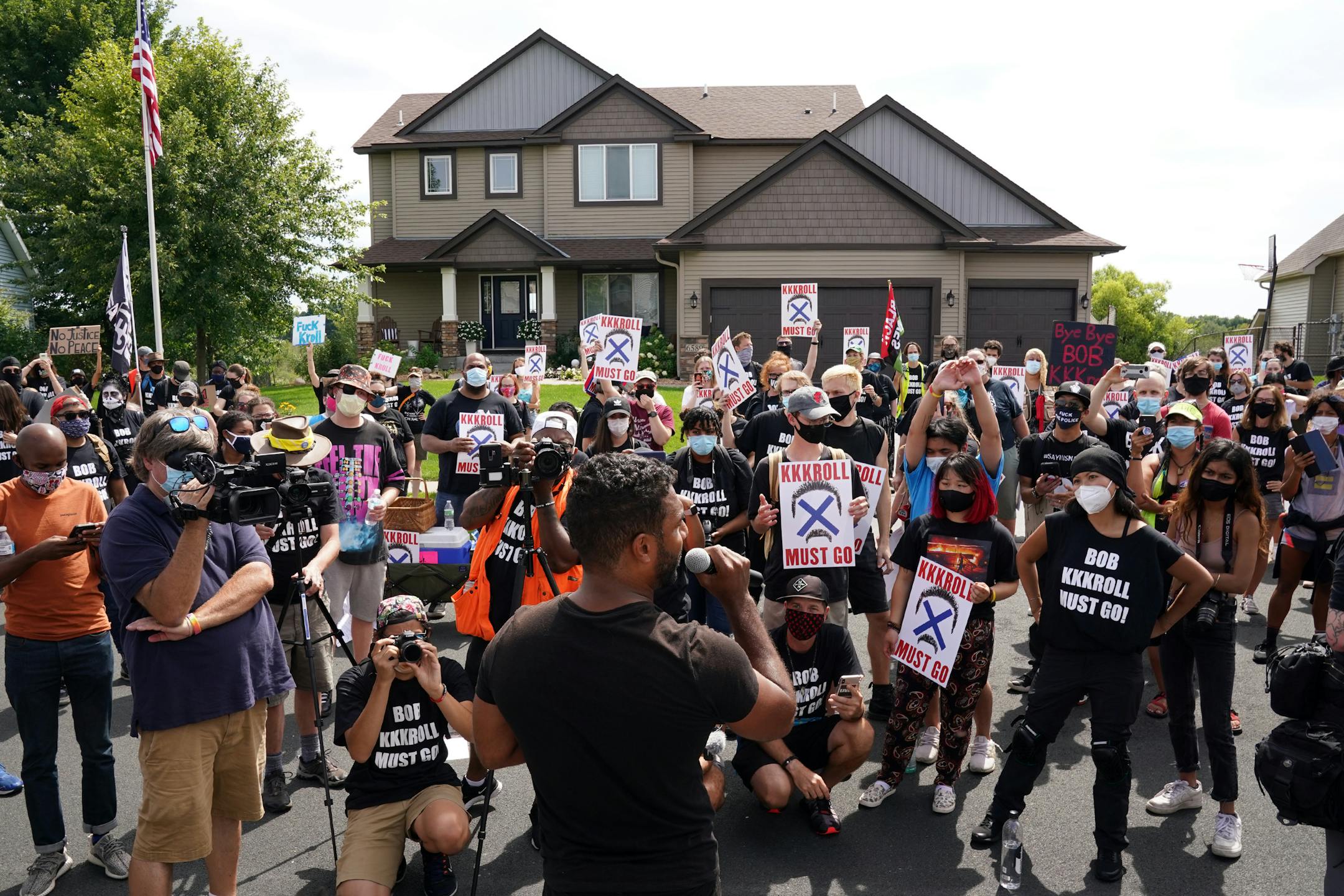
I am appalled that extremists are threatening to protest at legislator's houses ("Taking fight over policing to lawmakers," front page, July 6). That type of behavior is more akin to dictatorship than democracy. They are going to disrupt people's lives until they get their way because they believe they are right and anyone with a different opinion is wrong. If the compromises that democratic lawmaking requires result in laws that don't suit them, they will make life uncomfortable for those lawmakers just like they have made life uncomfortable for the rest of us by shutting down airports, train stations, malls, streets and interstate highways.
What they fail to realize is that, in a democracy, many different opinions exist simultaneously. Our elected representatives have to consider all the people they are representing, not just the extremists.
I hope all the cities in the metro area pass bills making it a crime to protest at private residences. If people don't like the laws, they should let their legislators know what changes they would like to see. Their legislators will then consider their inputs, along with inputs from the rest of us.
James Brandt, New Brighton
•••
It has been more than a year since George Floyd was killed by Derek Chauvin. During that time there have been some of the largest protests and destructive riots in Minnesota history. And there has been a constant deluge of stories claiming there is an epidemic of police killings (especially of Black men) and demanding reform. As the dust slowly begins to settle, I am hoping that there can be an honest and productive discussion about police killings and policing in general.
Every day thousands of police officers respond to tens of thousands of calls, many of which are fraught with danger. In the vast majority of these, the police use restraint as they resolve encounters in a peaceful manner. And when an incident results in the police killing someone, the public has a right to know the circumstances, and there should be a proper accounting of the behavior of all involved. But we should be honest in the discussions regarding these events.
There is not and has not been an "epidemic" of police killings or of police killings of Black people in America or Minnesota. In 2013, according to Mapping Police Violence, police killed 1,087 people across the country, and in 2020, they killed 1,126. In 2013, police killed 11 people in Minnesota, according to a Star Tribune database, and in 2020, police killed 10. Of the 11 killed in 2013, three were Black, and of the 10 in 2020, two were Black. These numbers clearly depict that there has not been a major increase and there is no epidemic of police killings in the country or in Minnesota.

