

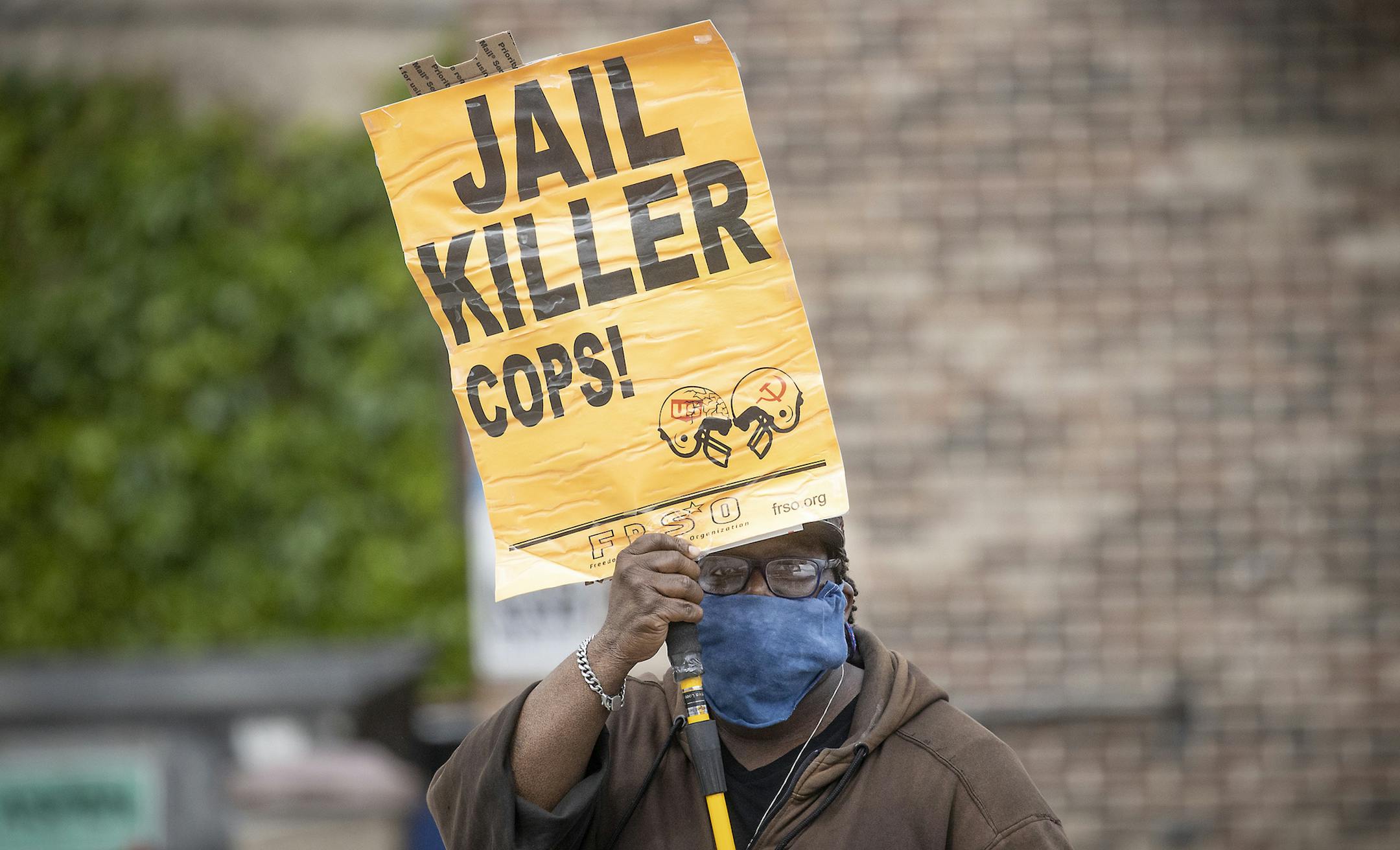
The Memorial Day death of a handcuffed black man is a tragic reminder that on a day when Americans are expected to blindly thank the armed forces for freedom, it's not the military that has anything to do with our most basic freedoms but rather our militarized police officers who get to make those decisions, and that all too often they do not grant those freedoms to minorities or the poor. We should be asking ourselves what freedom truly means. ("Four officers fired as FBI, BCA investigating in-custody death of man in south Minneapolis," StarTribune.com, May 26.) We should be asking who gets to decide our freedoms for us. And we should be asking whether those freedoms are being shared equally.
Peder Kvamme, Minneapolis
• • •
A knee on a neck — seeking justice is but one goal. But, please, someone figure out how police training can cause some officers to lose sight of their own common sense. Learn why some officers do not feel empowered to intervene with another officer when terrible police behavior is happening. Police work must be hard enough without its being represented by the officers seen in the video taken Monday.
Paul Mueller, Edina
COVID-19
Churches and the spaces within; National Guard testing; mask use
I thoroughly enjoyed a May 23 letter writer's mathematical gyrations about social distancing in churches. Fun and informative; however, he addressed the wrong space in the Cathedral. The spaces he should be addressing are the bathrooms.
Of course, in any church it is fairly easy to social-distance appropriately in the sanctuary portion of the building. However, measure the square footage of the bathrooms, allow for space taken up by the fixtures, then recalculate to get the "safe" number of people allowed for in-person worship. I have been in two bathrooms in the Cathedral, and I can assure you that space is at a premium.
Aside from this, to admit people to this common area of any building safely, you need to go back to the old-fashioned way of doing things and install bathroom attendants; two for each of the men's and women's bathrooms. One individual to sanitize hands and hand out masks as folks enter, control any lines that develop, as well as sanitize hands as folks leave, and another to sanitize stall doors, flusher handles, toilet seats, urinals, stall door handles (both sides) and sink faucets. Knowing this to be impractical, I am totally enjoying my church online worship, Bible studies and children's programs and will do so until the virus is controlled.
Marilyn Carlson, New Hope
• • •
I wanted to thank the Minnesota National Guard for offering and managing free COVID-19 testing over the weekend. The St. Paul location, one of six, was well organized and efficient, and the Guard men and women were professional, helpful, respectful and friendly. In a time of great uncertainty, this was truly compassionate service.
Sarah Barker, St. Paul
• • •
After reading a recent article about mask wearing, I realize that many people still have the idea that wearing a mask primarily protects the wearer. This is wrong, except for perhaps a valveless N95 mask. Wearing a mask protects the people around you, not the other way around. Surgeons wear masks in the operating room to protect the patient, not themselves. They do this even if they feel fine. The person quoted in the article said that if someone shedding virus sneezes in your face, a mask isn't going to help you. But if the person sneezing is wearing a mask, that reduces transmission to everyone around that sneeze.
It is a simple measure that could do a lot in keeping the infection rate low and allowing our economy to continue to open and recover. (I don't understand why so many Republicans complain about the damage being done to our economy, yet don't wear masks.)


