

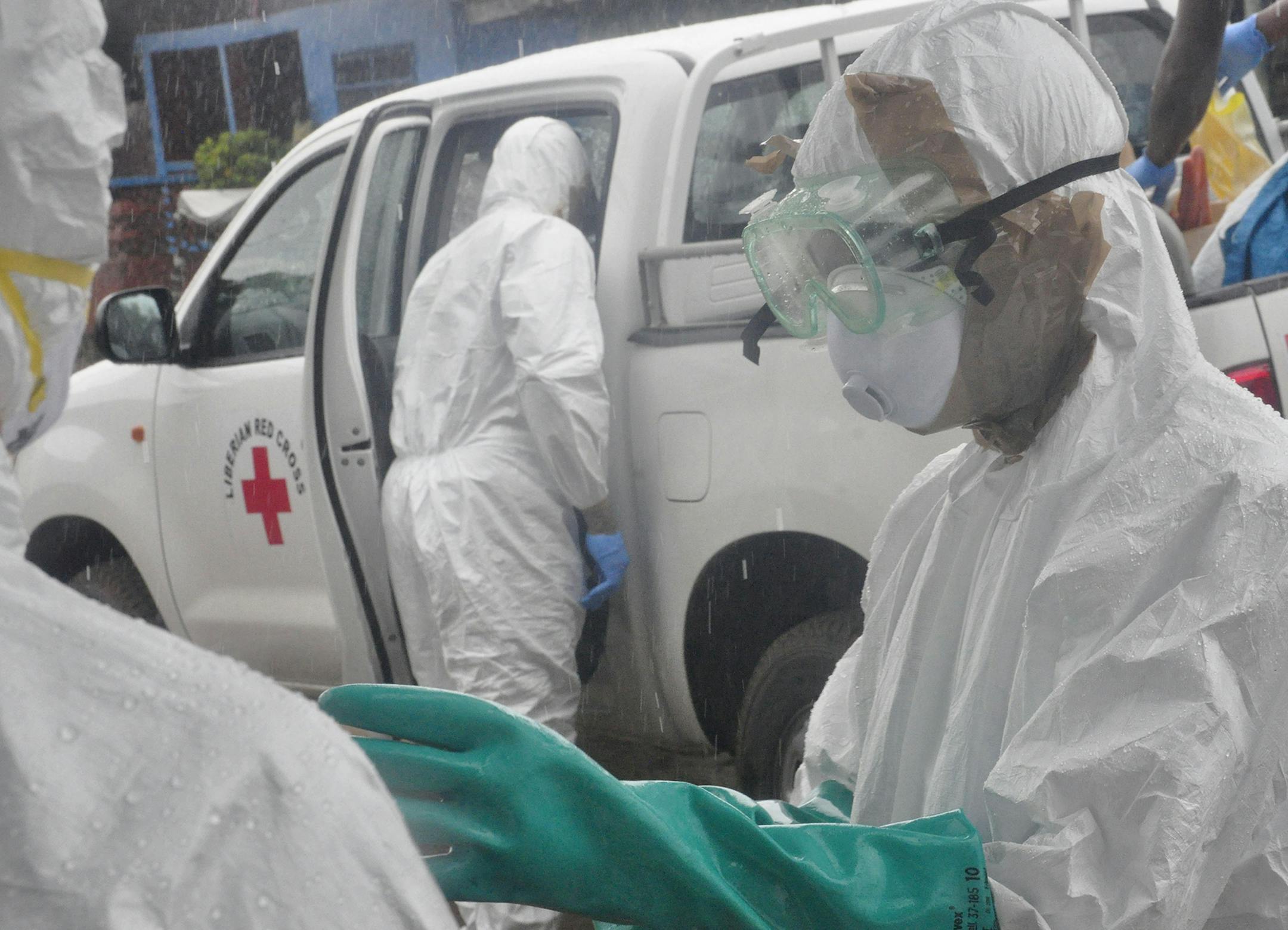
Our current national response to the Ebola outbreak as articulated by the director of the Centers for Disease Control and Prevention is wholly inadequate ("Ebola patient fighting for life," Oct. 6).
While expressing confidence about the U.S. effort, the director, Dr. Thomas R. Frieden, tells us the outbreak would be worse for us if we attempted to control incoming traffic from the affected areas. I feel like he is asking us to drink the proverbial Kool-Aid.
Ebola is clearly highly contagious and highly lethal. It is counterintuitive that we are not trying to control its introduction into the United States. With an incubation period of up to three weeks, even the newly suggested airport temperature screening would allow infected people into America.
The logistics and expense of quarantining all people coming in from endemic areas will not be simple or cheap, but playing catch-up to determine the contacts of people who become sick later will be much more complex and expensive.
We must also consider the possibility of extremists who want to hurt us by exporting this virus. Imagine the impact of 10 or more jihadists willing to martyr themselves as biological "dirty bombs." They will not seek medical care when they become ill, but rather contaminate as many as possible until stopped or dead. The potential impact upon our health care delivery system, financial markets and collective psyche is unimaginable.
Public health leaders need to institute 21 days of quarantine for all people entering the United States from any area with documented Ebola cases. Doing so will not only limit our risk of a widespread outbreak, but hopefully it will buy our scientists the time to develop the medicines to treat and/or prevent this horrible disease.
Dr. John Dryer, Maple Grove
AIRPORTS COMMISSION
How big solar project actually will pay off
I just want to correct the assertion by Don Van Gorp in the Oct. 8 Star Tribune (Readers Write) that the historic new solar project at Minneapolis-St. Paul International will cost $25 million but return only $10 million in revenues and cost savings to the Metropolitan Airports Commission. The commission will be $10 million ahead AFTER you deduct the $25 million construction cost and all related expenses ("MSP has big plans to go solar," Oct. 3).
The beauty of the airport's solar project, the largest in Minnesota, is that the airport will generate up to 20 percent of its energy needs from the sun, reduce overall energy consumption and have $10 million more in the bank at the end of 30 years than it would have if it had not undertaken the project. This effort demonstrates that being good stewards of our natural resources makes sense financially as well as environmentally.


