

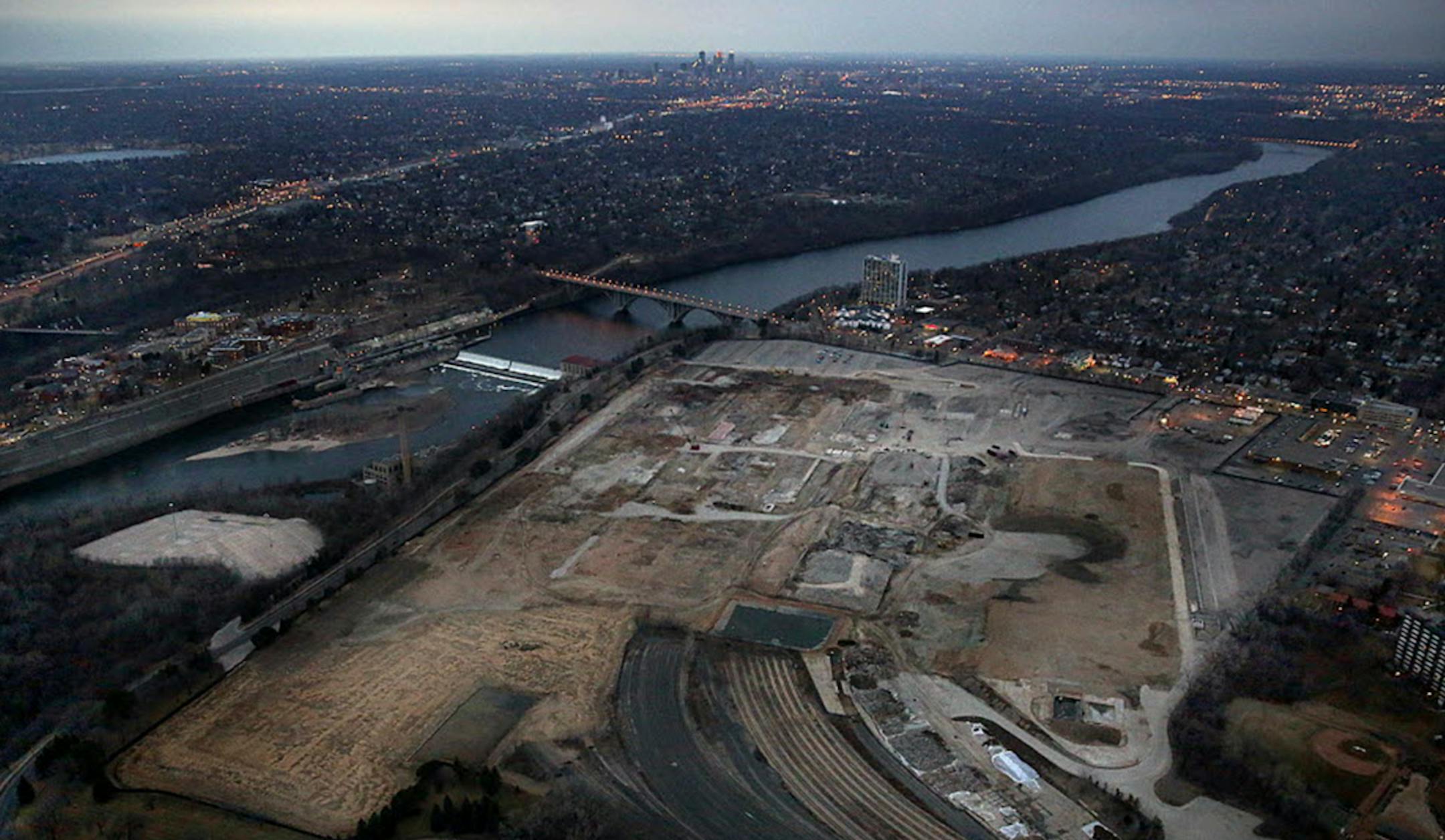
The Nov. 15 article "In St. Paul, a glimpse at the future of Ford site" coaxed me to put pen and paper to St. Paul Mayor Chris Coleman's numbers. If you take 122 acres, less roughly 20 percent for roadways, sidewalks and private/public easements, you are left with about 100 acres. In order for that to produce $22 million in annual tax revenue, as the politicians seem focused upon getting their hands on, the governmental grab would be roughly $200,000 per acre. That means each acre would need a building worth $5 million, taxed at 4 percent of that value. Now say that four homes, shops, gas stations or office buildings are squashed in per acre. The governmental fee for roads, sewer, schools and salaries would need to be $50,000 per building owner. Ouch!
Hopefully, the city won't allow developmental blight to occur, as Bloomington has, by pushing four- to five-story wood-construction apartments covering every allowable inch of property, while leaving inadequate parking and open space. If there isn't another employer to replace the lost Ford jobs, why not build a few 30- to 40-story condo/apartment buildings? Then maybe add a hotel, with mixed retail to serve the new residents, with the remaining 70 to 80 acres left as a park similar to New York with its Central Park?
C.W. Howard, Minneapolis
The writer is a real-estate broker.
THE DEMOCRATIC PARTY
'Discontent in the Heartland?' Yes, but not the kind proposed
Scott Gillespie's Nov. 15 analysis of the election results in Trempealeau County, Wis., ("Clinton failed to grasp discontent in the Heartland") can't see the forest because he's afraid to call it trees.
Unfilled jobs and needed workers who were willing to process chickens and milk cows, according to Gillespie, began to change the look of the "virtually all-white town." Local employers likely tried to fill job openings from "small government" and "Second Amendment advocates" born and raised in the area, but apparently they find certain jobs distasteful. Rather than close their businesses and move elsewhere — causing economic devastation to the county — the employers use "strong verification systems" and hire those willing to work.
What has happened in Trempealeau County is a growing local economy, a local population unwilling to fill the jobs and resent of those who are willing to take them. Then, as they see faces of an unfamiliar color, often bilingual, like the newly hired priest, they tap into their "high suspicion" and listen to a candidate who calls out to their fear and racism.
That is what Gillespie and the Clinton campaign failed to recognize. That a small rural county experiencing strong job growth not filled by the local residents would resent those willing to fill the void, not because they are jobless vagrants, but because they look and sound different. One campaign counted on our Better Angels. The other, Building a Wall.
Todd Embury, Ramsey
• • •

