

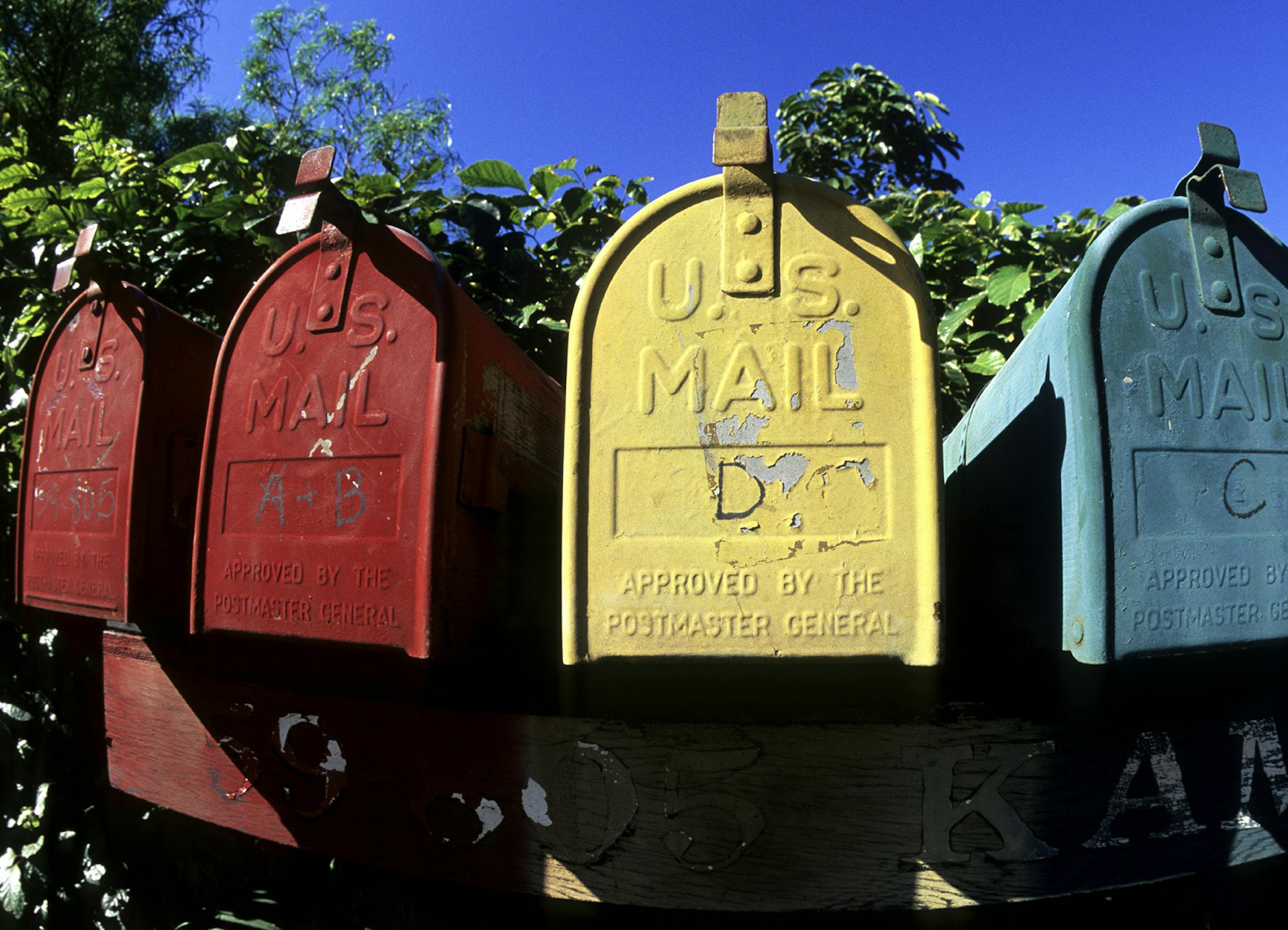
The U.S. Postal Service is disingenuous with its proposed closure of mail sorting facilities across the nation — including in Bemidji, Duluth, Mankato and St. Cloud. Concerning closures, USPS spokesman Peter Nowacki has been quoted as saying: "The time for first-class mail is expected to be about the same. Timely delivery is still important" and "[t]he delivery standard for first-class mail will change from one to three days to two to three days. Customers will see little change in when their mail is delivered."
Thankfully, the American Postal Workers Union has made the situation very clear: "On January 5 the USPS is slated to lower 'service standards' to virtually eliminate overnight delivery — including first-class mail from one address to another within the same city or town."
Today, four postal unions will participate in "National Day of Action" activities at about 125 locations across the nation. These unions will be protesting the closing of mail sorting facilities and the lowering of service standards.
If postal executives on the national level make the wrong decision and close these facilities, I challenge postal management on the state and local levels to mitigate the resulting consequences by working with local unions and rank-and-file members. Even though service standards probably will be lowered, we as postal employees have a duty to keep overnight delivery in rural Minnesota and western Wisconsin.
Galen Naber, Roseville
SCHOOL SUSPENSIONS
In defense of the superintendent's plan
Incorrect, pervasive perceptions such as those harbored by society toward young black men take on the effect of a disease process. Assumptions and attitudes spiral through the community unchecked, especially when seemingly legitimate outlets such as public servants and the media reinforce what many do not know to be true through firsthand experience.
There is a ground zero in the community, and it is our schools. Minneapolis public schools Superintendent Bernadeia Johnson recently announced a ban on elementary-age school suspensions and a case-by-case review of suspensions of black students. From working and volunteering in classrooms, I can give witness to the effect that suspensions of black students has. Without conscious effort, suspended students' peers and the adults who work with them begin to see those students as "bad" and begin from that point to interpret their behavior. Studies have shown that this is true whether we accept it or not.
We may not want to be racist, but we are — through the conditioning that happens passively as we observe the treatment of others, especially within settings like our schools and neighborhoods. These are the settings where we forge our values and identities, and few people actively challenge these roots of institutional racism, so it continues.
I applaud Superintendent Johnson for taking a stand and showing what it will take to change.


