

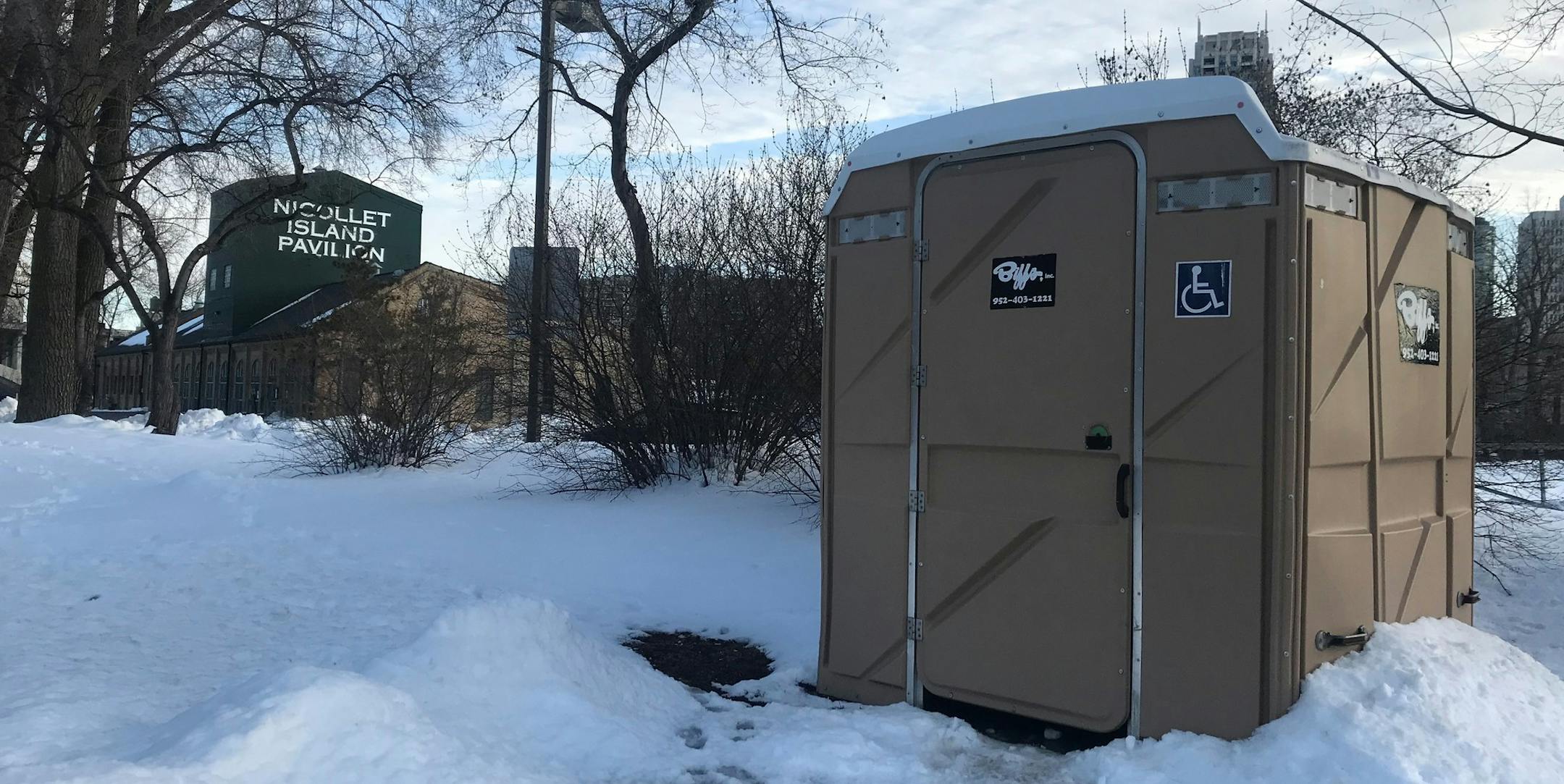
Park visitors have to go about a half-mile from Nicollet Island Park to find flushable toilets that are open to the public, as noted in the April 21 article "No (rest)room at the inn: Public facilities sought." But 100 paces from the current portable toilet are fully plumbed restrooms in a building the public paid for decades ago. The Minneapolis Park and Recreation Board bought the Durkee-Atwood rubber factory complex in 1981 for $6.5 million and turned the largest building into a park pavilion. The flushable toilets there were open to the public for years. Then in 2004 the Park Board privatized the pavilion and phased out public access to the facilities. Don't it always seem to go that you don't know what you've got 'til it's gone — and you have to go?
Chris Steller, Minneapolis
TRADE AGREEMENTS
Editorial Board is conceptually wrong — yet again — on TPP
The April 21 editorial "Trump is wrong — yet again — on TPP," chastising President Donald Trump and even Hillary Clinton over the Trans-Pacific Partnership, was not "geoeconomic and geopolitical rationality" but an exercise in neoliberal indoctrination, similar to trickle-down ideology: Repeat an obvious falsehood long enough and people will begin to accept it as truth uncritically.
Those of us who have actually read the TPP, and who understand existing global trade rules, recognize that global trade as it has been codified is not about protecting "workers" or "the environment" but more about weakening nation-state governance in favor of more direct rule by corporations and banks, preventing citizens from having any more say about what is done with the land and waters. Specifically, allow corporations foreign or domestic to do as they please, or be sued for "lost profits."
That is not "free trade and free peoples," but compulsory trade by force and the threat of extortion. See NAFTA, Enbridge and PolyMet as examples.
According to neoliberal logic about TPP and global trade generally, both "the environment" and "workers" in America should be in better shape than ever. From the point of view of this working-poor fellow who loves the land and waters, the leadership of this nation does not care about me or the health of America or the Earth.
William Hunter Duncan, Minneapolis
GUN POLICY
I second the motion: In this debate, language matters
Language is important. The term "gun control" is a case in point, as an April 24 letter writer suggests. One conjures up images of someone/something, most likely government, "controlling" a person or their goods. A different phrase — for instance, "firearms public safety" — accurately denotes exactly what the issue is.
Where is the public comfortable on drawing the line on firearms or firearms accessory ownership? Should citizens be able to own a machine gun or mortar? It's very reasonable to look at the almost daily occurrence of firearms violence and have a public debate as to where the line should be drawn. My guess is that hunters like me will still have our guns, but background checks, age of gun purchase, bump stocks, etc., will fail the public-safety test.
Kevin Kelleher, Houston, Minn.
OIL
Two rulings on Enbridge, and we're halfway to grasping risk
There were reports about two interesting rulings in the April 24 paper. One revolves around the case of Enbridge's fight for a new Line 3 ("Judge clouds pipeline fight"). In that ruling, the judge found that using the existing pipeline corridor for a replacement line would isolate the environmental risks to an already-active oil pipeline corridor. In this case, the risk is limited to that associated with the transport of oil through the pipeline. The greater risks that come from the use of oil — catastrophic turmoil and costs of global warming — are not considered.


