
Readers Write: Need for parking, transit, housing, masking in schools

It's just reality, St. Paul.

August 15, 2021 at 11:00PM
(Leila Navidi, Star Tribune/The Minnesota Star Tribune)

So the St. Paul City Council intends to follow the enlightened path of the Minneapolis City Council and eliminate parking requirements for developers ("St. Paul may nix parking minimums," Aug. 12). What a wonderful subsidy for the poor, downtrodden developers!

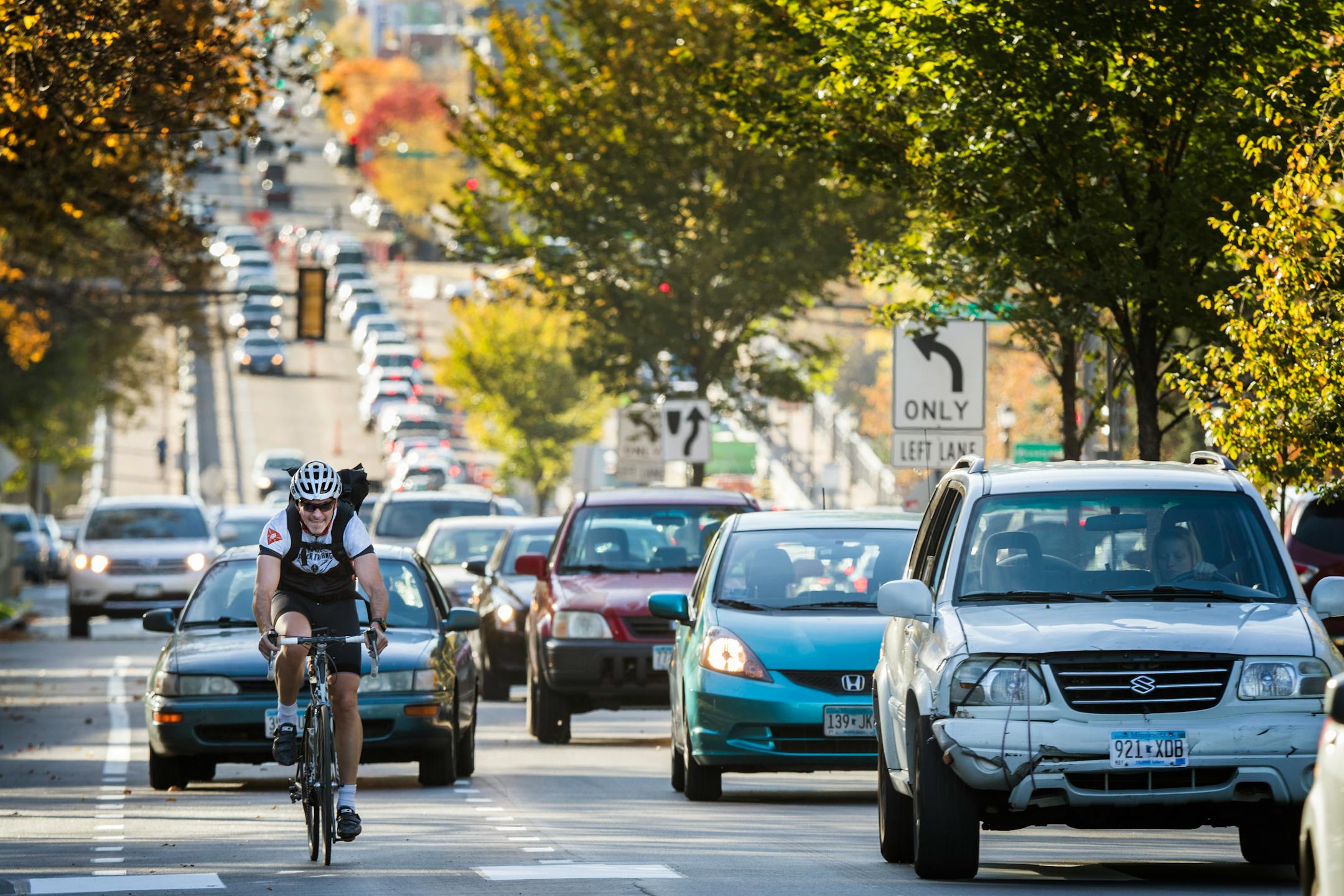
Most people don't realize that this great experiment in parking has been taking place in Minneapolis for several years since parking requirements for developments near mass transit were significantly reduced. Developers proceeded to build high-density housing with minimal parking and then dumped their tenant parking on the streets. Those streets have become bumper-to-bumper parking nightmares. Forget about having visitors to your home; there's no place to park. Pay more to a contractor for the restricted parking. Moving in or out of an apartment? Make special arrangements and pay more. Streets blocked with double-parked delivery trucks? Blame it on no parking.

Yes, the Twin Cities needs more housing density, but it shouldn't come at the loss of quality of life. Citizens pay special assessment taxes for streets, and they should have some expectation of using them. It has been the developers' gain and the citizens' pain.

Cars might be smaller or all electric soon, but there's no sign of their extinction.

If the City Council is so committed to a "carless" vision of the future, why not require a covenant for new developments to rent only to tenants who walk and bike? Why doesn't that happen? Because developers know that 90% of their tenants still want cars. Duh.

Larry Ludeman, Minneapolis

•••

The St. Paul City Council should reconsider any plans to eliminate new construction parking requirements, at least in densely populated areas that are already stressed by far-too-limited parking, especially during winter restrictions and construction/maintenance parking bans. This is especially true for aging seniors and the disabled who need to park close to home or to access to businesses.

We live in a high-density area near the Minneapolis lakes, stressed by concerts, four active restaurants and many other businesses. Streets are packed every evening and even during daytime hours. Winter is far worse when parking is restricted to one side of the street. A large condo apartment complex completed in recent years was well planned with adequate underground parking for all tenants, much to the relief of neighborhood homeowners and businesses.

Zoning should require all such projects to go to underground parking, building on a firm foundation of common sense. In fact, excess spaces should be considered as an investment for selling spaces for neighbors. If more people switch to public transportation over the years, spaces could be rented for other uses such as temporary locked storage bins or electric car charging ports. Vehicles are not going away for some time, if ever, so we need to provide this new adequate parking.

Michael Tillemans, Minneapolis

TRANSIT

Not worth the extra investment

In the past week, there have been two unrelated articles. In one, it was reported that Metro Transit is temporarily lowering fares to $1 on buses and trains in order to get riders back ("Metro Transit to try a buck a trip this fall," Aug. 11). In the second article, the Southwest light rail project incurred a $200 million cost overrun, which will be funded by the county ("SWLRT gets $200M more from county," Aug. 12).

Being a snarky number cruncher at heart, I calculate that just the cost overrun (1/10th of the total project), would pay for 77,000 people to ride existing light rail for free, every workday, for 10 entire years.

In my opinion, light rail construction does not deliver sufficient bang for the buck.

Jack Kohler, Plymouth

HOUSING

Homeownership isn't always possible

As someone who served on a committee advising the Metropolitan Council in the creation of its 2014 regional development guide, I find the conclusions and recommendations of Stephen Grittman ("Single-family homeownership dream doesn't divide, it unites," Opinion Exchange, Aug. 10) to be simplistic and light on basic economics.

Grittman contends that because people want to live in single-family homes, government should take extraordinary steps to make this housing type more affordable. And government should discourage development of multifamily housing because it competes for market space and drives up the price of homes: "Supply and demand is a real thing," writes Grittman. He recommends that the Metropolitan Council and other government bodies eliminate unrealistic density standards, subsidize wastewater treatment costs and build roads to cheap land.

This set of recommendations flies in the face of the reason the Legislature created the Met Council a half-century ago. The council was then and continues to be charged with promoting the orderly growth of the region in order to minimize wasteful spending on sewer lines and roads.

Regarding density, the council oversees and assists local governments as they create decadal comprehensive plans. As part of that task, the council analyzes demographic trends and advises local governments on the share of the region's population they need to plan for. This includes an assessment of growth in population by income grouping.

The population in the income category of below $41,500 includes delivery drivers, home health aides, retail and food service workers — people whose labor is needed in the functioning of our communities. No matter their level of desire for a single-family home, most will need an apartment in which to reside. This requires higher than single-family-home density, logically concludes the council. As a real thing, there will not be a supply of single-family homes affordable at this level of income, regardless of demand.

Chip Halbach, Minneapolis

MASKING IN SCHOOLS

For goodness' sake, just mandate it

As a mother of two girls who are too young to receive the COVID-19 vaccine, I am increasingly concerned about the increase in community spread in Minnesota and their potential exposure to COVID as they start school. My concerns were heightened after attending the Wayzata school board meeting on Aug. 9 and hearing a number of appalling, uninformed, conspiratorial public comments against universal masking.

To those who argue that universal masking will infringe on their constitutional right to freedom and parental choice, or any other masking hesitancy, I offer the following:

Years ago, smoking bans were implemented in most indoor public spaces because of the scientifically proven detrimental impact on the health of those exposed to secondhand smoke. Individuals still have the freedom to choose to smoke; however, smokers are required to remove themselves from those public spaces when they want to smoke so they do not adversely impact the health of others. An individual's right to a healthy environment free of secondhand smoke takes precedence over the rights of the smoker.

Similarly, parents have every right to decide what is best for their children. However, if a parent makes a choice for their child that is contrary to current scientific evidence, that parent and the child must not infringe upon the rights of others who have a right to a healthy school and work environment. These parents should be the ones who bear the burden of removing their children from school, finding alternative child care, providing remote learning opportunities for their children, or home-schooling.

Gov. Tim Walz, school boards and superintendents across Minnesota, please prioritize the health of our children and take the only action that can currently help keep those under 12 protected from COVID by implementing a universal masking mandate in all schools, regardless of vaccination status. The masking requirement should be in place at least until a vaccine becomes available for those under 12 and enough time has passed for the vaccine to be administered and deemed effective.

Nicole Sandoval, Plymouth

We want to hear from you. Send us your thoughts here.

about the writer

about the writer