

•••
"We're not gonna fix it."
This devastating assessment of the latest school shooting in Tennessee came from that state's congressman representing the Second District, Tim Burchett. Faced with a lethal situation in his own state, the best answer he had to give was to normalize the violence and carnage. This elected official chose the violence of the moment as the standard and acceptable state, and not the will to change.
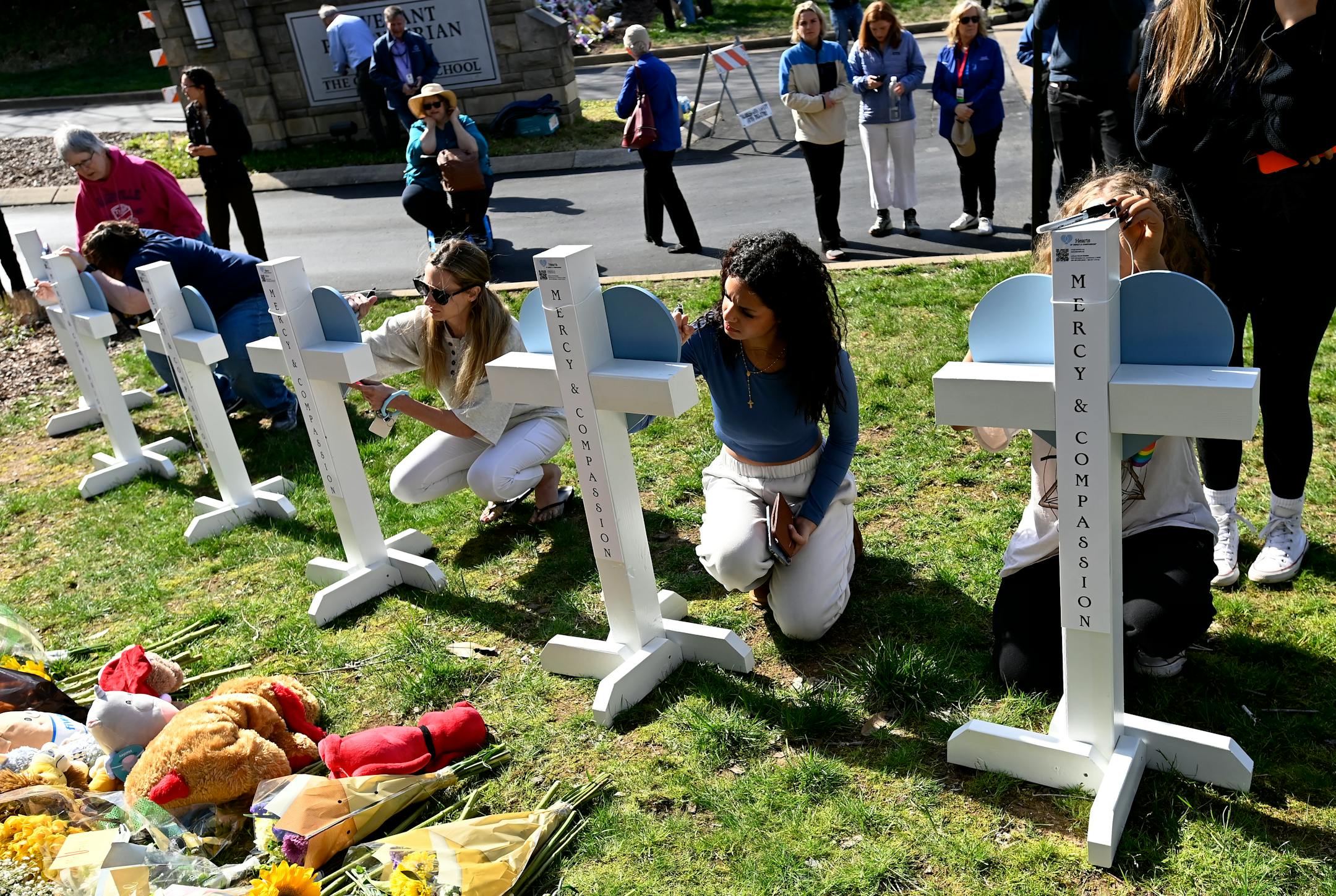
Each time a tragedy like the one at the Covenant School happens, there is a grisly system to which we have become accustomed ("Seven weapons bought legally," March 29). After the "thoughts and prayers," after "lifting up the families and first responders," after the mournful body counts, there is a moment when the dismay and terror turn to questions of "How? Why?" Often, the calls for blame fall to some acceptable and reliable culprits like mental illness, the internet, social disintegration, school safety, evil. As Burchett suggests, there are a slew of "well, what can you do" culprits that underline the helplessness of the situation. That "well, what can you do" response can conveniently frighten us into inaction, while at the same time, distance us from the causes.
We normalize. The best answer we are given is to normalize the violence and carnage. In Minneapolis, and across the country in 2020, we chose not to normalize the violence against Black lives and Black bodies. Instead of accepting another death (and another, and another) a movement started that, if it wasn't able to fully vocalize "no more" or "enough is enough," at least refused to see the deaths as "normal" in a civilized and prosperous country.
There is no reason carnage should be the state of our lives in the United States, no reason why the deaths of children and teachers should be considered normal. There is no reason why "we're not gonna fix it" other than cowardice and lack of social will.
Michael Whistler, Minneapolis

