

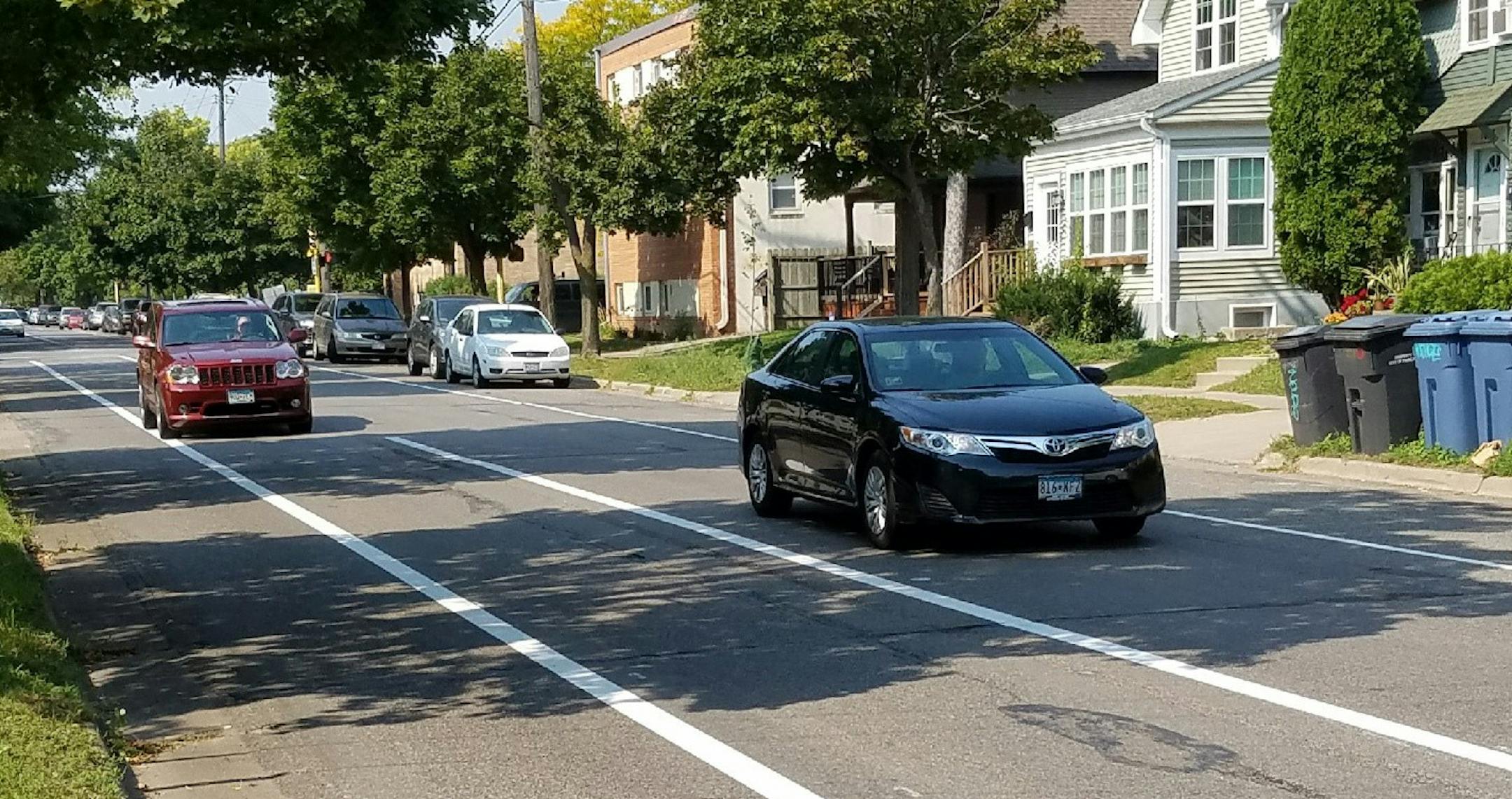
I am disappointed that Jon Tevlin, in his Sept. 13 column about safety improvements on 26th and 28th streets ("Let's push hamburger through a straw, Mpls."), ignores the safety of families who live along these streets. Most of the buildings that line 26th and 28th are people's homes — these freeway-like streets (which promote freeway-like driving) should never have been built like they are in the first place.
I live a block from 28th Street where it is at its widest, and I cross it every day to bring my 2-year-old son to day care. As he grows more independent and wants to do things like walk by himself, I grow more fearful for his safety. There is also an elementary school near my home that is right off 28th, but I wonder how many of its students — who like us, live only a couple of blocks away — don't walk to school because their parents fear for their safety. I'm tired of crossing four lanes of traffic with speeding cars and competing with drivers who treat right-turn lanes like freeway on-ramps.
I applaud the city and the steps it's taking to build protected bike lanes, not just because I often use them for commutes by bike, but because of the traffic-calming they provide on these dangerous roads. The streets aren't perfect, and there are certainly other things that can happen to improve safety, but anything that gets traffic to slow down and allows people to get around safely by foot is a step in the right direction.
Lesley Schack, Minneapolis
• • •
I've lived near 26th and 28th streets in the Whittier neighborhood for 18 years. Some are upset that driving on these corridors may be less convenient now that they have protected bike lanes.
In defending the status quo, they defend the indefensible. On 26th and 28th, five people have been killed by cars in as many years. These deaths come at no surprise. When two lanes of 40 miles per hour traffic fly through densely populated neighborhoods with poor sight lines, crashes and fatalities are inevitable. With the protected bike lanes, traffic will be more predictable and slower, sight lines improved and lives protected. More kids and families will walk and bike. There will be less property damage from crashes. All of the data from other projects affirm this. The bottom line is that these lanes will save lives.
Jeff Carlson, Minneapolis
GOVERNOR-LEGISLATURE DISPUTE
Supreme Court did not abdicate but properly threaded the needle
I disagree with Stephen B. Young's conclusion that the Minnesota Supreme Court abdicated its responsibility by not deciding the governor-Legislature dispute (Opinion Exchange, Sept. 12).
In its decision, the Supreme Court considered both (a) "no branch can suppress either of the other two" and (b) the governor has a line-item veto right. A decision in favor of the governor or the Legislature would have elevated (a) or (b) above the other.


