

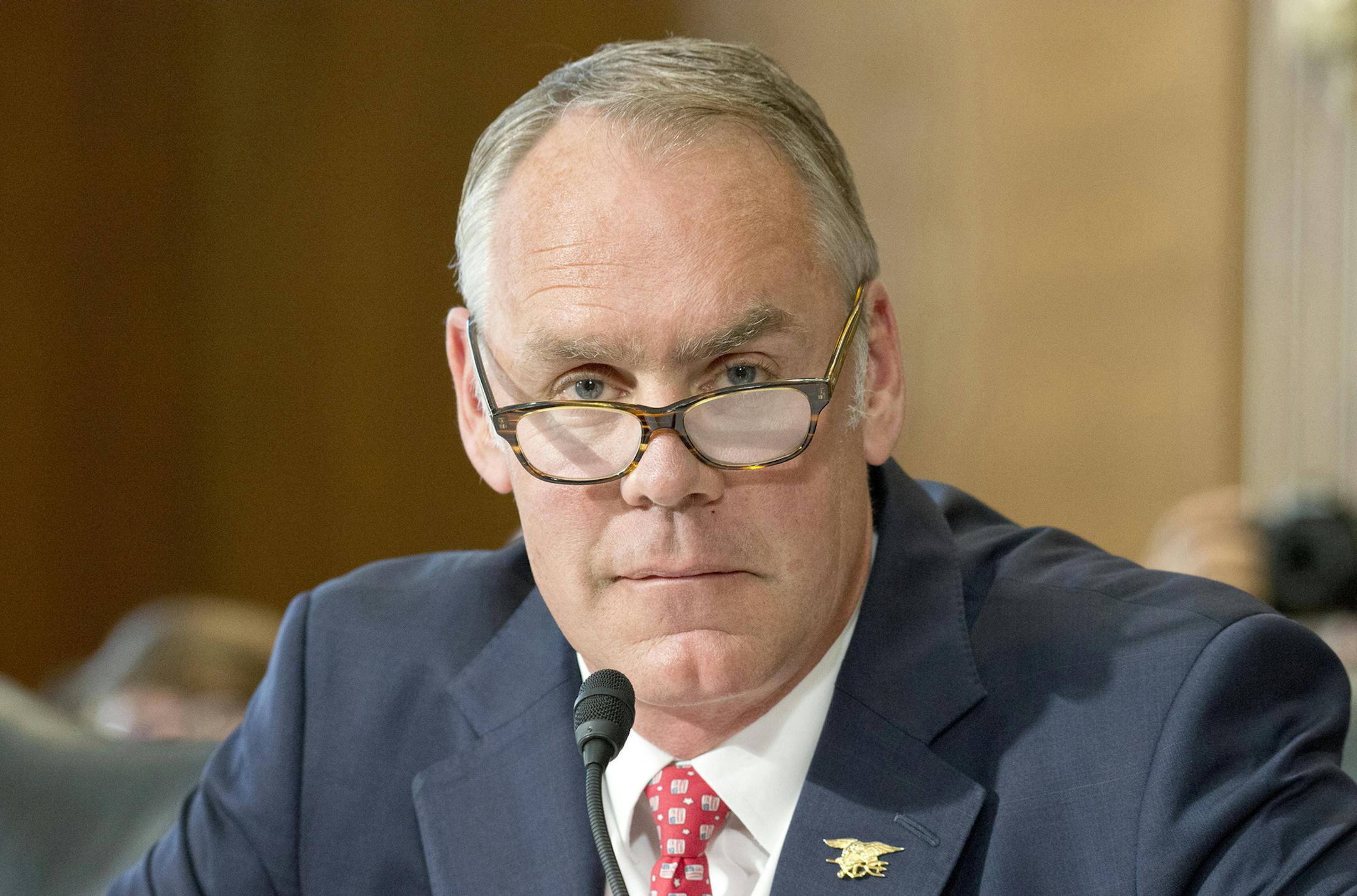
The Department of the Interior released an unexpected legal opinion last week — right before Christmas — putting the Boundary Waters Canoe Area Wilderness (BWCA) in even greater danger. The department now says that it doesn't have the authority to terminate Twin Metals' two mining leases near the Boundary Waters, contradicting the agency's own decision just last year. This is a clear move to fast-track the project and flies in the face of Interior Secretary Ryan Zinke's promise to let sound environmental science guide federal decisions on mining near the BWCA.
Zinke likes to invoke President Teddy Roosevelt and the famous Republican's legacy of conservationism, but there is no trace of Roosevelt's spirit in this decision. Twin Metals' proposed sulfide-ore mining operation would be directly adjacent to the BWCA, one of the few pristine natural places left in the country. The proposed mine would create thousands of tons of poisonous, acidic tailings, creating a constant threat to the BWCA.
Supporters of the proposal claim that a few permits will make Twin Metals safe, but no sulfide-ore mine has ever operated without incident. Twin Metals doesn't even have the financial assurance to cover the mine's estimated $1 billion liability. Consequently, Twin Metals' proposal remains reckless, irresponsible and economically unnecessary. Northern Minnesota's economy depends on tourism and outdoorsmanship, industries that stayed healthy throughout the 2008 recession but may not survive the destruction of the BWCA.
Zinke has caved to mining special interests and broken his promise to let environmental science guide the Department of the Interior.
Tim Schaefer, Minneapolis
The writer is director of Environment Minnesota.
MINNEAPOLIS CITY COUNCIL
After pay hike, a restoration of proper process is in order
As a Democrat and a supporter of the Affordable Care Act, I cheered when U.S. Sen. John McCain gestured "thumbs down" and called for the restoration of "regular order" as he voted no on repeal.
Alas, the citizens of Minneapolis must demand that regular order return to the City Council. The unanimous approval of the strategically "walked on" extraordinary salary increase on Dec. 15 is only the latest example of a council process run amok ("Council quietly hikes pay," Dec. 23). From streetcars to stadiums, the Commons Park to the $30 million parks and streets agreement outside of any budget process, the council has systematically discarded its charter and budget rules. Public hearings and debate have been circumvented, and unanimous council votes appear to serve the purpose of justifying decisions that have already been made after private discussions among council members.
This must end. Democracy at any level can only thrive when there is a healthy and open exchange of ideas. Responsible budgeting can take place only if the significant trade-offs among priorities are openly discussed, not hidden in a shroud of financial maneuvers or off-budget decisions. There will be no more important task for the newly installed mayor and City Council than the restoration of the basic rules of governance, or in McCain's words, "regular order."


