

•••
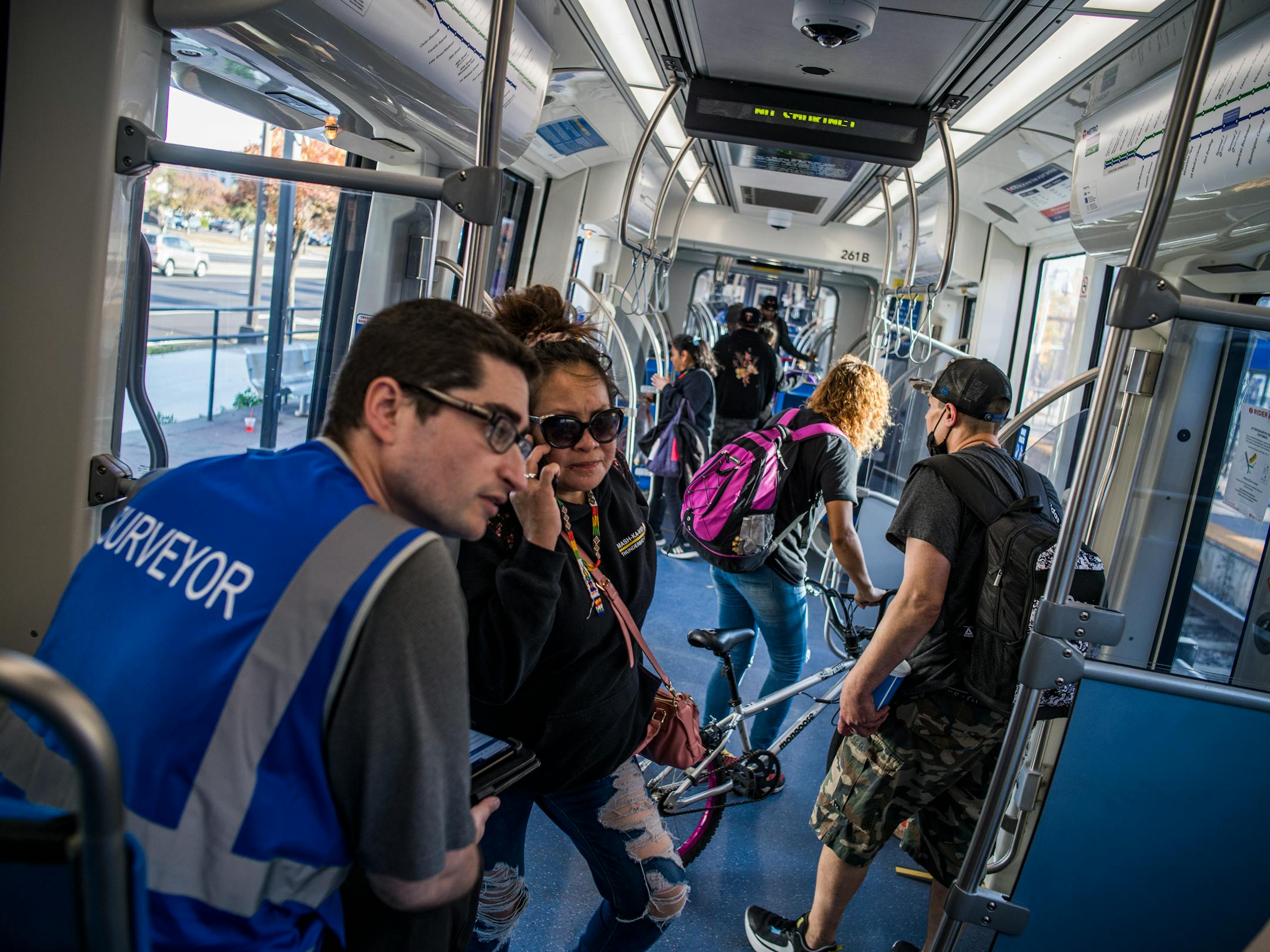
I often ride the light rail to the airport for business travel, and the trains are frequently filled with a collection of derelicts, stumbling drunk people and homeless people. I've taken hundreds of rides since the Metro Blue Line was built, and in that time, I've only twice been asked by Metro Transit officers to validate my fare. Apparently, Metropolitan Council leaders are again pushing state lawmakers to make fare evasion an administrative citation similar to a parking ticket in an effort to combat rising crime throughout its system ("'Eye-opening' transit crime spike," Jan. 19). The idea has failed at the Capitol in recent years.
Instead of trying to change the penalty for not paying, how about making paying a requirement in the first place? Invest in physical barriers and paid ridership, safety and revenue will increase exponentially. It seems like a no-brainer to me.
Don Stevens, Minneapolis
REPARATIONS
Parse the responsibility a bit more
As St. Paul prepares to initiate a homeownership program for those Rondo neighborhood residents displaced by the construction of Interstate 94 in the 1950s and '60s, it's past time to ask to what extent the city of St. Paul should be held responsible for the inequities of the past and whether reparations should be a strictly local endeavor ("St. Paul moves to 'real racial justice' with panel," Jan. 5). (Whether reparations are to be made by the city at all seems to have been decided already, by virtue of the creation of a committee and Mayor Melvin Carter's recent announcement of a plan to provide funding for the purchase of homes by those displaced or their descendants.)
I have no specific answers to these questions but I have not seen them addressed in any way. Clearly, the destruction of the Rondo neighborhood affected many. It was, however, a federal, state and local project. The siting decision alone involved input not only from the federal highway department but the Minnesota Department of Transportation, St. Paul and even the city of Minneapolis. Given the extent of the impact on those displaced by the project and the relative resources of the parties to that process, it is only fair to ask, "To what extent should the people of St. Paul bear the cost of reparations?"
Merely asking the question indicates my position: It should not be borne entirely by the people of St. Paul. While some of the damage inflicted on Black families by purely local policies and actions may warrant reparations, the nature and extent of those should be examined closely and measured carefully. Not all reparations will have a direct cost. There undoubtedly are city ordinances, zoning codes and other city-controlled matters that are the result of individual and systemic racism and that are yet to be purged. The city and its residents should address these. They should not be expected to determine and fund whatever reparations may be owed due to forces beyond their control. All levels of government should participate in any reparations effort.


