

•••
I made two observations when I visited two different sections of the Fort Snelling cemetery last year: Section J (my friend Bob's grave, who was killed in Vietnam in 1967), and Section 30 (my parents' graves).
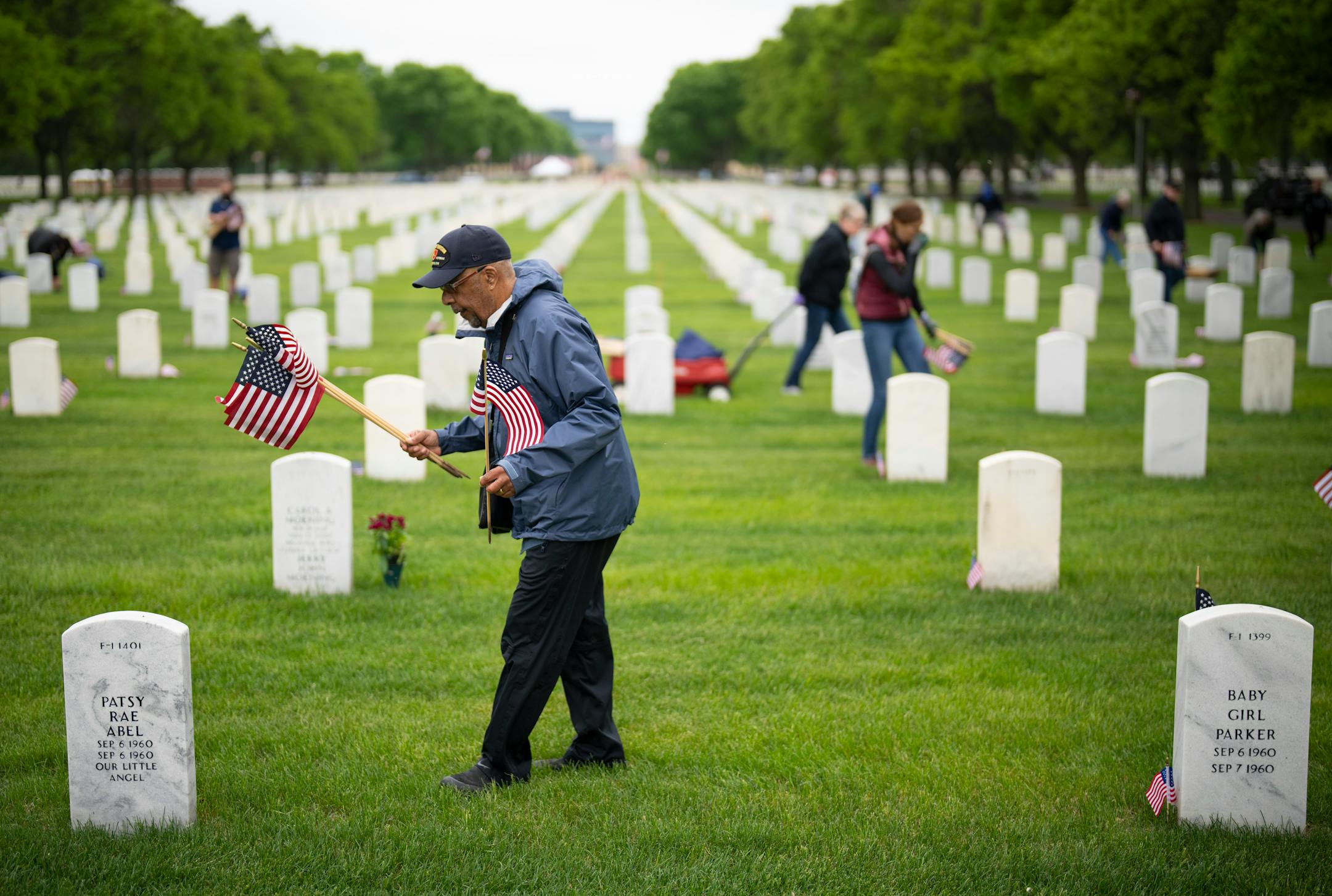
Section J contains graves mostly from 1967-68. Many are those who served in World War II, or even World War I, and thereafter lived a long life, many buried with their spouses. But quite often there are graves of those who served in Vietnam and died young, some as young as 18. (Bob was 20, and will always remain so.) Not buried with spouses. There were a few graves decorated with flowers of remembrance and flags, but not many. They died long ago — Bob's parents are also gone. Who is left to remember such people?
Section 30, on the other hand, is filled with graves of those who recently died (my parents included) and the field of graves is resplendent with colorful flowers of remembrance, and even flags too. They are, for the most part, older people who lived a long full life, or at least had the opportunity to. Many visitors are in attendance — even on a weekday, it's a busy place as people prepare to remember.
So the ages of those lost are vastly different, as is the evidence of remembrance.
I have recently had the opportunity to observe several high school sporting events. What a pleasure it is to see them: young people, strong healthy athletes, brimming with enthusiasm, filled with promise, exuberant, some 17 or 18 years old. They are the future.
In Section J I noticed the grave of Steven, born 1949, died 1967, less than two months after his 18th birthday. I concluded he must have volunteered for the Marines when he was 17. Who is left to remember? There were no flowers there. A search showed he died after 12 days in-country. A random walk up and down the rows revealed many 18- and 19 year-old soldiers. And they, too, will always be so.

