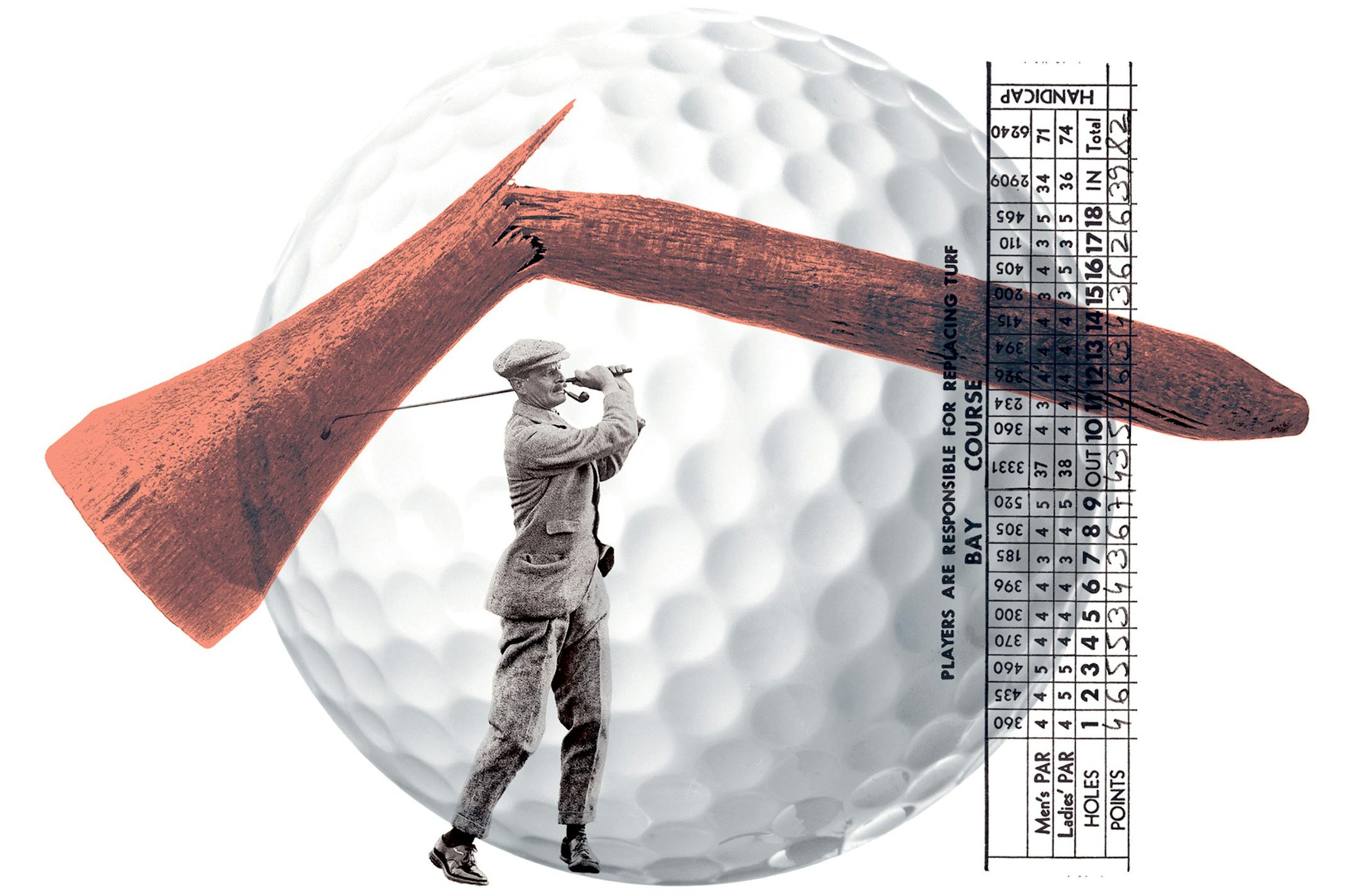
Way mentioned nothing about this reason for the sport's demise: the near total absence of golf being offered in our public schools' physical education curricula. Poll your local public school and you might be surprised to note a lack of golf units offered to students in grades K-10. If, during a 36-week phy. ed. program, a gym teacher would offer a one-week unit on golf to every student from elementary school through early high school, as they do for badminton, bowling, softball, dodge ball and the like, just think of the positive ramifications for the sport statewide. Students would develop a golf stance, grip, swing and knowledge of the sport that just might transfer to an appreciation for golf during their adult lives.
It is no wonder, as Way states, that golf is still considered by many to be an "elite" sport. If the only way a child in our state is going to be exposed to golf is through having wealthy parents, then of course it will remain elite. But public education is for everyone. Phy. ed. teachers from Worthington to International Falls ought to begin tomorrow adding units on golf to their curricula. The Minnesota PGA is even willing to supply clubs to schools at no cost, and many golf courses in the state make their facilities available to schools in their districts. The time is now to promote this lifetime sport through our local school systems.
Announced above the headline of the May 22 article "Run over twice," about pedestrian traffic deaths: "But many of the deaths weren't even judged worth a traffic ticket." While such words may inflame passions and sell newspapers, they perpetuate the ignorant myth that criminal charges are an evaluation of the victim's loss, rather than of the sufficiency of the evidence to overcome the presumption of innocence that protects us all. Ethics rules forbid prosecution without such evidence, and we would be well-served by a newspaper that reminds us of the wisdom of this principle.
I am writing to thank Eric Roper and all who contributed to "Run over twice." Distracted driving is behind the deaths of too many innocent pedestrians. My twin brother, Michael Lindholm, is one of the "uncharged driver" dots on the map that appeared with the article online; his friend Jon Smith's dot is directly underneath. Michael was killed instantly; Jon suffered in ICU for a month before succumbing to his injuries.
My feeling is that it's the victim's family members who are run over twice, or more accurately, hundreds of times. Because the dead cannot say what happened to them, the driver's version of events directs what is written and stands as "truth," as it did for Michael and Jon. I agree completely with Sandra Hanson: It is a "perpetrator-friendly legal environment" — there was no justice in the way the accident that ended the lives of my brother and his friend was handled. I am certain that the Hansons' and our cases are not an anomaly but rather help explain why so many drivers are not charged with anything.