

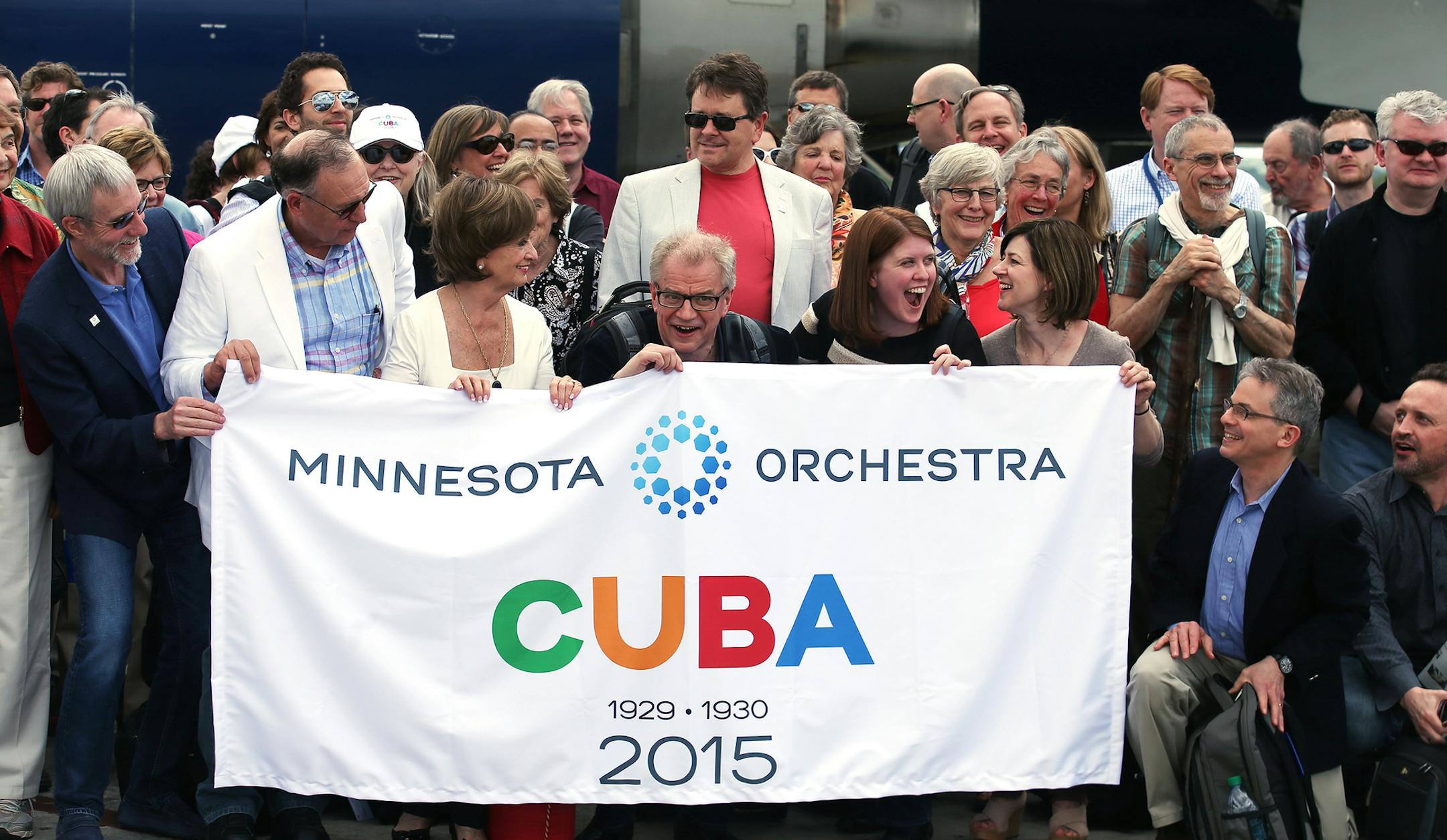
As the tour photographer for the Minnesota Orchestra in Cuba, I wanted to offer one more view of that incredible undertaking. Certainly the trip was historic, the music beautiful and the cultural exchange inspiring to witness. But within the orchestra's own ranks, I've never seen more camaraderie, love or dedication to greatness than was on display by the musicians and artistic staff in Cuba.
Transitioning from an orchestra that was on the brink of collapse to catapulting even further into the international limelight as one of the world's great orchestras doesn't happen by accident. Kevin Smith, the new president, interacted with the musicians with nothing less than total parity and a collaborative spirit. Music director Osmo Vänskä continued the orchestra's push toward brilliance with warmth and complete artistic command. And what more can be said about the musicians? They're warm, funny, brilliant people who drank rum, smoked cigars and were the best cultural ambassadors we could hope to send to Cuba and beyond. From the press corps all the way up to board president Warren Mack, everyone felt we were part of something special, and clearly the Cubans agreed. So to Minnesota audiences, this is the time to show some love, attend some concerts and be proud of what we have. This orchestra is to be cherished.
Travis Anderson, Minneapolis
• • •
The lessons of the orchestra's historic tour to Cuba — so soon after the highly public labor stalemate between management and musicians — underscore the importance of consistently and constantly recognizing and acknowledging the impact of culture on all of us. We would all live in a better world if the significant role of arts and culture were captured through public discourse day-in and day-out — not just when an event hits the world stage. While local and national coverage of recent Minnesota Orchestra activities in Cuba has been wonderful, the media could help capture the multitude of ways in which culture impacts us — from the glint in the eye of a fifth-grader after playing violin at his or her first orchestra concert to the nod of recognition of an Alzheimer's patient remembering songs from childhood.
Nathan Davis, Golden Valley
TRADE AGREEMENTS
There's free trade, and there's fair trade (which we support)
In "Free-trade supporters push back" (May 19), Curt Hanson, co-founder of the Edina-based Trade Acceptance Group Ltd., stated that "Congress is completely detached from reality on free trade." He also said that he was puzzled over why so many members of Congress and the public oppose foreign trade agreements.
To be clear, the public and labor unions are against "free trade" and for "fair trade." To expect the workers of the U.S. to compete with workers in Vietnam who are making between 46 and 60 cents an hour is unrealistic. To say that by joining this agreement we will be open to a larger middle-class market is a bit deceptive; the middle class of the United States has a significantly higher buying power than the middle classes of Vietnam or Brunei.
If the past trade deals have been so good for America, why is our trade deficit so out of whack? (The Korea free-trade agreement increased our trade deficit with South Korea by 104 percent in just three years.) The truth is that the Trans-Pacific Partnership will not help people in poor, Pacific Rim countries buy American-made products. What it will do is allow multinational corporations to exploit low-wage workers, bypass environmental standards and continue to erode the shrinking middle class of the United States, while generating massive wealth for their companies.
Fair trade — trade that isn't negotiated in secret — ensures fair wages, worker rights and environmental standards. It doesn't use child labor. It addresses currency manipulation, contains "buy American" provisions, and has an enforcement mechanism that actually has the authority to investigate and enforce the provisions of the agreement.


