

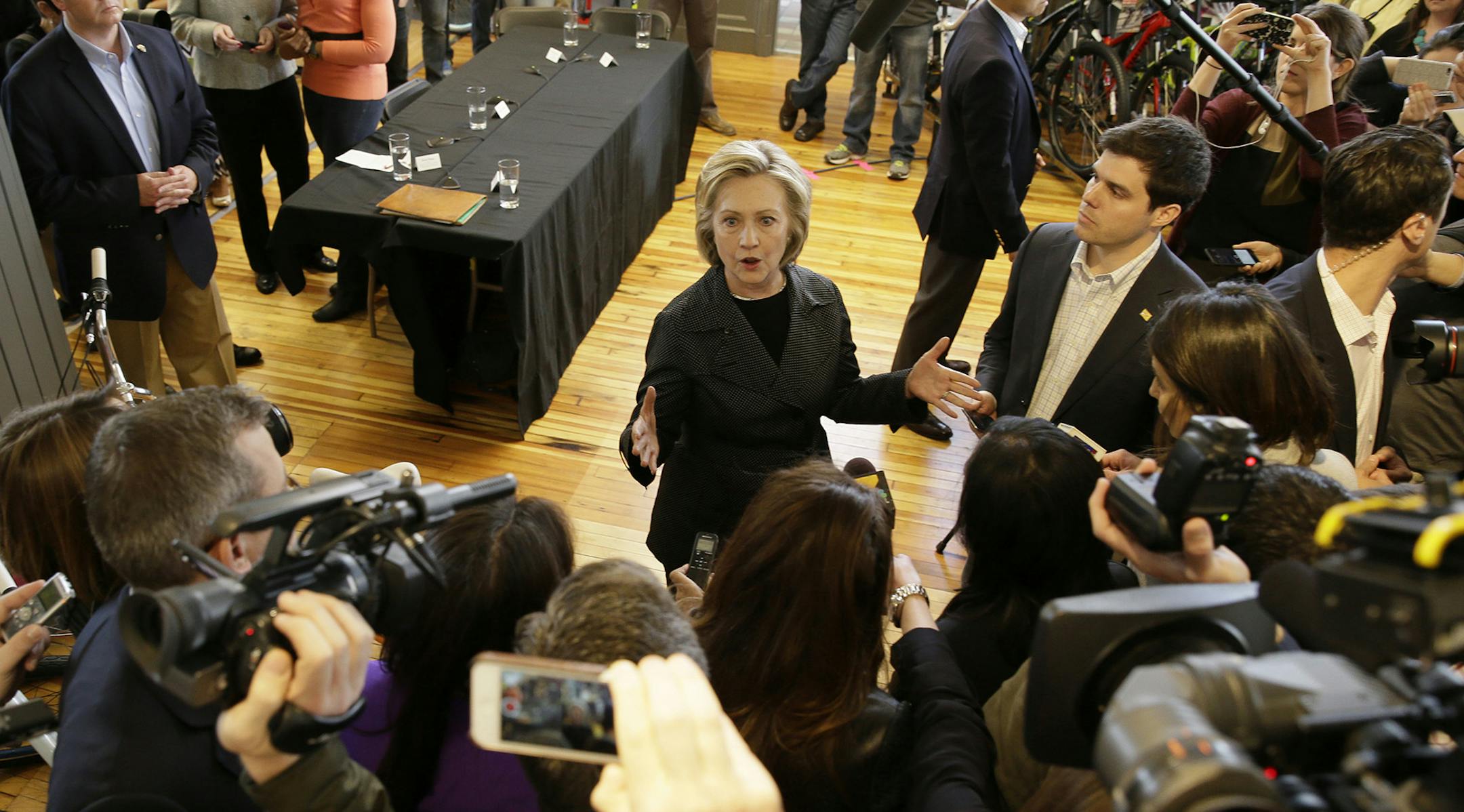
I was pleased to see that Hillary Clinton acknowledges that her e-mails from her time as secretary of state belong to the State Department ("Clinton urges State Dept. to speed release of e-mails," May 20). It would have been more timely, however, if she'd had this belief from the start of her tenure. When exactly, Madam Secretary, would you have turned over those documents had they not been requested from the State Department? Are we to believe that hard-copy e-mails turned over to the department will contain documents that have not been carefully scrubbed and sorted? Why, Madam Secretary, did you not provide an electronic record of all your e-mails, and why have you not requested a forensic examination of your server by an independent third party?
We can only hope that the American media does its job and demands answers to these questions and others about Clinton's time as secretary of state. Maybe they can ask her the "if you knew then what you know now" type of questions about Russia, Egypt, Libya, Syria, Iran and Iraq among others. Then, and only then, will Clinton have made herself transparent enough for the American voter to make an informed decision.
Gary Dreyer, Bloomington
HEALTH CARE
One wonders if our leaders care whether programs are supportive
The May 19 article "New task force takes up potential MNsure changes" misses a key point. According to University of Minnesota pundit Larry Jacobs, the task force will analyze how to change public programs like MinnesotaCare to make MNsure sustainable. But it's not the job of Minnesota health care consumers, especially lower-income MinnesotaCare enrollees making $8 to $12 an hour, to make the "private individual market viable." The market should be looking for, and catering to, the needs of health care consumers. And this means prices these consumers can afford and quality plans that provide them with the health care they need, when they need it.
Dolores Dunlop Voorhees, Cedar
• • •
I come to this MNsure/MinnesotaCare issue from an interesting perspective, having been a part of both. For years, I was lucky enough to qualify for MinnesotaCare. I am one of the self-employed, disappearing middle class. MinnesotaCare was great coverage and affordable. When MNsure was "enacted," I suffered through the glitchy (for lack of a better term) sign-up. It took months to get coverage. My premium via MNsure, Minnesota's answer to the Affordable Care Act, was almost five times more than I was paying on MinnesotaCare, and the coverage wasn't as comprehensive.
According to MNsure, I made too much money to stay on MinnesotaCare. After being on MNsure for a year, I was told I qualified for MinnesotaCare and could change policies again. I am now back to "actual," affordable health care.
How is it possible in a state with a $1.87 billion surplus that losing MinnesotaCare is even a possibility? What is it about those of us who work hard to keep a roof over our heads and pay our bills that makes us so invisible, or worse yet, not even considered worthy to keep an important resource?
R.L. Brown, Minneapolis
• • •


